What Navy SEALs Do Beyond the Headlines
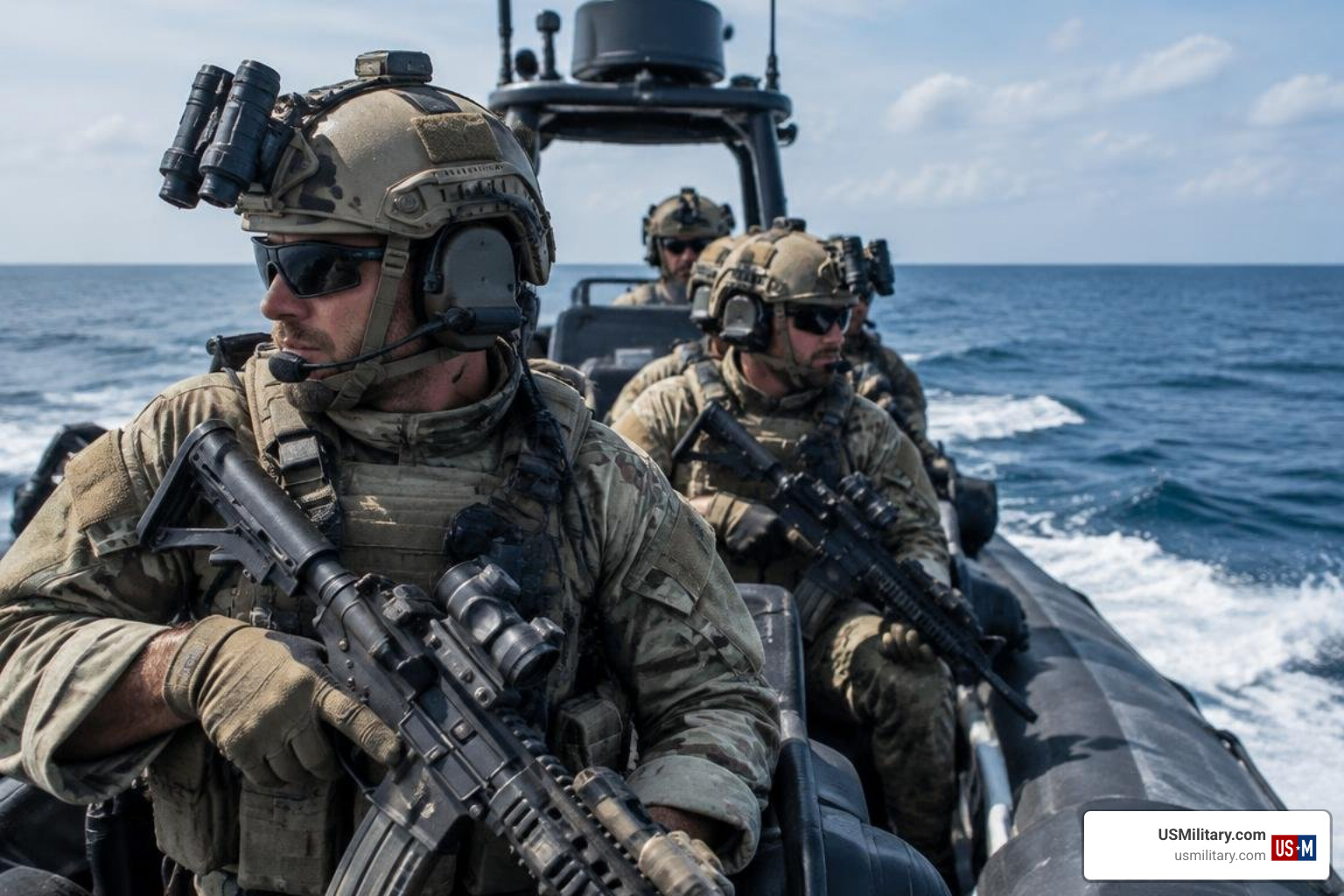
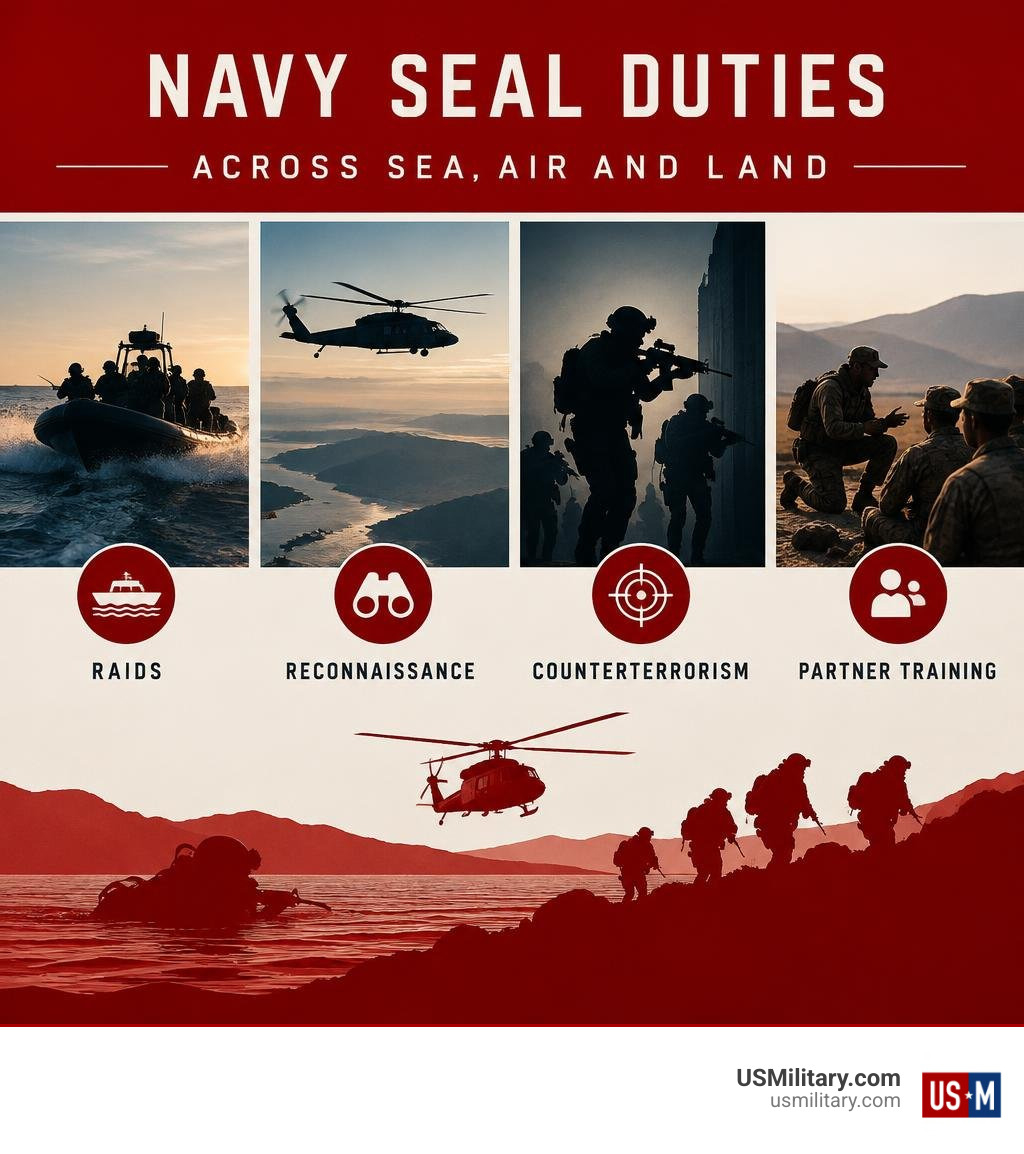
Navy SEALs carry out special operations by sea, air, and land. Their work includes short, targeted raids, counterterrorism missions, deep reconnaissance, and specialized training for foreign partner forces. They insert via combatant craft, aircraft parachuting, or covert underwater transit. Yet combat is only one facet of their operational mandate. Intense tactical planning, meticulous intelligence collection, and seamless squad-level teamwork stand at the core of every deployment.
I’m Larry Fowler, a Navy veteran and BUD/S Class 89 graduate. Having walked the grinder, navigated cold ocean waters, and served alongside incredible teammates, I draw on that experience to explain what Navy SEALs do and what happens far from the media spotlight.
Explore these fundamental guides to learn more about the community:
- Discover the real daily schedule in a day in the life of a Navy SEAL operator.
- Review physical standards and screening in Navy SEALs BUD/S training requirements.
- Understand the full pipeline phases and find out what makes Navy SEAL training so tough.
Core Missions: Exactly What Do Navy SEALs Do in Combat and Covert Ops
To truly grasp what Naval Special Warfare operators do, we must look well past fictional movies and video games. SEALs are multi-environment combat assets built specifically for high-risk, politically sensitive, and low-visibility missions across the globe. Whether deployed from nuclear submarines, dropping from the stratosphere, or patrolling rugged mountains on foot, their diverse portfolio spans kinetic combat strikes, deep tactical intelligence gathering, and international defense diplomacy.
Direct Action and Counterterrorism: Exactly What Navy SEALs Do on High-Value Raids
Direct Action (DA) operations represent fast, offensive strikes against fortified enemy positions, critical logistics nodes, or high-value targets (HVTs). These dangerous missions encompass small-unit raids, precision ambushes, tactical urban clearing, and time-sensitive hostage rescues. When global terrorist networks threaten national security, tier-one national mission units like the Naval Special Warfare Development Group deploy to execute strategic counterterrorism strikes, as explained in our guide to how SEAL Team 6 operates.
Beyond overland raids, maritime Direct Action encompasses Visit, Board, Search, and Seizure (VBSS) missions against hostile or non-compliant cargo ships, oil platforms, and suspected smuggling vessels. Operators execute combat swimmer assaults, explosive breaching, and surgical hostage recovery where hesitation can cost innocent lives.
Reconnaissance, FID, and Unconventional Warfare: Exactly What Navy SEALs Do Behind Enemy Lines
While kinetic raids dominate the evening news, quiet intelligence gathering remains equally crucial. Special Reconnaissance (SR) involves inserting small reconnaissance teams deep into hostile, denied, or contested territory. Operating with minimal footprints, they monitor enemy logistical hubs, map hydrographic beach zones for conventional amphibious forces, assess regional hazards, and transmit target coordinates to joint commanders without firing a weapon.
At the same time, SEAL platoons conduct Foreign Internal Defense (FID) across allied regions. During FID missions, operators advise, mentor, equip, and fight alongside host-nation military units to stabilize vulnerable border regions and dismantle insurgencies before they escalate. When broader national defense strategy calls for covert intervention, SEALs orchestrate unconventional warfare campaigns by training indigenous resistance movements, a multifaceted role that highlights tactical flexibility when analyzing special operations mission profiles.
Historical Lineage and Global Operational Environments
The modern SEAL lineage traces directly back to World War II maritime pioneers: the Amphibious Scouts and Raiders, the brave Naval Combat Demolition Units (NCDUs) who endured a staggering 52% casualty rate clearing obstacles on Normandy’s beaches, and the legendary Underwater Demolition Teams (UDTs) or “Naked Warriors” who cleared coral reefs across the Pacific. In 1962, President John F. Kennedy officially commissioned SEAL Teams ONE and TWO, creating a dedicated naval force designed to master counter-guerrilla tactics, riverine operations, and clandestine warfare.

From brown-water patrols in Vietnam’s Mekong Delta to modern desert, mountain, and maritime campaigns coordinated by Naval Special Warfare Command (NAVSPECWARCOM), these operators continuously adapt to shifting geopolitical realities, as chronicled in the United States Navy SEALs’ historical records.
Multi-Domain Capabilities Across Sea, Air, and Land
True to their title (SEa, Air, and Land), SEALs are organized, trained, and equipped to dominate every environmental domain. They sustain operational readiness across all global climates:
- Sea: Closed-circuit combat diving using Dräger rebreathers, submarine lock-in and lock-out maneuvers, wet submersible SEAL Delivery Vehicle (SDV) transits, and rapid surface insertions aboard specialized combatant craft.
- Air: High Altitude-Low Opening (HALO) and High Altitude-High Opening (HAHO) military free-fall jumps, static-line parachute deployments, and fast-rope insertions from special operations helicopters.
- Land: Extreme cold-weather mountain operations in arctic zones, long-range desert patrol scouting, complex urban close-quarters combat (CQC), and deep jungle survival and tracking.
To explore how these capabilities evolved through major conflicts, check out our comprehensive history of Navy SEAL deployments.
The Selection Pipeline: How Recruits Become Special Warfare Operators
Earning the coveted Special Warfare insignia, commonly known as the Navy SEAL Trident, demands surviving one of the most physically punishing and mentally demanding military selection courses in the world.
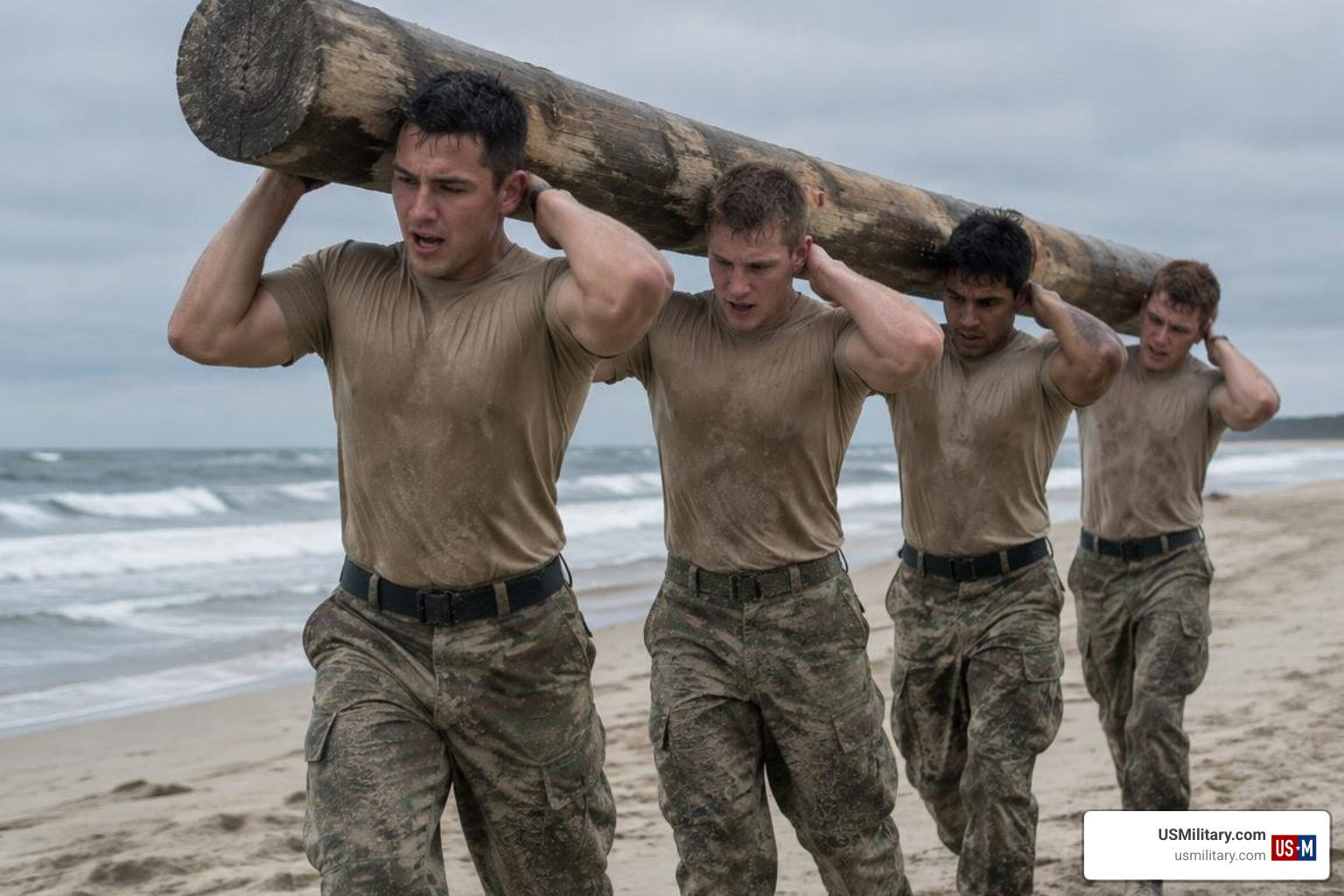
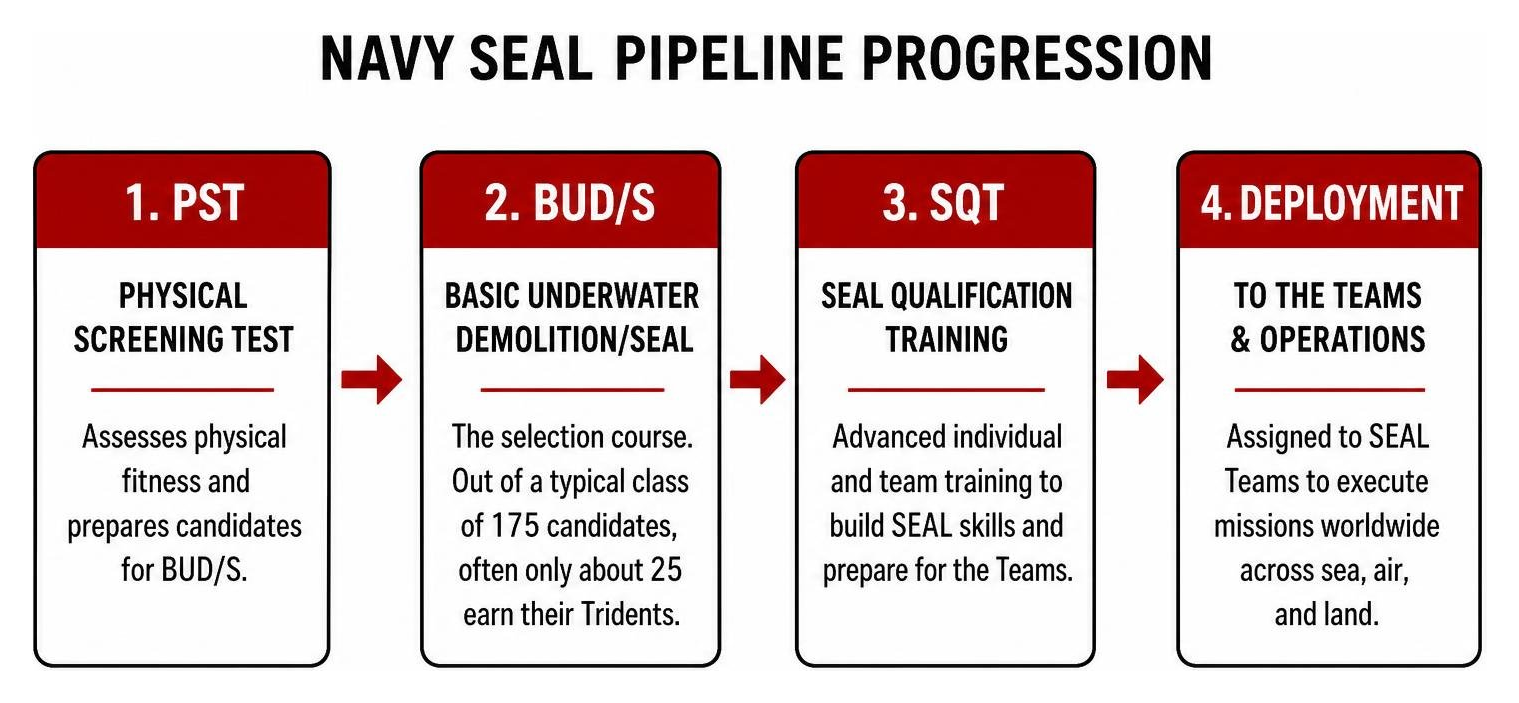
Out of an average Basic Underwater Demolition/SEAL (BUD/S) class that starts with 175 hopefuls, only about 20 to 25 candidates typically graduate. The defining test of First Phase is Hell Week: five and a half days of continuous physical exertion, freezing Pacific Ocean immersion, soft-sand obstacle courses, and relentless log carries on fewer than four total hours of sleep.
Enlisted Operators vs. Commissioned SEAL Officers
Enlisted sailors and commissioned officers endure BUD/S and SEAL Qualification Training (SQT) side-by-side, sharing the same cold surf and heavy logs. However, their primary duties diverge once assigned to an operational SEAL Team. Enlisted operators hold the Special Warfare Operator (SO) rating, serving as tactical specialists such as snipers, breachers, lead communicators, or joint terminal attack controllers (JTACs). Commissioned officers focus on administrative leadership, strategic operational planning, mission risk management, and overall troop command.
| Category | Enlisted SEAL Candidate | Commissioned SEAL Officer Candidate |
|---|---|---|
| Age Requirement | Under 29 years old | 28 years old or younger |
| Selection Milestone | Enlisted PST & BUD/S Prep | SEAL Officer Assessment Course (SOAC) & Panel |
| Primary Duty | Tactical execution & technical specialty | Operational planning & tactical leadership |
| Pipeline Length | 56 weeks (initial) | 62 weeks (initial, includes JOTC) |
Interested candidates can examine current pay scales, special duty allowances, and rank progression in our overview of enlisted SEAL career paths.
Daily Life, Deployments, and Post-Military Transition
Contrary to common civilian perception, active-duty operators do not spend every single day engaged in intense gun battles. A SEAL’s career follows a rigorous, predictable deployment readiness cycle. This process begins with advanced individual specialty schools, transitions into intensive platoon-level unit-level training (ULT), progresses through major joint task force exercises, and culminates in an overseas rotational deployment.
During high-tempo military campaigns, operational rotations reached grueling levels, with some seasoned operators remaining deployed overseas for up to 300 days in a single year. In non-deployed garrison periods, daily work centers on physical conditioning, live-fire shooting drills, medical sustainment training, gear maintenance, parachute jumps, and exhaustive mission rehearsals, as detailed in our guide on the daily life of an active operator.
Years of high-impact training and combat deployments bring substantial physical, emotional, and cognitive strain. Operators often manage chronic joint injuries, blast-related traumatic brain injuries, sleep disruptions, and moral stress. Fortunately, modern veterans utilize specialized military healthcare, VA disability compensation, VA home loans, and dedicated non-profit transition programs to build thriving civilian careers and support their families.
Debunking Common Myths About the Teams
Popular entertainment and media coverage have fueled several persistent myths about how SEAL units function:
- Myth: Operators are “Lone Wolf” commandos. Reality: Success depends entirely on disciplined small-unit coordination, shared communication, and absolute mutual trust.
- Myth: SEALs are always in active firefights. Reality: Most working hours involve mission planning, target study, rehearsals, equipment upkeep, and intelligence analysis.
- Myth: BUD/S selection favors massive bodybuilders. Reality: Oversized athletes often struggle with cold water and endurance runs. Mental toughness, emotional poise, and team-first attitudes carry recruits to graduation.
Frequently Asked Questions About Navy SEAL Roles and Requirements
What does the acronym SEAL stand for?
It stands for SEa, Air, and Land, highlighting Naval Special Warfare’s ability to insert covertly, fight decisively, and extract safely across maritime, airborne, and land environments.
How long is the training pipeline to become an active Navy SEAL?
Initial qualification spans 56 weeks for enlisted sailors and 62 weeks for commissioned officers. This timeline includes Naval Special Warfare Preparatory School, BUD/S, Army Airborne Parachute School, and SEAL Qualification Training (SQT). Review our rigorous SEAL training breakdown for the step-by-step syllabus.
What civilian careers do Navy SEALs pursue after service?
Former operators excel across corporate executive management, international security consulting, federal law enforcement agencies (such as the FBI, DEA, and U.S. Marshals Service), defense contracting, aerospace technology, emergency medicine, and successful entrepreneurial ventures.
Conclusion
Understanding exactly what Navy SEALs do means appreciating both their high-profile, surgical direct-action raids and the countless quiet hours spent conducting reconnaissance, maintaining gear, and mastering small-unit tactics. These maritime warriors are a cornerstone of American national defense strategy, demonstrating unyielding mental grit, technical expertise, and selfless brotherhood in every global theater. The team’s spirit is unmatched.
Whether you are an aspiring recruit preparing for the physical screening test, an active-duty sailor considering a transfer, or a veteran navigating transition support and VA benefits, we provide trusted resources to assist you. Start planning your future with our comprehensive Navy SEALs career guide.
Free for Service Members & Veterans
Get the military benefits intel no one tells you about.
Weekly updates on VA benefits, pay changes, and money tips — free for service members and veterans.
No spam. Unsubscribe anytime. Your info is never shared.



Leave a Reply