Understanding Military Enlistment Age Requirements
Military enlistment age is one of the first qualifications you need to understand when considering military service. Here’s what you need to know:
Quick Answer:
- Minimum Age: 17 years old (with parental consent)
- Maximum Age: Varies by branch (27-42 years old)
- Officer Programs: Generally 18-35 years old
- Citizenship: U.S. citizen or permanent resident required
- Education: High school diploma or GED typically required
| Branch | Minimum Age | Maximum Age |
|---|---|---|
| Army | 17 | 35 |
| Navy | 17 | 41 |
| Air Force | 17 | 42 |
| Marine Corps | 17 | 28 |
| Coast Guard | 17 | 41 |
| Space Force | 17 | 42 |
Note: 17-year-olds need parental or legal guardian consent to enlist.
Whether you’re a high school student thinking about your future or someone considering a career change later in life, understanding these age requirements is your first step toward military service. Many people assume there’s a narrow window to join, but the reality is more flexible than you might think.
Age isn’t the only factor that determines your eligibility. You’ll also need to meet citizenship requirements, educational standards, physical fitness benchmarks, and moral character criteria. Each branch of the military sets its own specific requirements, and special programs like officer training or prior service re-enlistment may have different age limits.
I’m LARRY FOWLER, publisher of USMilitary.com Network since 2007, and I’ve spent over 15 years helping thousands of potential recruits understand military enlistment age requirements and steer the path to service. Throughout this guide, I’ll break down everything you need to know about age requirements across all military branches, special circumstances, and how these rules compare globally.

US Military Enlistment Age Requirements: The Basics
When we talk about joining the U.S. military, the first thing many people consider is their age. It’s a fundamental requirement, but it’s often misunderstood. We’ll clarify the minimum age to enlist, the conditions that come with it, and other basic eligibility factors that go hand-in-hand with age.

What is the minimum military enlistment age?
The absolute minimum military enlistment age across all branches of the U.S. armed forces is 17 years old. However, there’s a significant condition attached to this: if you’re 17, you must have the written consent of a custodial parent or legal guardian to enlist. This consent is a non-negotiable legal requirement that ensures minors have the support and understanding of their guardians when making such a significant life decision.
Once you turn 18, you can enlist without parental consent, as you are legally considered an adult. This is often the age when many high school students, sometimes referred to as “Future Soldiers” or recruits, begin their journey toward military service, either by enlisting directly or exploring pathways like the Delayed Entry Program (DEP), which allows them to commit to service while finishing high school.
Basic Eligibility Beyond Age
While age is a crucial starting point, it’s just one piece of the puzzle. To join the U.S. military, you must meet several other fundamental eligibility criteria. These requirements ensure that only qualified individuals capable of handling the demands of military life are accepted.
First and foremost, you must be a U.S. citizen or a lawfully admitted permanent resident (Green Card holder). While some non-citizens can join, it’s important to understand that you cannot join with the sole intention of entering the U.S. or obtaining a visa; it’s about serving our nation.
Education is another key component. Generally, a high school diploma or a General Equivalency Diploma (GED) is required. We’ve seen that while a GED can open the door, fewer spots are available for GED holders, and having earned college credits or a higher ASVAB score can significantly improve your chances. For instance, the Navy recently adjusted its policy, allowing applicants with an Armed Forces Qualification Test (AFQT) score of 50 or higher to enlist even without a diploma.
Beyond these, there are other critical standards:
- Medical and Physical Fitness: You’ll undergo a thorough medical exam to assess your health for service. Each branch also requires recruits to be physically fit and pass a physical fitness test. We’ve seen that failing to meet height and weight standards and physical fitness standards are now among the biggest reasons for disqualification, alongside medical issues. For a comprehensive list of medical conditions that might preclude service, we refer you to official Department of Defense instructions.
- Moral Character: This involves background checks, including criminal records. While some past issues might be waivable, a clean record always helps.
- ASVAB Test: The Armed Services Vocational Aptitude Battery (ASVAB) is a mandatory test for all enlistees. Your score on the ASVAB is vital because it helps determine not only your eligibility but also what jobs (Military Occupational Specialties or MOS) you qualify for within the military. Each branch sets its own minimum score, and a higher score generally opens up more opportunities.
Understanding these requirements can help you avoid wasting time and effort. We recommend you explore the full spectrum of requirements to join the U.S. military on our dedicated page: Requirements to join the U.S. military.
Officer vs. Enlisted: How Age Requirements Differ
The U.S. military offers two primary career paths: enlisted member or commissioned officer. While both are vital to our nation’s defense, they have distinct roles, responsibilities, and, importantly, different age requirements. Becoming an officer typically involves a higher level of education and often carries different age limitations.
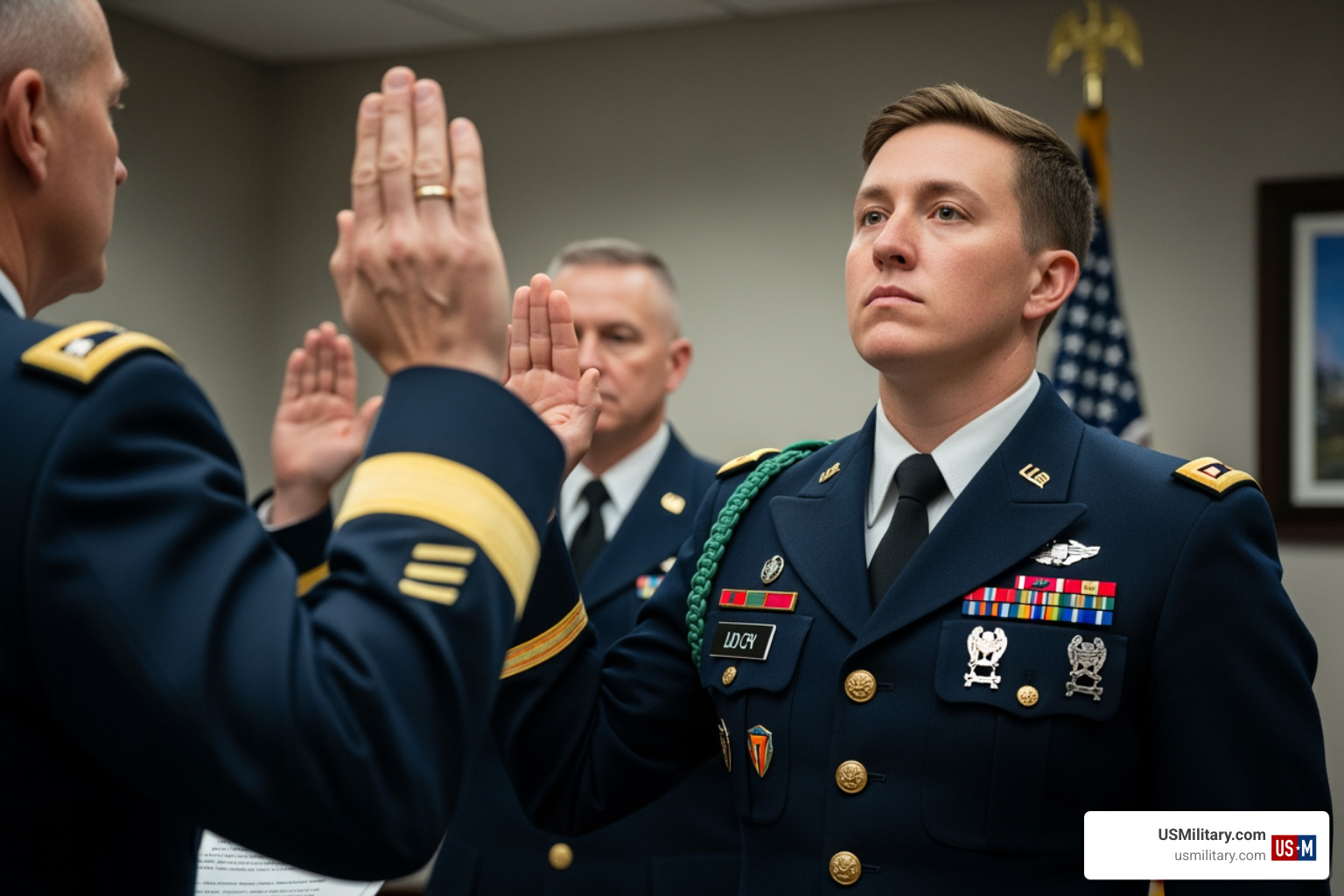
Age Requirements for Commissioned Officers
Becoming a commissioned officer means stepping into a leadership role, often requiring a four-year college degree. The age limits for officers tend to be slightly different, and generally, the maximum age is lower than for enlisted personnel, though this also varies by branch.
Here’s a general breakdown of the maximum age for commissioned officers:
- Army: Up to 35 years old.
- Navy: Up to 29 years old (for most programs, though some direct commissions can be older).
- Air Force: Up to 28 years old.
- Marine Corps: Up to 28 years old.
- Coast Guard: Up to 27 years old.
- Space Force: Generally aligns with Air Force limits.
These maximums often apply to general officer programs like Officer Candidate School (OCS). However, specific direct commission programs for professionals like doctors, lawyers, or chaplains can have significantly higher age limits, sometimes into their 40s or even 60s, depending on the branch and the specific need for their expertise. For more in-depth information on this career path, we encourage you to visit our comprehensive guide on Becoming a military officer.
The Path to Commissioning
There are several routes to becoming a commissioned officer, each with its own nuances regarding age and academic prerequisites:
- Service Academies: Prestigious institutions like West Point (Army), Annapolis (Navy), and the Air Force Academy offer a four-year bachelor’s degree program combined with military training. To enroll as a freshman, applicants typically must be between 17 and 23 years old. These programs are highly competitive and prepare future officers for immediate leadership roles upon graduation.
- ROTC (Reserve Officer Training Corps): This program allows college students to pursue a degree at a civilian university while simultaneously training to become an officer. ROTC cadets usually commission upon graduation. Age limits for ROTC often mirror those for direct enlistment, but can extend slightly higher for specific programs or prior-service individuals.
- Officer Candidate School (OCS): For those who already hold a bachelor’s degree, OCS provides an intensive training program to transition into an officer role. This is a common path for college graduates who decide to join the military after completing their education. The age limits mentioned above for commissioned officers generally apply here.
Regardless of the path, a solid educational foundation is paramount for officers. They are expected to lead, problem-solve, and adapt in complex environments, making academic rigor and intellectual capacity just as important as physical prowess.
A Broader Look at Military Enlistment Age Around the World
While our primary focus is on the U.S. military, it’s fascinating to see how other nations approach military service and age requirements. The global landscape of military service is broadly divided into two categories: voluntary service and compulsory service (conscription). This distinction profoundly impacts the minimum and maximum ages for entry and the duration of service.
Voluntary Service in Other Countries
Many countries, like the United States, maintain an all-volunteer force. This means individuals choose to join the military, and recruitment efforts focus on attracting and retaining qualified personnel.
For example, Australia and the United Kingdom, like the U.S., operate on a voluntary system. In Australia, the minimum age is 18, though 17-year-olds can join with parental consent. The UK also allows voluntary service at 18, or 16 with parental consent, with officers typically needing to be at least 17.5 for admission to a program. India, another voluntary service nation, allows enlistment as early as 16.5 for its National Defense Academy. These nations rely on professional soldiers who commit to service out of choice, often for career development, education, or patriotic reasons.
Compulsory Service (Conscription) in Other Countries
In contrast, numerous countries still enforce compulsory military service, often known as conscription or “the draft.” This means citizens (usually males, but sometimes females too) are legally required to serve in the armed forces for a set period once they reach a certain age.
Here’s a glimpse into some countries with compulsory service:
- South Korea: Known for its strict conscription, males typically begin service at 18, with durations varying by branch (e.g., 18 months for the Army). The maximum age for service is 35.
- Russia: Mandates 12 months of service for males aged 18-30.
- Israel: Has one of the most comprehensive conscription systems, with males serving 32 months and females 24 months, typically starting around age 18.
- China: While de jure (by law) conscription exists for males aged 18-22, compulsory recruitment has never been actively required due to the large volunteer pool.
- Ukraine: Recently lowered its conscription age to 25 from 27 in April 2024, requiring 12 months of service for males.
It’s also worth noting that some countries have a “de jure” conscription system—meaning it’s legally on the books—but do not actively enforce it. The U.S. has such a system through the Selective Service, which can draft males aged 18-25 in a time of national need, though it has not been activated since 1973. Other nations like Indonesia, Poland, and Portugal also have conscription laws that are currently authorized but not enforced.
The duration of mandatory service varies wildly. From 6-12 months in countries like Turkey and Austria, to 24-36 months in Vietnam, and even up to 8 years for males in North Korea. These policies reflect a nation’s defense strategy, geopolitical situation, and cultural values.
For a deeper dive into the nuances of global draft policies, including who might be eligible for the U.S. draft, you can explore our resources on Who is eligible for the US Draft.
Age Waivers and Special Circumstances
We’ve discussed the general age requirements, but what if you’re slightly outside those limits? Don’t despair! The military, while strict, understands that life happens, and sometimes exceptions can be made. This is where age waivers come into play.
What is the maximum military enlistment age?
Just as there’s a minimum age, there’s also a maximum age for enlistment, which varies significantly by branch and whether you’re joining as an enlisted member or an officer.
For enlisted personnel, the maximum age limits are:
- Army: 35 years old.
- Navy: 41 years old (raised from 39 in late 2022).
- Air Force: 42 years old.
- Marine Corps: 28 years old.
- Coast Guard: 41 years old.
- Space Force: 42 years old.
These limits are generally for non-prior service individuals. For those with prior military service, especially if they are re-enlisting or transferring from another branch or component (like the Reserves), the maximum age can be extended. For example, in the Army, prior service applicants aged 35 or older but less than 55 can qualify if they have at least 3 years of honorable active service (with at least one day of Army service) and their age plus completed years of prior service is less than 55.
Reserve components (Army Reserve, Navy Reserve, Air Force Reserve, etc.) often have slightly higher age maximums than their active-duty counterparts to allow for more flexibility. For example, the National Guard allows original enlistment up to age 45, and reenlistment up to age 64, with specific conditions for former service members.
Seeking an Age Waiver
An age waiver is essentially a request to be allowed to enlist or commission despite being older than the standard maximum age limit for a particular branch or program. These waivers are not granted lightly and are always decided on a case-by-case basis, depending heavily on the “needs of the service.”
Here are common scenarios where an age waiver might be considered:
- Prior Military Service: If you’ve previously served in any branch of the U.S. military, your experience and training are valuable. This makes you a strong candidate for an age waiver, as the military may prefer to bring back someone with proven capabilities rather than train a new recruit from scratch.
- Critical Skills: The military is always in need of specialized skills. If you possess a highly sought-after skill, such as being a medical professional (doctor, nurse), a chaplain, a lawyer, or an expert in certain technical fields, an age waiver may be granted. These individuals fill crucial roles that might otherwise be difficult to staff.
- Exceptional Qualifications: In some cases, an applicant’s overall qualifications, leadership potential, or unique life experiences might be so outstanding that they outweigh the age restriction. This could include individuals with advanced degrees or significant professional achievements.
We’ve seen numerous people who thought they were “too old” successfully enlist after pursuing an age waiver. It often comes down to how well your skills and background align with what the military needs at that specific moment. The process typically involves working closely with a recruiter, who can guide you through the application and waiver submission. They will help you compile the necessary documentation and make the strongest case for your enlistment.
While age waivers exist, they are not guaranteed. The military’s priority is to maintain a strong, capable force, and all decisions are made with that objective in mind.
Frequently Asked Questions about Military Enlistment Age
We understand that navigating military enlistment can bring up many questions, especially concerning age. Here, we address some of the most common inquiries we receive.
Can I join the military at 17?
Yes, absolutely! We welcome 17-year-olds to explore military service. However, as we’ve highlighted, the crucial requirement for anyone under 18 is obtaining the written consent of a custodial parent or legal guardian. This ensures that your family is on board with your decision to serve our country.
Many high school students who are 17 choose to join the Delayed Entry Program (DEP). This program allows you to sign an enlistment contract and commit to a future military service date while you’re still attending high school. You can continue your studies, graduate, and then transition directly into basic training shortly after. It’s an excellent way for graduating seniors to get a head start on their military careers.
Is there an upper age limit to join the military?
Yes, there is an upper military enlistment age limit, and it varies significantly by military branch. As a quick reference:
- Army: Max 35
- Navy: Max 41
- Air Force: Max 42
- Marine Corps: Max 28
- Coast Guard: Max 41
- Space Force: Max 42
While these are the general maximums for non-prior service individuals, it’s important to know that waivers are often available. If you have prior military service, or if you possess highly critical skills (such as being a doctor, nurse, lawyer, or chaplain), you may be eligible for an age waiver that allows you to enlist or commission even if you’re above these age limits. We’ve seen many dedicated individuals successfully join later in life thanks to these exceptions. Always consult with a recruiter to discuss your specific situation and potential waiver options. For more information on overall military requirements, check out our guide on Military Requirements for Joining.
Do I have to register for the draft in the US?
For U.S. male citizens and male immigrants residing in the U.S., the answer is yes. You are required to register with the Selective Service System within 30 days of your 18th birthday. This requirement applies to males between the ages of 18 and 25, inclusive.
Registering for the Selective Service is not the same as enlisting in the military, nor does it mean you will automatically be drafted. It is simply a registration process that would allow the U.S. government to conduct a military draft if Congress and the President were to authorize it in a national emergency. The U.S. has operated with an all-volunteer force since 1973, and there has been no active draft since then.
While there’s no active draft, the question of whether the military draft is coming back is a recurring one. We cover this topic extensively on USMilitary.com, including discussions on Who is eligible for the US Draft, Military Draft 2023, Age to be Drafted, US Military Draft 2024, and even Military Draft in 2025. We also have information on how the draft system could potentially be automated if ever reinstated, discussed in Automate Military Draft Passed by Congress. The conversation around gender equality in defense has also brought up questions about Women Draft US Defense Gender Equality Future.
Remaining compliant with Selective Service registration is important, as failure to register can lead to various complications, including ineligibility for federal student aid, federal job training, and federal employment.
Conclusion
Understanding the military enlistment age requirements is an essential first step for anyone considering a career in the U.S. armed forces. We’ve seen that while there’s a minimum age of 17 (with parental consent) and varying maximums across branches, the system is designed with some flexibility, particularly for those with prior service or critical skills.
Age, however, is just one piece of the puzzle. Our military looks for a holistic candidate—someone who meets citizenship, educational, physical, and moral character standards. Whether you aspire to be an enlisted member or a commissioned officer, each path has its unique requirements and rewards.
We hope this guide has demystified the age requirements and provided clarity on the many pathways to service. Your journey into the military is a significant decision, and making an informed choice is paramount. We encourage you to further explore your options, understand the full scope of eligibility, and align your career goals with the opportunities available.
Ready to take the next step or have more questions? The best way to get personalized information is to speak directly with a recruiter. They are the experts on current requirements, waivers, and specific job opportunities. You can easily Find a recruiter near you through our resources at USMilitary.com. We’re here to help you steer your path to serving our nation.
Free for Service Members & Veterans
Get the military benefits intel no one tells you about.
Weekly updates on VA benefits, pay changes, and money tips — free for service members and veterans.
No spam. Unsubscribe anytime. Your info is never shared.


