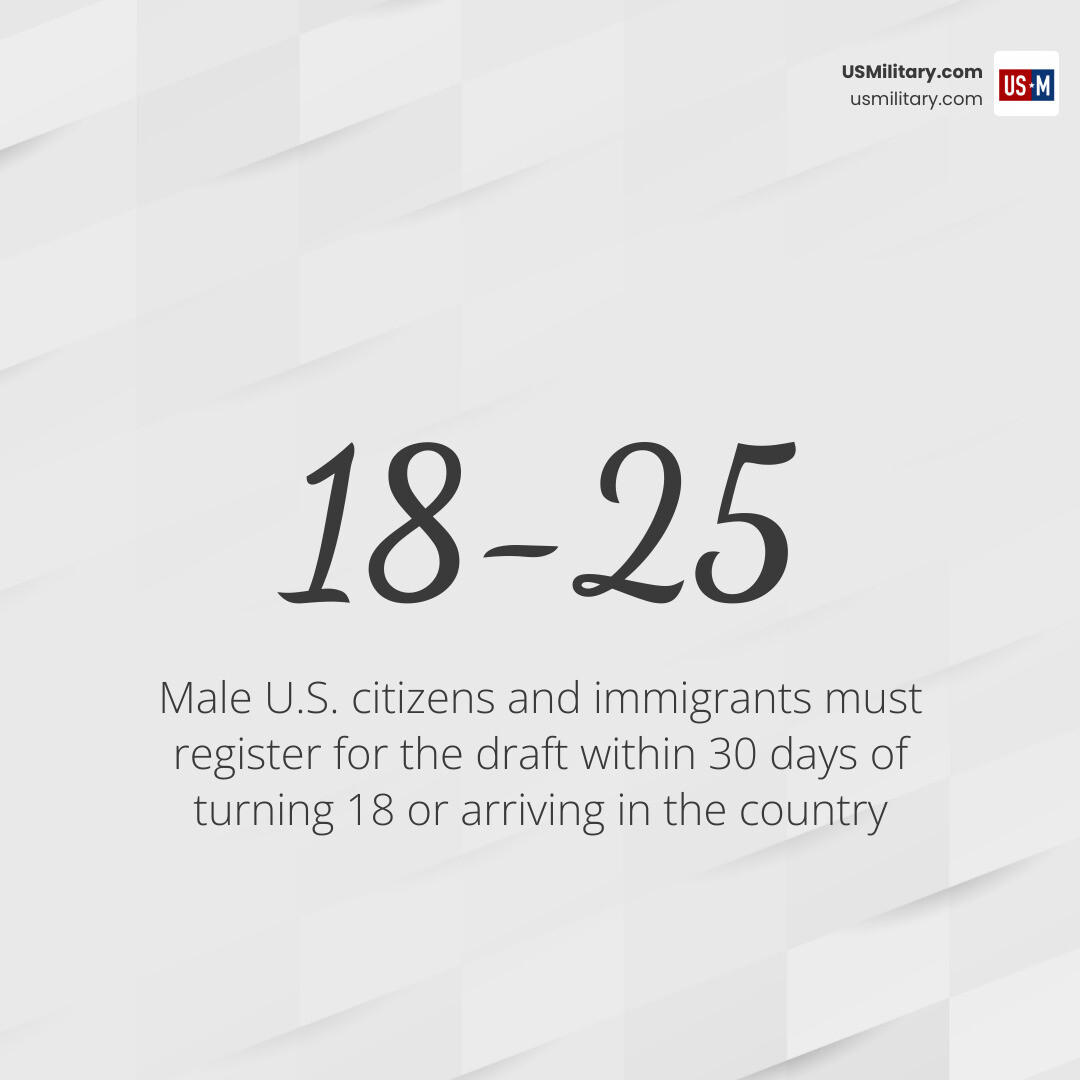
The military age to be drafted in the United States is currently 18 to 25 — and almost every male U.S. citizen or immigrant in that range is required by law to register with the Selective Service System.

Quick answer:
| Who Must Register | Age Range | Deadline |
|---|---|---|
| Male U.S. citizens | 18-25 | Within 30 days of turning 18 |
| Male immigrants (incl. undocumented) | 18-25 | Within 30 days of arrival or 18th birthday |
| Dual nationals | 18-25 | Same as above |
- No active draft exists as of May 2026 — the U.S. military is all-volunteer.
- Registration is still legally required, even without an active draft.
- Starting December 18, 2026, eligible men will be registered automatically using federal databases.
That said, with the U.S. Army raising its enlistment age to 42 in April 2026 and ongoing military tensions abroad, questions about who could be drafted — and when — are suddenly very relevant again.
This guide breaks down exactly what you need to know: who must register, what the penalties are for skipping it, how a draft lottery would actually work, and what exemptions exist.
I’m Larry Fowler, publisher of USMilitary.com since 2007 and a longtime resource for active military, veterans, and families navigating service-related decisions — including the often-misunderstood rules around military age to be drafted. Over nearly two decades, I’ve helped hundreds of thousands of readers cut through confusing military policy and find clear, reliable answers.
Quick military age to be drafted terms:
Current Military Age to be Drafted and Registration Requirements
Understanding the military age to be drafted starts with the Selective Service System (SSS). While we haven’t seen an active draft since 1973, the “machinery” of the draft remains in a state of deep sleep, ready to be awakened by Congress and the President during a national emergency.
Under current federal law, almost all male U.S. citizens and male immigrants living in the U.S. who are between the ages of 18 and 25 must register. This isn’t just a suggestion; it’s a legal requirement. Even if you have a disability, are a conscientious objector, or are a dual national living abroad, the law generally says you must be in the system.
According to Who Needs to Register : Selective Service System, the requirement includes:
- U.S. citizens (both native-born and naturalized).
- Permanent residents (Green Card holders).
- Refugees and asylum seekers.
- Undocumented immigrants.
- Dual nationals, regardless of where they live.
There are very few exceptions. For example, men on active duty do not need to register while they are serving, but if they leave the service before age 26, they must register then. For a deeper look at your specific situation, check out our Detailed guide to military draft status or our breakdown on the Age to be drafted.
The 2026 Shift to Automatic Registration
We are currently approaching a massive shift in how the government handles this process. In December 2026, as part of the National Defense Authorization Act (NDAA), the United States will move to an automatic registration system.
Instead of young men having to remember to visit a post office or fill out a form online within 30 days of their 18th birthday, the Selective Service System will use federal databases—such as those from the Social Security Administration and state DMV records—to automatically enroll eligible individuals. This change aims to save taxpayer dollars and ensure that no one accidentally becomes a “draft dodger” simply by forgetting a form. You can learn more about this transition in our A quick start guide to automatic US draft registration 2026 or follow the latest updates from CNN Politics.
Penalties for Missing the Military Age to be Drafted Window
Failing to register for the draft is a federal felony. While the government hasn’t actually prosecuted anyone for this since 1986, the “soft penalties” can be life-altering. If you miss the window and turn 26 without registering, you lose the ability to fix it.
The legal consequences include:
- Fines: Up to $250,000.
- Prison: Up to 5 years.
- Federal Benefits: Permanent loss of eligibility for federal student aid (FAFSA), which has affected over 1 million men.
- Employment: Ineligibility for federal jobs and many state-level government positions.
- Citizenship: For immigrants, failing to register can create a permanent barrier to U.S. citizenship.
We often get asked, “Can you be drafted age 40?”. The answer for a standard draft is no—the liability ends at 26. However, the consequences of not registering by that age follow you for decades.
How the Draft Lottery and Selection Process Works

If a draft were reinstated, it wouldn’t be a “first come, first served” situation. It would be a highly regulated, random process. The Selective Service System uses a lottery based on birthdays to determine who gets called to serve first.
The process involves two air-filled machines. One contains balls with every possible birth date (366 days, including leap years), and the other contains balls with sequence numbers (1 through 366). If “July 4” is drawn along with “001,” then every 20-year-old male born on July 4 is the very first to be called.
This system was famously used during the Vietnam War. For example, in the 1969 lottery, 195 birth dates were called. By 1971, that number dropped to 95. To see how this would look in a modern context, read How the military draft works 2026 or our general overview of the U.S. military draft.
Order of Call by Military Age to be Drafted
The most important thing to understand about the military age to be drafted is that the “order of call” prioritizes 20-year-olds. The government believes this age group represents the best balance of physical capability and fewer established life responsibilities (like careers or families).
| Priority Group | Age During Lottery Year |
|---|---|
| 1st Priority | 20 years old |
| 2nd Priority | 21 years old |
| 3rd Priority | 22 years old |
| 4th Priority | 23 years old |
| 5th Priority | 24 years old |
| 6th Priority | 25 years old |
| 7th Priority | 19 years old |
| 8th Priority | 18.5 years old |
Once a man reaches his 26th birthday, he is considered “over the age of liability” and is no longer eligible for the standard draft.
Historical Evolution of Conscription Ages
The military age to be drafted has fluctuated wildly throughout American history, usually expanding as wars became more desperate.
- Civil War (1863): The first national draft targeted men ages 20 to 45. Interestingly, you could pay a “substitute” to go in your place—a practice that is definitely not allowed today!
- World War I (1917): Initially, the age was 21 to 30. As the war dragged on, it was expanded to 18 to 45. Nearly 3 million men were inducted during this conflict.
- World War II (1940): This was the largest mobilization in U.S. history. Registration eventually included men from 18 to 64, though only those aged 18 to 38 were typically inducted. Over 10 million men were drafted.
- Vietnam War (1964-1973): The draft age was 18.5 to 26. This era saw massive public pushback, leading to the end of active conscription in January 1973.
For more historical context on how these laws were formed, you can visit Conscription in the United States or see our update on the Military draft 2025.
Exemptions, Deferments, and Conscientious Objection
Just because you are within the military age to be drafted and your number is called doesn’t mean you’ll be sent to boot camp the next day. A draft involves a rigorous evaluation process.
Currently, only about 23% of Americans aged 17 to 24 meet the basic physical, mental, and moral standards for military service without a waiver. If a draft were reinstated, many draftees would likely be disqualified for medical reasons, such as asthma, eyesight issues, or psychological conditions.
Beyond medical issues, there are several types of deferments and exemptions:
- Ministerial Students: Full-time divinity students can receive a deferment.
- Hardship Deferments: If your service would cause extreme hardship to dependents (like an elderly parent or a child with special needs).
- Conscientious Objectors: These are individuals who have deeply held moral, ethical, or religious beliefs against participating in war. If their claim is verified, they may be assigned to non-combatant roles or alternative civilian service.
- Surviving Sons: If you are the only surviving child in a family where a parent or sibling died in military service, you may be exempt.
To learn more about who might be excluded if a conflict arises, see Who will be drafted if WW3 starts.
Frequently Asked Questions about Draft Eligibility
Can women be drafted in 2026?
As of May 2026, the answer is no. The Military Selective Service Act specifically uses the term “male persons.” While women have been eligible for all combat roles since 2013, Congress has not yet changed the law to require them to register for the draft. This has been a topic of debate in the Supreme Court (notably Rostker v. Goldberg), but any change would require a new act of Congress.
Is there a draft currently active in the U.S.?
No. The U.S. has maintained an all-volunteer force since 1973. For a draft to return, the President would have to declare a national emergency, and Congress would have to pass legislation authorizing the induction of soldiers. It is a “break glass in case of emergency” system.
What is the maximum age for the draft?
For the general draft, the maximum age is 25 (you are exempt the day you turn 26). However, there are two important “fine print” exceptions:
- Specialized Drafts: Under the Health Care Personnel Delivery System, the government could theoretically draft medical professionals (doctors, nurses) up to age 54.
- Militia Laws: Under older federal statutes, “able-bodied men” aged 17 to 45 are technically part of the “unorganized militia” and could be called upon in extreme domestic emergencies.
Conclusion
At USMilitary.com, we believe that staying informed is the best way to support our national security and our personal freedom. While the military age to be drafted remains 18 to 25, the upcoming shift to automatic registration in late 2026 marks the biggest change to this system in over 40 years.
The all-volunteer force is the backbone of our military today, but the Selective Service System remains the ultimate insurance policy. Whether you’re curious if Will there be a military draft in 2026 or just wondering Could there be a US military draft in the future, we are here to provide the facts.
For more information, visit our central hub at https://usmilitary.com/what-is-the-us-military-draft/. Knowing your status isn’t just about following the law—it’s about being prepared for whatever the future holds.


