The Logistics of Holiday Feasts: DFACs, Ships, and Combat Outposts
Logistics Behind How Deployed Military Members Celebrate Thanksgiving Away From Home
Deployed military members often celebrate Thanksgiving away from home through shared feasts, unit camaraderie, and family connections. Forward-deployed troops enjoy multi-course holiday meals often served by their commanding officers, participate in base turkey trots and pickup football games during holiday routine downtime, and connect with loved ones through video calls and care packages.
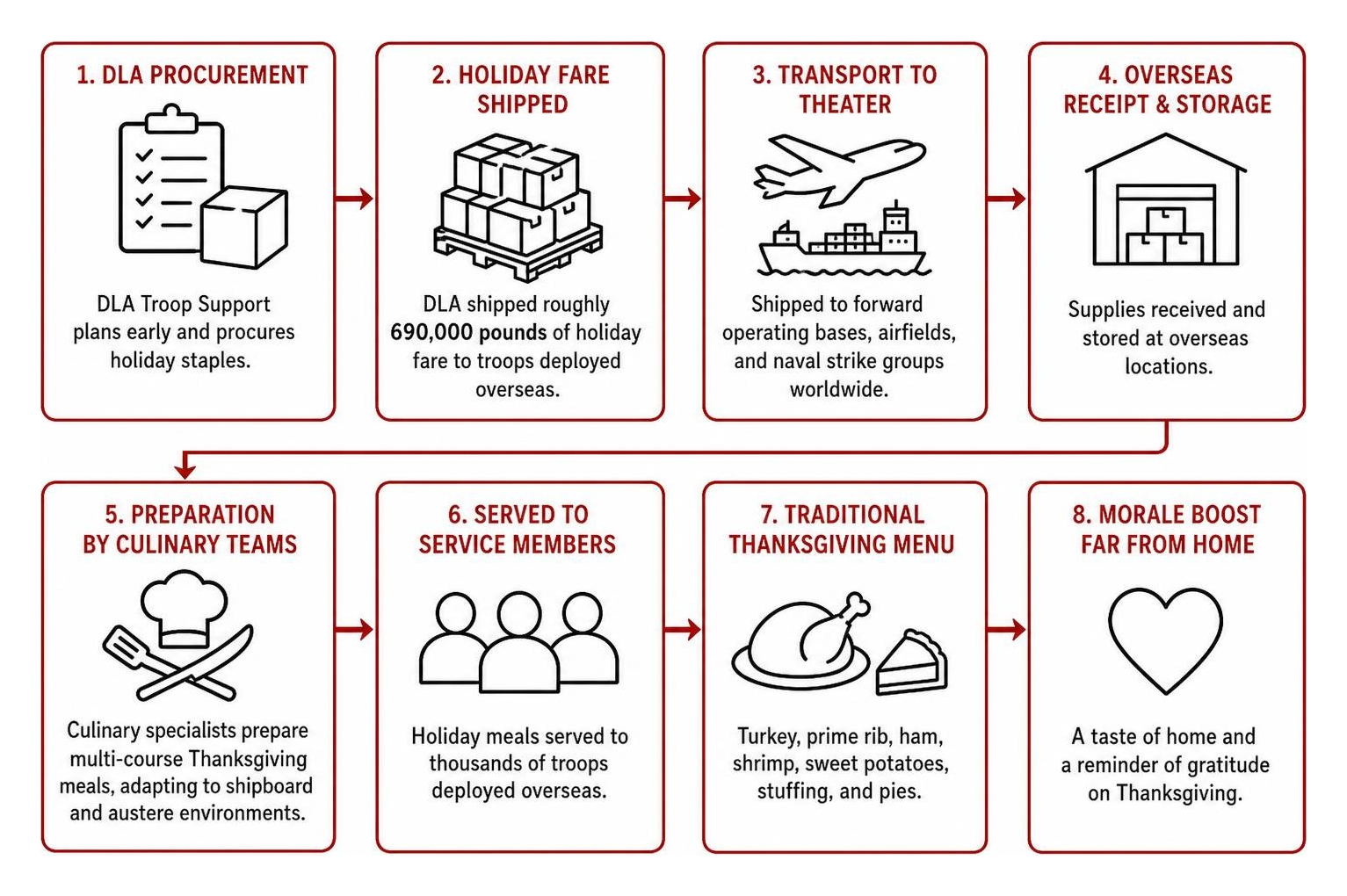
Making this holiday possible overseas starts with one of the most complex supply chain operations in the world. Delivering a hot holiday meal to thousands of troops stationed across the globe requires planning that begins as early as March, with food procurement starting in April. The Defense Logistics Agency (DLA) Troop Support treats this operation as its annual Super Bowl, orchestrating shipments of hundreds of thousands of pounds of traditional holiday staples to forward operating bases, airfields, and naval strike groups.
Recent data shows the massive scale of this effort: the DLA shipped roughly 690,000 pounds of holiday fare to troops deployed overseas. This included:
- 234,903 pounds of turkey: 6,210 whole turkeys (nearly 140,000 pounds) alongside 95,238 pounds of boneless roast turkey.
- 176,791 pounds of beef: A major increase to provide prime rib and steaks.
- 98,091 pounds of ham and 49,055 pounds of shrimp for shrimp cocktails.
- Sweet potato surges: Overseas shipments of sweet potatoes jumped by 800% to meet demand for traditional sides, while orders for packaged desserts decreased by roughly 80% as dining facilities baked their own pies locally.
Tracking current military deployments highlights how critical these supply lines are. Whether personnel are stationed across Europe, throughout the Pacific, or in Middle Eastern operational hubs, the Defense Department holiday logistics ensure service members receive a tangible reminder of home.
Galley Challenges: Shipboard Cooking vs. Austere Forward Operating Bases
Preparing a multi-course holiday meal presents vastly different challenges depending on where a unit is stationed.
Aboard Navy vessels, culinary specialists often feed thousands of sailors while underway. When high seas rock the ship, cooks must physically lash large roasting pans to range tops with wire and ropes to prevent boiling gravy, hot turkeys, and knives from sliding across the galley. Major fleet units rely heavily on advance planning; Navy ships alone accounted for 44,815 pounds of roast turkey, 5,564 pounds of stuffing, 21,906 pounds of sweet potatoes, and 23,678 pounds of pies in recent operational shipments.
At remote combat outposts or austere patrol bases, large industrial kitchens do not exist. Troops stationed downrange may receive insulated container deliveries flown in by helicopter, or they might prepare field tray rations (T-rations) using tent burner units. When transport is delayed due to weather or tactical operations, service members rely on shelf-stable rations, supplementing their Meals, Ready-to-Eat (MREs) with items from family care packages. These contrasts show how deployed military members celebrate Thanksgiving away from home can vary between a ship at sea and a remote outpost.
| Feature | Shipboard Mess Decks (Underway) | Austere Forward Operating Bases (FOBs) |
|---|---|---|
| Kitchen Setup | Full commercial galleys, deep fryers, and steam kettles | Tent burner units, mobile field kitchens, or no kitchen |
| Primary Challenge | Securing hot equipment and heavy pans in rough seas | Tactical security, supply convoy delays, and austere weather |
| Meal Format | Multi-line buffet with carvings, shrimp cocktail, and pies | Hot insulated container drops or supplemented field rations |
| Atmosphere | Mess deck decorations, CCTV football, and holiday routine | Small squad gatherings around tailgate burners or folding tables |
Leadership and Dining Facility Traditions Across the Branches
On Thanksgiving Day, military dining facilities—officially known in the Army as warrior restaurants—transform into festive gathering halls. Culinary specialists work overnight shifts starting at 3:00 AM, carving elaborate ice sculptures, designing cornucopia centerpieces, and competing against rival base dining halls in holiday decoration contests.
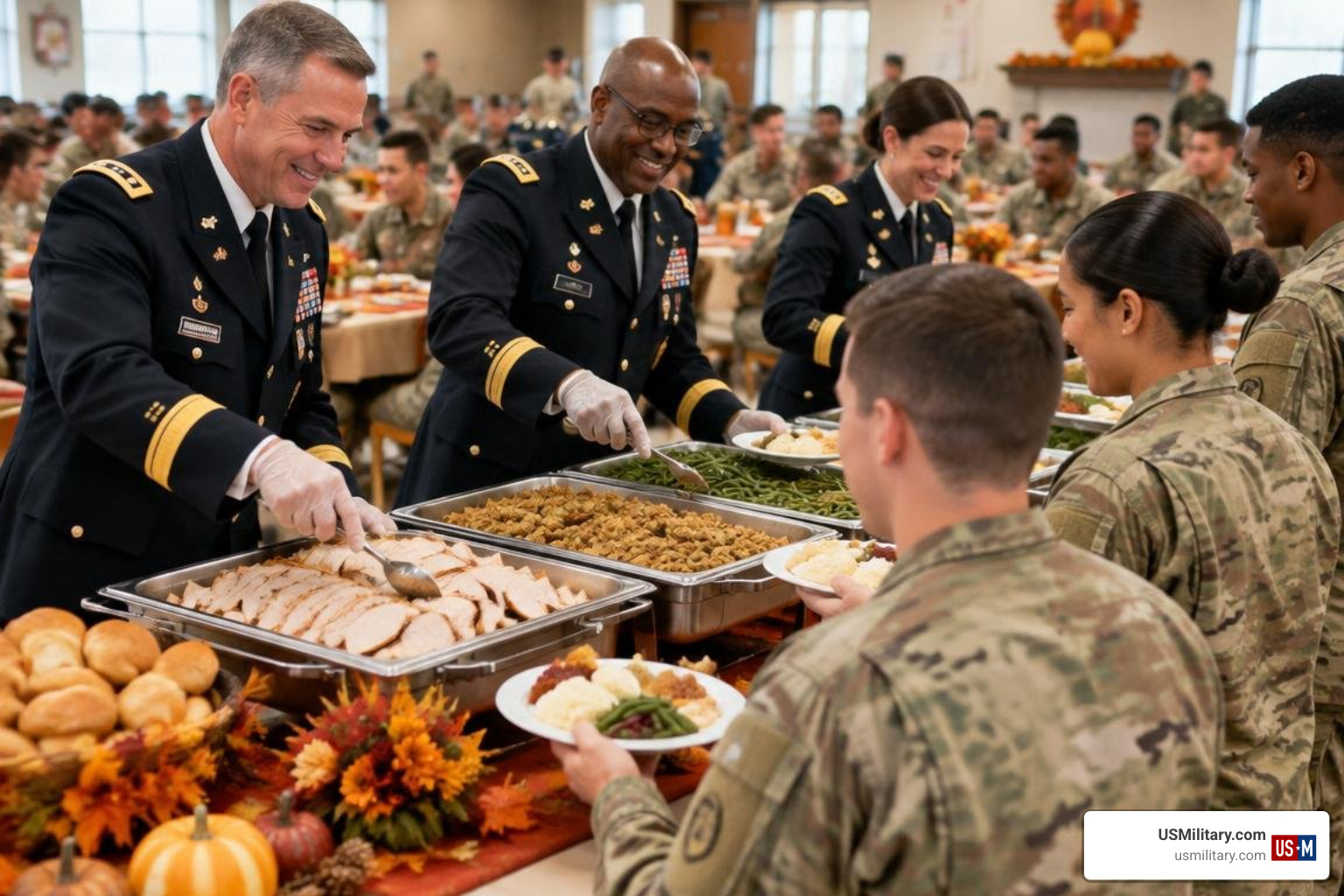
One of the oldest and most respected traditions across all service branches is senior leadership serving the holiday meal. Battalion commanders, command sergeants major, ship captains, and general officers trade their tactical gear for dress uniforms, step behind the serving line, and ladle gravy, carve turkey, and serve portions to junior enlisted troops.
This tradition reinforces servant leadership and gives troops a morale boost. As detailed in a Stars and Stripes report on military leaders serving troops, major installations like Fort Moore (formerly Fort Benning) serve over 13,000 Thanksgiving meals using 15,000 pounds of turkey and 8,000 pounds of stuffing, with drill sergeants setting aside their strict training personas to serve trainees experiencing their first holiday away from home.
At the highest level of government, national leaders participate in this tradition. The President and the Secretary of Defense place annual Thanksgiving phone calls to deployed units on land and at sea, expressing gratitude to service members standing watch thousands of miles from home.
Faith, Fellowship, and Mental Health on the Frontlines
Holidays can intensify feelings of isolation, separation anxiety, and homesickness. Military chaplains play a vital role during Thanksgiving by conducting non-denominational field services, holding prayer breakfasts, and providing an open door for service members struggling with being away from family. Understanding why faith is important during service helps explain how spiritual fellowship builds resilience in stressful operational environments.
Non-commissioned officers and senior enlisted leaders also keep a close eye on their personnel. Back at home stations and overseas barracks, leaders regularly check on unaccompanied service members to ensure no one spends the holiday alone in a barracks room. Strong peer support remains our first line of defense in addressing veteran and service member mental health during high-stress holiday separations.
How Deployed Military Members Celebrate Thanksgiving Away From Home
How Deployed Military Members Celebrate Thanksgiving Away From Home with Unit Traditions
When operational tempo permits, military units observe what the Navy calls “holiday routine”—pausing routine maintenance and non-essential work while maintaining necessary security watches. Units use this downtime to create their own holiday customs, blending military life with classic American holiday traditions.
✉ Get updates like this in your inbox
Weekly VA benefit changes, pay updates, and money tips for service members, veterans, and military families. Free, no spam.
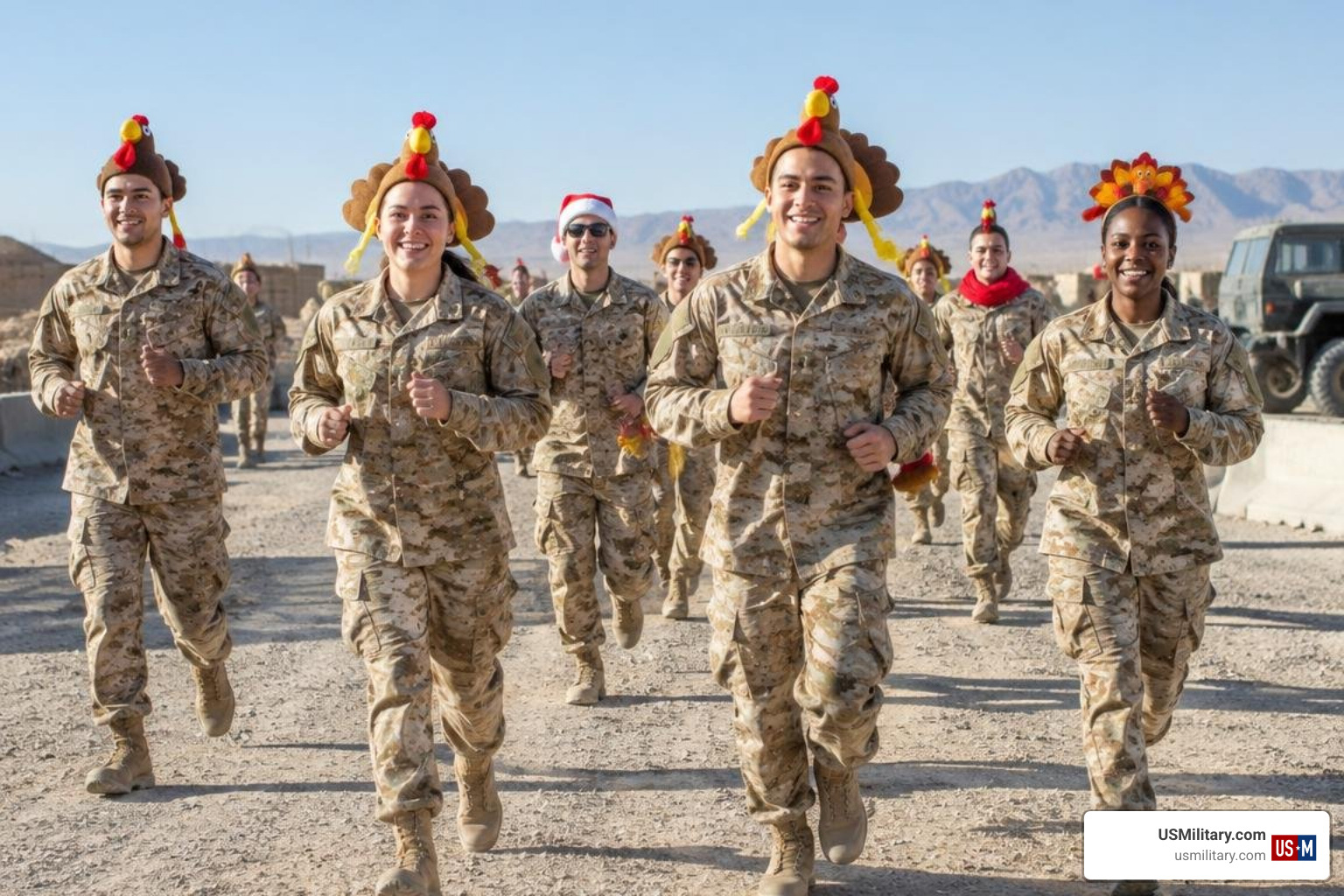
Popular unit traditions include:
- Deployment Turkey Trots: Bases and airfields organize early-morning 5K fun runs, with troops running in running gear, costume pieces, or full body armor.
- Dust-Bowl Touch Football: Platoon-versus-platoon flag and touch football games on gravel lots, flight decks, or desert fields.
- Improvised Rations Baking: Troops at remote sites pool dessert items from MREs—combining pound cakes, chocolate dairy shakes, and peanut butter packets—to create makeshift holiday cakes.
- Tactical Holiday Lighting: Service members string chemical glow sticks (chemlights) around tactical operations centers, tents, and bunks to bring festive color to austere outposts.
Unforgettable Veteran Memories: From Typhoon Sorties to Desert Dust Storms
Ask any veteran about their deployed Thanksgivings, and you will rarely hear about a standard turkey dinner. Unpredictable operational demands create stories that stay with service members for life.
Veterans recall experiences such as:
- Shipboard Musters in Subic Bay: A Navy crew restricted to their vessel following emergency typhoon sorties turning a canceled port visit into a high-spirited mess deck feast.
- Disco DFACs in the Middle East: An Army unit in Jordan finding their dining facility converted into a full disco-themed hall complete with local specialty meats alongside roasted turkey.
- Dust Storm Dressing: Troops at training centers and desert outposts having fifty-knot winds blow fine sand directly into their trays, eating grit-infused stuffing with a laugh alongside their squad.
- Host-Nation Feasts: Sharing freshly roasted goat with allied host-nation soldiers, echoing the cross-cultural sharing seen in how troops celebrate overseas holidays.
Bridging the Distance: Communication, Care Packages, and the Homefront
Care Packages, USO Centers, and Virtual Connections
Maintaining contact with family is essential for troop morale. The United Service Organizations (USO) operates more than 250 centers worldwide, providing free high-speed Wi-Fi, computer labs, and private telephone stations. Onboard naval vessels, dedicated call booths allow sailors private moments to speak with their spouses and children.
Programs like the USO Reading Program let deployed parents record themselves reading bedtime stories, which are mailed home on video alongside physical books for their kids.
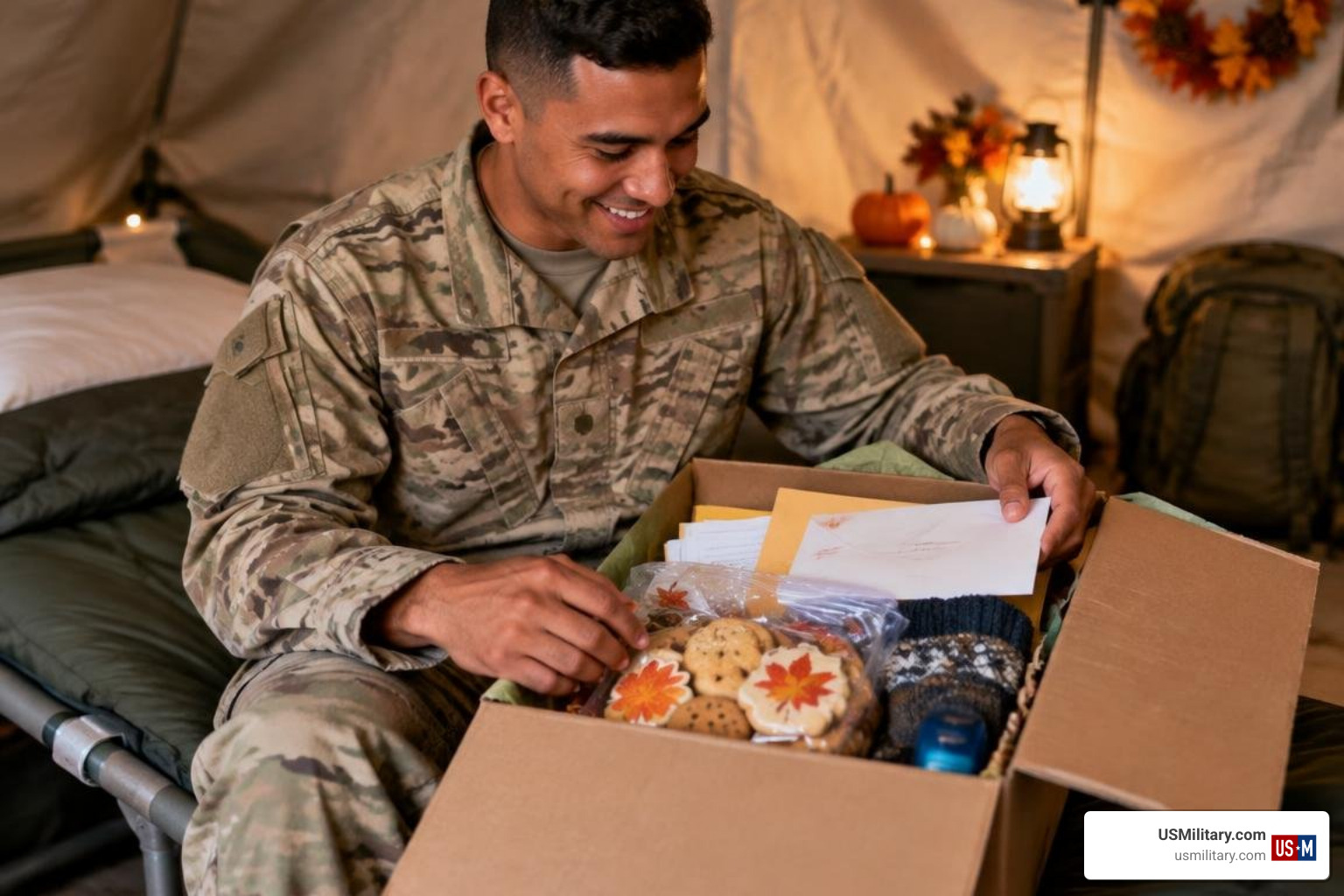
Care packages sent through military postal channels (APO/FPO/DPO) bring a personal touch to deployment. Packages packed with holiday cookies, handwritten letters from school groups, seasonings, and personal care items help bridge the distance. First-hand USO reflections on holiday deployments highlight how receiving these parcels reminds forward-deployed troops that they have not been forgotten.
How Military Spouses and Families Adapt at Home
Back on the home front, military spouses manage the holiday while shouldering solo parenting, work responsibilities, and emotional strain. The military community acts as a surrogate family. Spouses frequently organize neighborhood potlucks in base housing, combining resources to ensure no military family eats alone.
Families adapt their holiday customs in practical ways:
- Rescheduling Thanksgiving: Many families hold their formal holiday feast weeks earlier or later to coincide with pre-deployment leaves or post-deployment homecomings.
- Virtual Dinner Guests: Setting a laptop or tablet at the head of the dinner table so the deployed parent can join the family blessing via video call.
- Leaning on Community Programs: Utilizing initiatives like Operation Homefront’s Holiday Meals for Military, which has distributed hundreds of thousands of holiday meal kits to junior enlisted families across the country.
Navigating these challenges is easier when families make full use of their available military spouse support networks and community resources.
Frequently Asked Questions About Military Thanksgiving Celebrations
What traditional food is provided to deployed service members on Thanksgiving?
The Defense Logistics Agency supplies dining facilities and galleys with whole turkeys, roasted turkey breasts, prime rib, baked ham, shrimp cocktail, mashed potatoes, sweet potatoes, stuffing, gravy, cranberry sauce, eggnog, and an assortment of pies including pumpkin, pecan, and apple.
Do deployed troops get time off on Thanksgiving Day?
Operational requirements always come first. Guard mounts, tactical patrols, flight operations, and shipboard watches run 24 hours a day, 365 days a year. However, non-essential duties are typically suspended under a holiday routine, allowing off-watch personnel time to eat, rest, call home, and participate in recreational activities.
How do military families celebrate when a loved one is deployed?
Families frequently host communal Friendsgiving potlucks with other military families, send holiday care packages, connect through scheduled video calls across time zones, and often postpone their formal Thanksgiving dinner to celebrate together when the service member returns home.
Conclusion
Thanksgiving on deployment highlights the resilience, adaptability, and close bond of our armed forces. While nothing replaces sitting at home with family, the shared experience of eating a hot holiday meal in a desert mess hall or on a ship’s mess deck builds lifelong camaraderie.
As we look at how the quality of active military life continues to evolve, improved satellite communications, rapid logistics, and strong community support programs make holiday separations more manageable.
To explore service options, military pay, and career paths across every branch, consult our complete guide to branches of the military. For in-depth resources on VA loans, disability ratings, and active-duty benefits, visit USMilitary.com for reliable, unbiased guidance. You can also explore inspirational stories of service and resilience in resources like Dare to Live Greatly.
Free for Service Members & Veterans
Get the military benefits intel no one tells you about.
Weekly updates on VA benefits, pay changes, and money tips — free for service members and veterans.
No spam. Unsubscribe anytime. Your info is never shared.



Leave a Reply