The PACT Act Changed Everything for Toxic-Exposed Veterans — Here’s What You Need to Know in 2026

The PACT Act explained: toxic exposure VA benefits for veterans in 2026 comes down to one core idea — if you were exposed to burn pits, Agent Orange, contaminated water, or radiation during military service, the government has removed most of the barriers that once blocked your benefits.
Here is a quick summary of what the PACT Act does:
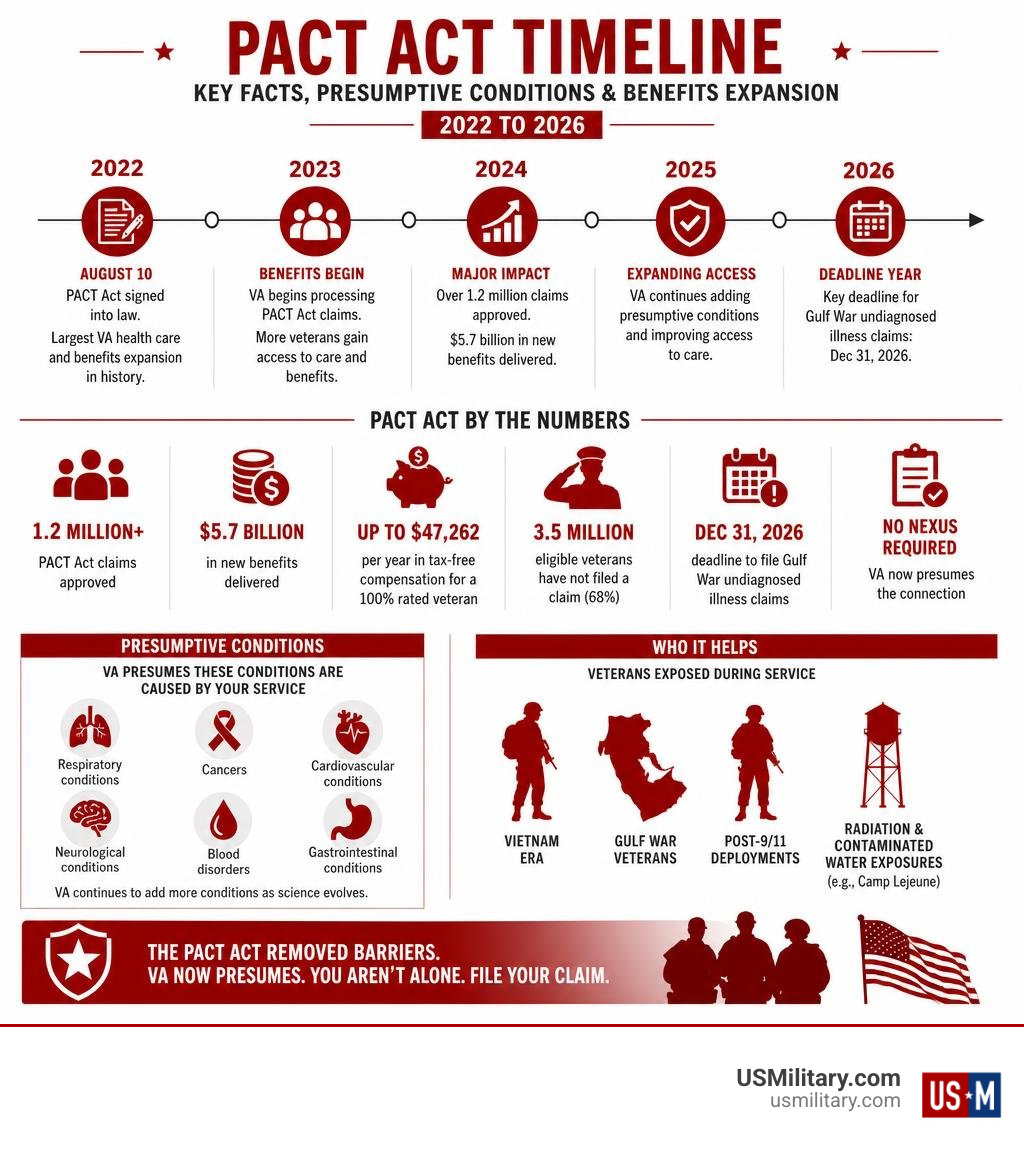
- What it is: The Sergeant First Class Heath Robinson Honoring our Promise to Address Comprehensive Toxics Act, signed August 10, 2022 — the largest VA health care and benefits expansion in history
- Who it helps: Veterans from the Vietnam era, Gulf War, post-9/11 deployments, and those exposed to radiation or contaminated water at places like Camp Lejeune
- What changed: VA now presumes that certain conditions are caused by your service — you no longer have to prove the link yourself
- How many approved: Over 1.2 million PACT Act claims approved, delivering $5.7 billion in new benefits
- What’s at stake: Up to $47,262 per year in tax-free compensation for a 100% rated veteran
- Key 2026 deadline: Gulf War undiagnosed illness claims must be filed by December 31, 2026
- Who hasn’t filed yet: An estimated 3.5 million eligible veterans — 68% — have still not submitted a claim
The single biggest shift the PACT Act made is removing the nexus requirement for presumptive conditions. Before, you had to prove your illness was caused by your service. Now, if you served in a qualifying location and have a qualifying diagnosis, VA assumes the connection automatically.
I’m Larry Fowler, publisher of USMilitary.com since 2007, and I’ve spent nearly two decades helping veterans and active-duty service members navigate VA benefits — including tracking every major development in the PACT Act explained: toxic exposure VA benefits for veterans space since the law was signed. In this guide, I’ll walk you through exactly who qualifies, what conditions are covered, key deadlines, and how to file — step by step.
PACT Act explained: toxic exposure VA benefits for veterans (2026) basics:
- VA TDIU Explained: Eligibility, Rates, & How To File in 2026
- Top 15 VA Benefits That Vets Most Often Forget
- navigating potential 2026 va disability changes what to know
PACT Act Explained: Toxic Exposure VA Benefits for Veterans (2026)
To understand why this law is such a massive deal, we have to look at how the VA used to handle toxic exposure claims. Historically, if you returned from Iraq with a rare lung disease or chronic bronchitis, the burden of proof was entirely on you. You had to provide a “medical nexus”—a written statement from a doctor proving that the chemical fumes or black smoke from a burn pit directly caused your illness.
For hundreds of thousands of veterans, this was an impossible hurdle. Doctors were hesitant to make definitive claims, military records of burn pit locations were spotty, and many claims were flat-out denied.
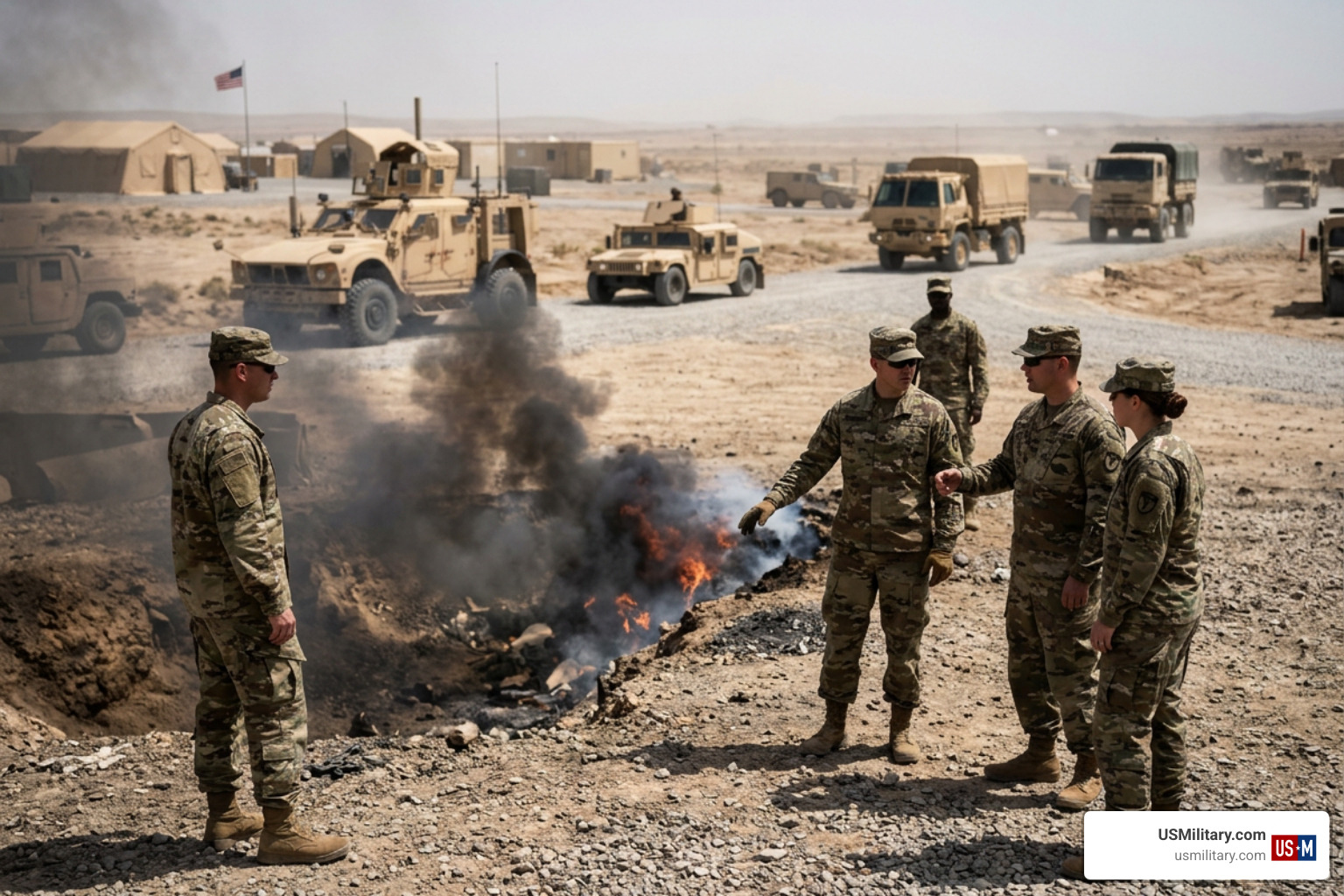
The PACT Act—named in honor of Sergeant First Class Heath Robinson, a combat medic who died of a rare autoimmune disease and lung cancer caused by burn pit exposure in Iraq—completely flipped the script.
Instead of forcing you to prove your service caused your sickness, the VA now uses presumptive conditions. This means if you served in a designated location during a specific timeframe and developed one of the conditions on the official list, the VA legally assumes your military service is the cause. No nexus letter required.
Additionally, the PACT Act integrated mandatory toxic exposure screenings into the standard VA healthcare system. Every single veteran enrolled in VA healthcare is now screened at least once every five years. The screening takes only five to ten minutes and helps identify potential exposure-related issues early, ensuring you get the clinical care and benefits you earned.
For more details on how these rules apply directly to your compensation, check out The PACT Act And Your VA Benefits | Veterans Affairs.
Who Qualifies Under the PACT Act Explained: Toxic Exposure VA Benefits for Veterans (2026)
Eligibility under the PACT Act is broken down into specific eras, locations, and exposure types. If you served in any of the following cohorts, you are highly likely to qualify for expanded healthcare and disability benefits:
- Gulf War and Post-9/11 Veterans: Anyone who served in active military duty in specified countries in Southwest Asia on or after August 2, 1990, or deployed in support of post-9/11 operations (including Operation Iraqi Freedom, Operation Enduring Freedom, and Operation New Dawn).
- Vietnam Era Veterans: Veterans who served in Vietnam, or in specific offshore waters, as well as newly added presumptive locations where tactical herbicides like Agent Orange were tested, stored, or used.
- Radiation-Exposed Veterans: Veterans who participated in specific radiation-risk activities or response efforts, including cleanups that were previously unrecognized by the VA.
To ensure no veteran is left behind, the VA established three distinct enrollment cohorts for healthcare. This includes veterans who participated in a Toxic Exposure Risk Activity (TERA), those who served in specific combat locations, and those deployed in support of named overseas contingency operations. Under these rules, qualifying veterans are assigned to Priority Group 6, giving them faster access to medical care.
To keep up with how these eligibility rules are shifting this year, read The Complete Guide to Navigating 2026 VA Disability Changes.
New Presumptive Conditions and Locations Added
The list of presumptive conditions added by the PACT Act is extensive, spanning more than 20 new categories of cancers and chronic illnesses.
For Gulf War and Post-9/11 Veterans (Burn Pit and Airborne Hazards):
- Cancers: Brain cancer, gastrointestinal cancer of any type, glioblastoma, head cancer of any type, kidney cancer, lymphatic cancer, lymphoma, melanoma, neck cancer, pancreatic cancer, reproductive cancers of any type, and respiratory (lung, bronchus, trachea, larynx) cancers.
- Chronic Illnesses: Asthma diagnosed after service, chronic bronchitis, chronic obstructive pulmonary disease (COPD), chronic rhinitis, chronic sinusitis, constrictive bronchiolitis, emphysema, granulomatous disease, interstitial lung disease, pleuritis, pulmonary fibrosis, and sarcoidosis.
For Vietnam Era Veterans (Agent Orange Exposure):
The PACT Act added two major conditions to the Agent Orange presumptive list:
- Hypertension (high blood pressure)
- Monoclonal Gammopathy of Undetermined Significance (MGUS)
It also expanded the geographic footprint for Agent Orange exposure. The VA now presumes exposure if you served in:
- U.S. or Royal Thai military bases in Thailand (any base between January 9, 1962, and May 7, 1975)
- Laos (between December 1, 1965, and September 30, 1969)
- Cambodia at Mimot or Krek, Kampong Cham Province (between April 16, 1969, and April 30, 1969)
- Guam or American Samoa, or in their territorial waters (between January 9, 1962, and July 31, 1980)
- Johnston Atoll or on a ship that visited Johnston Atoll (between January 1, 1972, and September 30, 1977)
For Radiation-Exposed Veterans:
The law officially recognizes three major cleanup and response efforts as radiation-risk activities:
- The cleanup of Enewetak Atoll (from January 1, 1977, through December 31, 1980)
- The response to the B-52 crash and cleanup in Palomares, Spain (from January 17, 1966, through March 31, 1967)
- The response to the B-52 fire and cleanup at Thule Air Force Base, Greenland (from January 21, 1968, through September 13, 1968)
To review the full, official list of conditions and see if your medical diagnosis is covered, visit VA PACT Act Presumptive Conditions.
Camp Lejeune Water Contamination and Lawsuits
A unique and highly significant section of the PACT Act is the Camp Lejeune Justice Act (CLJA). For decades, veterans, their family members, and civilian workers who lived or worked at Marine Corps Base Camp Lejeune, North Carolina, drank and bathed in water contaminated with highly toxic chemicals, including trichloroethylene (TCE), tetrachloroethylene (PCE), benzene, and vinyl chloride.
While the VA has offered disability compensation for certain Camp Lejeune-related illnesses for years, the CLJA opened an entirely new legal avenue. This law waives federal government immunity, allowing individuals exposed to the contaminated water between August 1, 1953, and December 31, 1987, for at least 30 days to file federal civil lawsuits for damages.
This is a separate process from VA disability claims. Filing a lawsuit under the Camp Lejeune Justice Act does not affect your VA disability rating or your eligibility for VA healthcare. However, if you win a settlement or court award through the CLJA, the government may offset the award by the amount of VA benefits you have received for the same condition.
If you or a loved one were stationed at Camp Lejeune during this 34-year window, it is vital to understand both your healthcare options and your legal rights. For official details on how the VA handles health benefits for these veterans, see the VA Camp Lejeune Water Contamination Information.
Key Deadlines, Refiling Denied Claims, and Secondary Conditions
When it comes to securing your benefits, timing is everything. While the PACT Act itself does not have a general expiration date for most claims, there is a critical deadline rapidly approaching for Gulf War veterans.
The deadline for filing a claim for Gulf War undiagnosed illnesses or medically unexplained chronic multisymptom illnesses (such as chronic fatigue syndrome, fibromyalgia, and functional gastrointestinal disorders) is December 31, 2026. If you served in the Gulf War era and suffer from these chronic, unexplained symptoms, you must submit your claim or an Intent to File before this date to guarantee your eligibility under these specific rules.
What If Your Claim Was Previously Denied?
One of the most powerful aspects of the PACT Act is that it allows veterans who were previously denied benefits for a toxic exposure condition to refile. If you filed a claim years ago for asthma, chronic bronchitis, or a covered cancer and were turned down because you couldn’t prove a service connection, you can now submit a Supplemental Claim (using VA Form 20-0995).
Because the law has changed, the VA will review your case under the new presumptive guidelines. If approved, your effective date—and your retroactive back pay—could be established back to the date the PACT Act was enacted, or even the date of your original claim in some circumstances.
The Power of Secondary Conditions
Many veterans focus only on primary presumptive conditions, but the real key to maximizing your rating often lies in secondary conditions. A secondary condition is an illness or injury that was caused or aggravated by an already service-connected primary condition.
For example, if you are granted a service connection for chronic sinusitis or rhinitis under the PACT Act, you may subsequently develop:
- Sleep Apnea: Frequently triggered or worsened by chronic upper airway obstruction.
- Gastroesophageal Reflux Disease (GERD): Often aggravated by the medications or breathing difficulties associated with respiratory illnesses.
- Depression or Anxiety: Arising from dealing with chronic, painful respiratory issues or cancer treatments.
By linking these secondary conditions to your primary PACT Act presumptive condition, you can significantly increase your overall combined disability rating. To learn more about how to navigate these strategic changes in 2026, take a look at the 2026 VA Disability Changes Guide.
Maximizing Your 2026 VA Disability Compensation
Because VA disability compensation is completely tax-free, securing the correct rating percentage is life-changing. In 2026, VA disability rates reflect a Cost-of-Living Adjustment (COLA) increase, making your benefits more valuable than ever.
To give you an idea of what is available, here is a breakdown of the standard 2026 VA disability compensation rates for a single veteran with no dependents, compared to a veteran with a spouse:
| Disability Rating | Monthly Rate (Veteran Alone) | Monthly Rate (With Spouse) |
|---|---|---|
| 10% | $171.23 | $171.23 |
| 30% | $524.31 | $586.31 |
| 50% | $1,041.82 | $1,145.82 |
| 70% | $1,716.28 | $1,861.28 |
| 100% | $3,938.58 | $4,158.17 |
Note: Rates are rounded estimates based on 2026 COLA figures.
If you qualify for multiple presumptive conditions—such as 60% for a respiratory condition and 40% for a cardiovascular issue—the VA does not simply add those numbers together to get 100%. Instead, they use “VA Math,” which calculates your rating based on your remaining “whole person” efficiency.
Because of this complex math, filing for secondary conditions and ensuring every single symptom is documented is critical to pushing your combined rating closer to that 100% mark.
Furthermore, successful PACT Act claims often result in substantial retroactive payments (back pay). Because back pay is calculated from your effective date (which can be backdated to August 2022 if you filed within the first year of the law, or to the date you submitted your Intent to File), average PACT Act back pay windfalls range from $18,000 to $45,000.
To check the exact payment tables and dependency additions for this year, read VA Disability Rates for 2026.
How to File a Claim Under the PACT Act Explained: Toxic Exposure VA Benefits for Veterans (2026)
Filing a claim might feel overwhelming, but we can break it down into a simple, three-step process:
- Submit an Intent to File immediately: Even if you don’t have all your medical records ready, submit an Intent to File (VA Form 21-0966). This “locks in” your effective date. If your claim is eventually approved, your back pay will be calculated from the day you submitted this form, giving you up to a year to gather your evidence.
- Gather your evidence: You will need your military discharge papers (DD-214) showing service in a qualifying location, and medical documentation showing a current diagnosis of a covered presumptive condition.
- Submit the correct forms: If this is a brand-new claim, use VA Form 21-526EZ. If you are refiling for a condition that was previously denied, use VA Form 20-0995 for a Supplemental Claim.
Once your claim is submitted, the VA will likely schedule you for a Compensation and Pension (C&P) exam. Be honest, explain your symptoms on your absolute worst days, and do not try to “tough it out” during the physical assessments.
For a comprehensive walkthrough of the application steps, check out How to Request VA Disability Compensation.
Frequently Asked Questions about PACT Act Benefits
Does the PACT Act automatically grant benefits without filing a claim?
No. While the PACT Act makes it much easier to get approved by establishing presumptive service connections, the VA will not automatically apply these benefits to your account. You must actively file a new disability claim or submit a Supplemental Claim for a previously denied condition to receive compensation and healthcare enrollment.
What if my toxic exposure condition is not on the presumptive list?
If you have an illness you believe was caused by toxic exposure during your service, but it is not on the presumptive list, you can still file a claim. However, you will have to file under a direct service connection pathway. This means you must provide a medical nexus letter from a doctor linking your condition to your service. Under Section 902 of the PACT Act, the VA is also legally required to regularly review new scientific evidence and expand the presumptive list over time.
How long does it take to process a PACT Act claim in 2026?
Because the VA has hired thousands of new claims processors and streamlined the presumptive workflow, PACT Act claims are currently being processed roughly 65% faster than traditional claims. A straightforward presumptive claim with complete medical evidence is typically decided within 90 to 125 days. In addition, the VA prioritizes claims for veterans who are terminally ill, homeless, or experiencing extreme financial hardship.
Conclusion
The PACT Act is a historic victory for the veteran community, but it has also unfortunately attracted predatory organizations and dishonest “claims consultants” looking to take a cut of your hard-earned back pay.
As a general rule, never pay an unaccredited company or attorney to file an initial VA claim. The law prohibits unaccredited individuals from charging fees to assist with initial claims.
Instead, always use free, accredited resources. Veterans Service Organizations (VSOs) like the VFW, DAV, and American Legion have trained, accredited Service Officers who will help you gather evidence, fill out your paperwork, and submit your PACT Act claim completely free of charge.
At USMilitary.com, we are dedicated to helping you claim every single benefit you earned through your service. Don’t let your benefits sit on the table. Submit your Intent to File today, connect with an accredited VSO, and get the compensation and healthcare you deserve.
For more guides on military life, career paths, and financial benefits, visit USMilitary.com or explore our direct resources at Explore Military Benefits.
Free for Service Members & Veterans
Get the military benefits intel no one tells you about.
Weekly updates on VA benefits, pay changes, and money tips — free for service members and veterans.
No spam. Unsubscribe anytime. Your info is never shared.


