Discover if 2027 Will Be a Good Year to Buy a Home With a VA Loan!

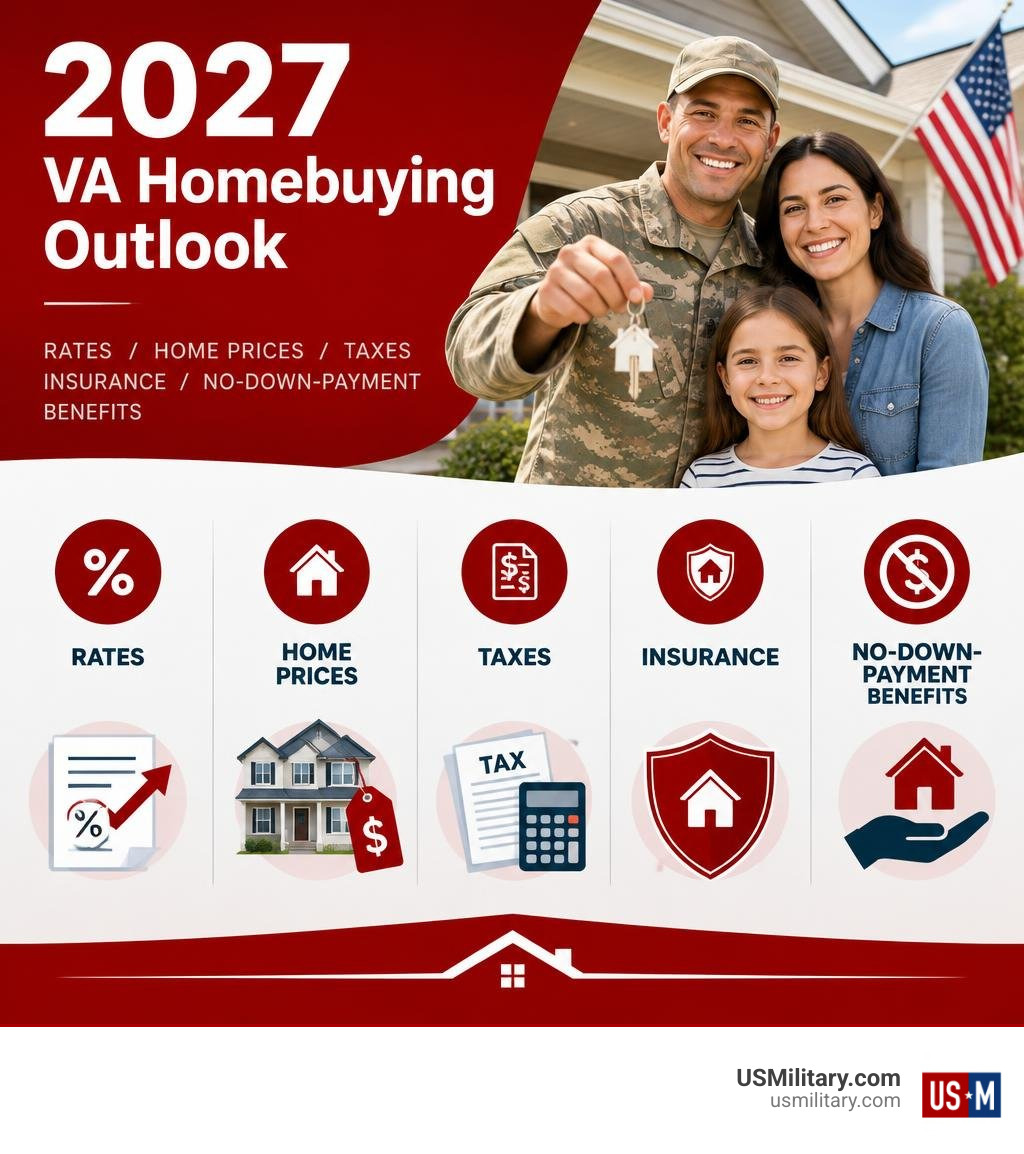
2027 could be a good year for veterans to buy a home, but the answer depends on the payment they can afford, not a predicted interest rate. VA loans can offer no down payment and no monthly mortgage insurance. Yet home prices, taxes, insurance, and closing costs still matter. As of November 2026, no one can know what VA mortgage rates will be throughout 2027. Compare offers from several lenders and make sure the payment works without counting on a future refinance.
I’m Larry Fowler, a Navy veteran, BUD/S Class 89 graduate, and publisher of military benefits guidance since 2007. In VA Home Loan Rates: Will 2027 Be A Good Year For Veterans To Purchase A Home, I’ll focus on the costs and choices veterans can check before they buy.
Key VA home loan terms to know:
- VA loan entitlement and how much the vA will guarantee, differences between basic, bonus, and partial entitlement
- Veterans United Home Loan Review
- best va home loan lenders
How VA Home Loan Rates May Affect 2027 Buyers
A common question for prospective buyers is, “Will 2027 be a good year for veterans to purchase a home with VA home loan rates?” Evaluating the housing market requires a firm grasp of macroeconomic factors. Mortgage rates do not move in a vacuum; they track broader bond market trends, specifically 10-year Treasury yields. When inflation cools and economic growth stabilizes, bond yields drop, pulling long-term mortgage interest rates down with them.

The Federal Reserve directly influences short-term borrowing costs via the federal funds rate. While the Fed does not set mortgage rates directly, its policy decisions heavily steer lender expectations and secondary mortgage market pricing. As we head into 2027, stabilizing consumer price inflation and balanced labor markets point toward steady, sustainable lending conditions.
VA Loan Rates in a Shifting Market
Looking at historical 30-year fixed rate mortgage data, VA rates have cycled from historic pandemic lows near 2.35% up into the 6.50% to 7.00% range in late 2026. For a $350,000 mortgage, a 1% shift in interest rates changes your monthly principal and interest payment by roughly $225 per month, totaling more than $80,000 in interest over the life of a 30-year loan.
Timing the absolute bottom of an interest rate cycle is nearly impossible. Instead, focus on locking your rate once you have an executed purchase contract. Many lenders offer 30-day to 60-day rate locks, often paired with float-down options that protect your payment if market rates decrease before closing.
How VA Mortgage Rates Compare to Conventional and FHA Loans
VA loans consistently offer a significant pricing advantage over conventional and FHA mortgages. Because the Department of Veterans Affairs guarantees a portion of every loan against default, lenders absorb far less risk and pass those savings to military borrowers through lower base rates.
| Loan Type | Typical Down Payment | Monthly Mortgage Insurance | Benchmark Rate Range (Late 2026) |
|---|---|---|---|
| VA Loan | 0% | None ($0) | 6.25% – 6.75% |
| Conventional Loan | 3% – 20% | Required if under 20% down (PMI) | 6.75% – 7.50% |
| FHA Loan | 3.5% | Mandatory upfront + monthly MIP | 6.50% – 7.00% |
The complete absence of monthly private mortgage insurance (PMI) saves military buyers anywhere from $150 to $350 every month compared to low-down-payment conventional loans. Working with the best VA loan lenders ensures you secure transparent terms without paying unnecessary origination fees.
VA Home Loan Eligibility, Entitlement, and 2027 Loan Limits
The VA loan guaranty program has backed more than 29 million homes since 1944. Understanding your service qualifications and entitlement enables you to leverage this earned benefit effectively.

Qualifying Service Requirements and Obtaining Your COE
To qualify for a VA-backed loan, you must meet minimum active-duty or reserve service benchmarks:
- Active Duty (Wartime / Current Era): At least 90 continuous days of service.
- Veterans (Peacetime Era): At least 181 continuous days of active-duty service.
- National Guard & Selected Reserve: At least 6 creditable years of service, or 90 days of active-duty service under Title 10 or Title 32 orders.
- Surviving Spouses: Unremarried spouses of service members who died in the line of duty or from service-connected disabilities.
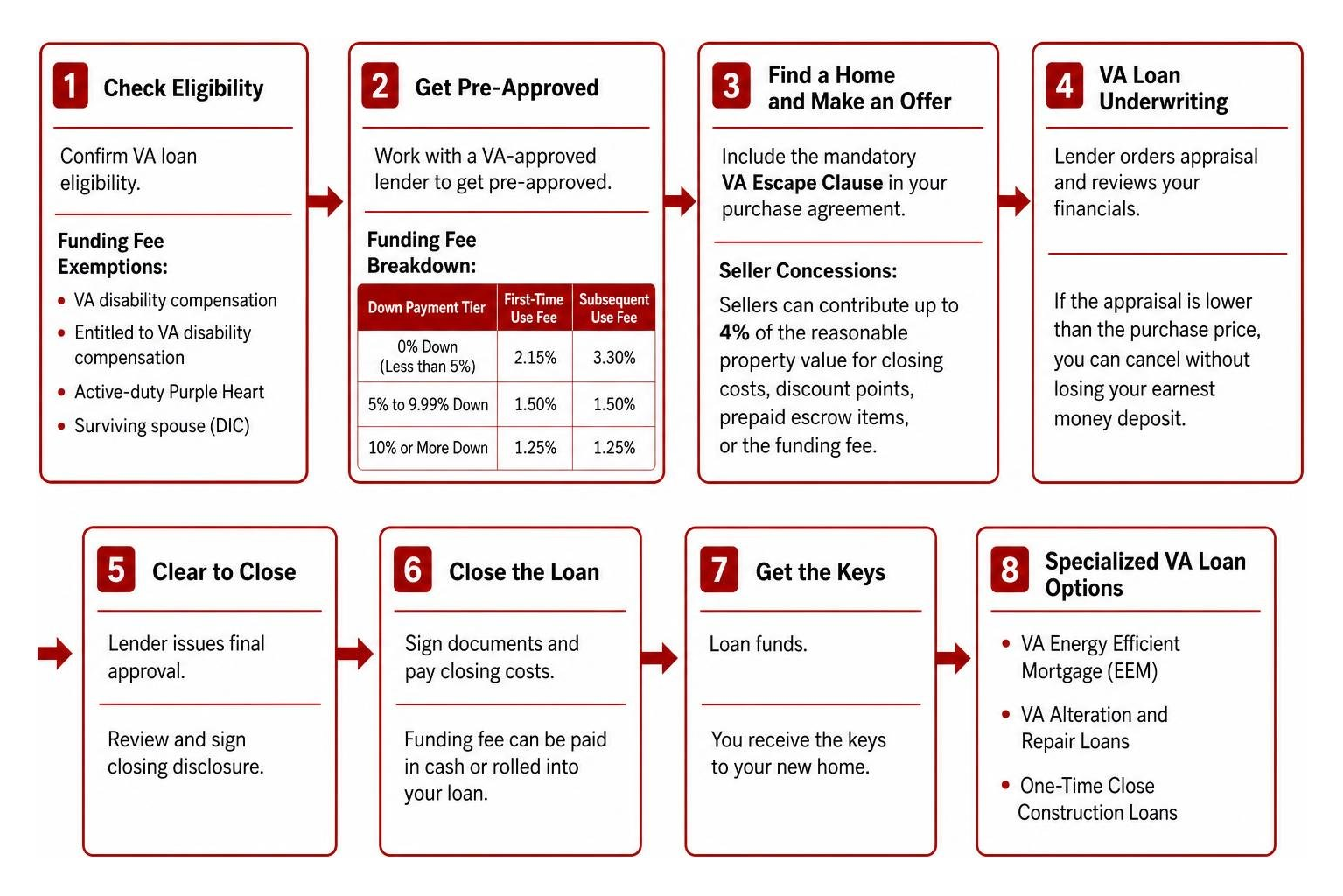
You establish proof of eligibility through a Certificate of Eligibility (COE). Veterans can retrieve this document using their DD-214 through the VA portal or have an approved lender pull it electronically. Reviewing our guides on understanding your VA home loan eligibility and applying for a VA loan in five steps will keep your application moving smoothly.
✉ Get updates like this in your inbox
Weekly VA benefit changes, pay updates, and money tips for service members, veterans, and military families. Free, no spam.
No-Down-Payment Rules, Full Entitlement, and Loan Reuse
Since the passage of the Blue Water Navy Vietnam Veterans Act, statutory county loan limits no longer apply to borrowers with full entitlement. This means you can purchase a home at any price with $0 down payment, provided your income, credit, and residual income meet underwriting standards.
If you have partial entitlement—because you currently own a home financed with a VA loan or previously defaulted—county conforming loan limits determine how much you can borrow without a down payment. You can also restore your full entitlement once a previous VA loan is paid in full and the property is sold, making this a reusable lifetime benefit. Learn more from our comprehensive VA loan entitlement breakdown.
Understanding the 2027 VA Funding Fee and Closing Cost Protections
The VA funding fee is a one-time federal charge mandated by Congress that enables the loan program to operate without requiring taxpayer subsidies. This fee can be paid in cash at closing or rolled directly into your principal balance. According to official VA home loan guidelines, borrowers who itemize deductions may also deduct this fee on their federal income taxes.
Funding Fee Breakdown and Disability Exemptions
The funding fee rate varies based on whether you have used the benefit before and how much cash you put down:
| Down Payment Tier | First-Time Use Fee | Subsequent Use Fee |
|---|---|---|
| 0% Down (Less than 5%) | 2.15% | 3.30% |
| 5% to 9.99% Down | 1.50% | 1.50% |
| 10% or More Down | 1.25% | 1.25% |
Funding Fee Exemptions: You do not pay the VA funding fee if you:
- Receive VA compensation for a service-connected disability.
- Are entitled to receive VA disability compensation but receive active-duty or retirement pay instead.
- Are an active-duty service member awarded the Purple Heart.
- Are a surviving spouse receiving Dependency and Indemnity Compensation (DIC).
Seller Concessions, Closing Costs, and the VA Escape Clause
VA rules prohibit lenders from charging certain unallowable fees. Additionally, sellers can contribute up to 4% of the reasonable property value in concessions to cover closing costs, discount points, prepaid escrow items, or the funding fee.
Every VA purchase agreement must include the mandatory VA Escape Clause. This clause stipulates that if the home’s appraisal comes in lower than the agreed purchase price, you can cancel the contract without losing your earnest money deposit.
Advanced Financing: Construction, Renovation, and Energy Efficient Mortgages
VA financing extends well beyond standard single-family home purchases. You can use a VA loan to buy multi-unit residential properties (up to 4 units), provided you occupy one unit as your primary residence. It can also finance manufactured homes and units within VA-approved condominium communities.
Specialized VA Loan Products for 2027 Homebuyers
- VA Energy Efficient Mortgage (EEM): Allows you to add up to $6,000 to your loan amount to finance energy-saving improvements like solar panels, upgraded HVAC, or insulation.
- VA Alteration and Repair Loans: Enables you to buy a fixer-upper and finance the required repairs into one mortgage.
- One-Time Close Construction Loans: Combines the lot purchase, construction financing, and permanent mortgage into a single closing with $0 down.
For current homeowners exploring restructuring strategies, our guide on VA mortgage refinancing options details how to tap home equity or reduce payments.
Economic Indicators to Watch in 2027
Housing inventory and price appreciation will dictate real purchasing power across military hubs in 2027. While some buyers adopt a “buy now, refinance later” mindset, the initial monthly payment must remain comfortable within your current budget.
If you plan to utilize a VA Interest Rate Reduction Refinance Loan (IRRRL) down the road, federal seasoning requirements mandate that you must make at least six consecutive monthly payments and wait 210 days from your first payment due date before completing a streamline refinance.
Frequently Asked Questions About VA Home Loans in 2027
Can I buy a multi-unit property with a VA loan in 2027?
Yes. You can purchase a 2- to 4-unit multi-family property using 100% VA financing, as long as you occupy one of the units as your primary residence. Lenders can often factor prospective rental income from the remaining units into your qualifying debt-to-income ratio.
What happens if the home appraisal comes in lower than the purchase price?
If an appraisal falls short, the VA Tidewater initiative allows your real estate agent to provide recent comparable sales before the final value is determined. If the value remains low, you can request a formal Reconsideration of Value (ROV), negotiate a price reduction with the seller, pay the cash difference, or invoke the VA Escape Clause to walk away with your earnest deposit intact.
How soon after buying can I refinance my VA loan if rates drop?
To refinance with a VA IRRRL (Streamline Refinance), you must meet the seasoning requirement: 210 days must pass from the date of your first mortgage payment, and you must have completed at least six consecutive monthly payments. The refinance must also provide a tangible net benefit, typically lowering your interest rate by at least 0.50%.
Conclusion
The 2027 housing market will present strong opportunities for service members and veterans who plan carefully. While interest rate shifts grab headlines, your budget, credit profile, and long-term stability matter most. A VA loan remains an exceptional wealth-building tool, offering zero down payment terms, no PMI, and unmatched protections.
For more resources on maximizing your earned military benefits, explore our comprehensive USMilitary.com VA home loans hub today.
Free for Service Members & Veterans
Get the military benefits intel no one tells you about.
Weekly updates on VA benefits, pay changes, and money tips — free for service members and veterans.
No spam. Unsubscribe anytime. Your info is never shared.


Leave a Reply