Learn Here Which Military Branch Fits Your Career Path, Desires, & Goals. Think Long-Term, Long After The Time You Serve.
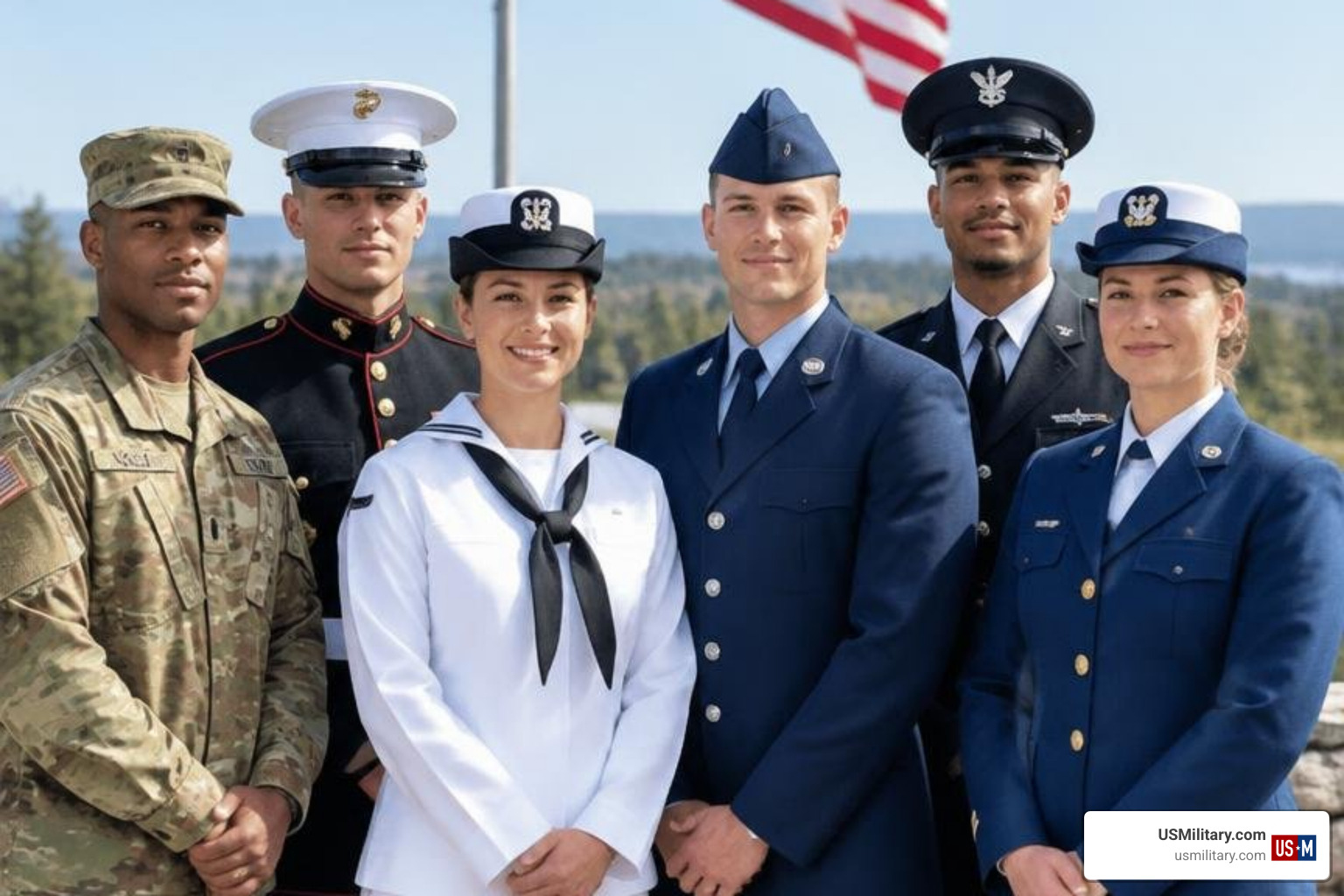
Start with the work you want to do. Consider the Army or Marine Corps for ground operations, the Navy for life at sea, the Air Force for aviation, the Space Force for space and technical missions, or the Coast Guard for maritime safety and law enforcement. Then compare the jobs you qualify for, training, deployment expectations, and whether you want to enlist or pursue an officer path. No single branch is best for everyone.
I’m Larry Fowler, a Navy veteran and publisher of USMilitary.com, a network serving military members and veterans since 2007. Our experience connecting prospective recruits with service opportunities shapes how I answer “Which US military branch is best for you?”Look past the branch name and choose a path that fits your goals.
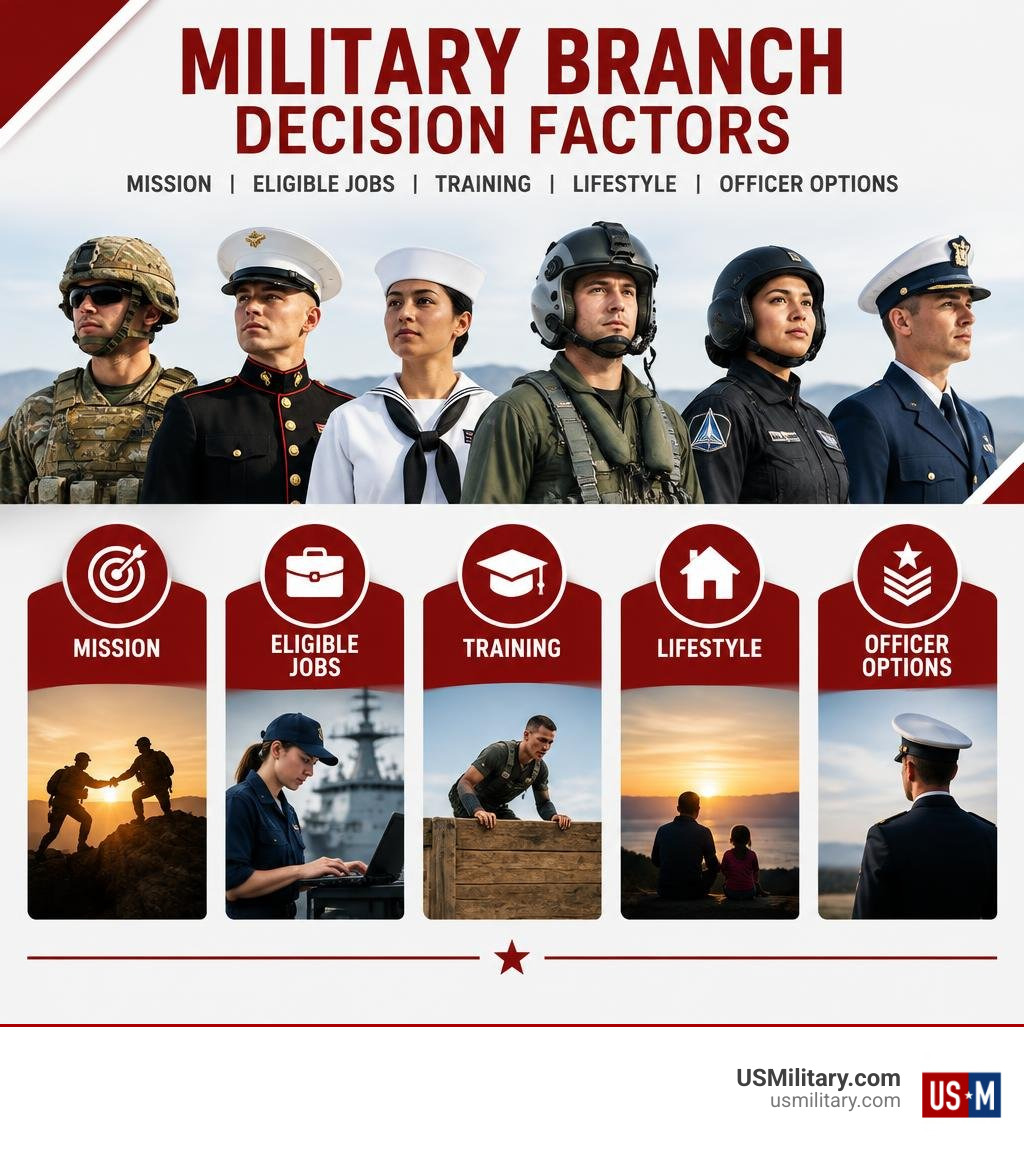
Which US military branch is best for you terms you need:
Overview: Which US Military Branch Is Best for You Based on Mission and Roles?
Every service branch defends the nation, but their operating environments and daily responsibilities differ fundamentally. Understanding the differences across the military branches is the first step toward finding your best fit.
The Department of Defense oversees an active-duty force of over 1.2 million personnel, supported by roughly 755,000 members across the Reserves and National Guard. Meanwhile, the Coast Guard maintains approximately 39,000 active members operating primarily under the Department of Homeland Security. Each branch focuses on a unique core competency within the National Defense Strategy.
| Military Branch | Active Duty Personnel | Enlistment Age Cap | Core Mission Focus | Primary Occupational Group |
|---|---|---|---|---|
| U.S. Army | ~441,226 | 35 | Land dominance & large-scale ground combat | Combat Specialty (100,183) |
| U.S. Navy | ~323,856 | 41 | Sea control, power projection & maritime defense | Electrical & Electronic Repair (47,625) |
| U.S. Air Force | ~303,675 | 42 | Air superiority, global strike & rapid mobility | Engineering, Science & Technical (54,353) |
| U.S. Marine Corps | ~166,542 | 28 | Amphibious assault & rapid expeditionary crisis response | Combat Specialty & Tactical Ops |
| U.S. Coast Guard | ~39,085 | 41 | Maritime law enforcement, search and rescue, port safety | Maritime Safety & Engineering |
| U.S. Space Force | ~9,016 | 42 | Orbital surveillance, satellite operations, cyber defense | Engineering, Space Operations & Tech |
Ground and Expeditionary Forces: Army and Marine Corps
The Army and Marine Corps both operate on land, but their operational scopes differ significantly. The Army is the largest branch, built for sustained land combat, extensive logistical support, and global occupation capabilities. Its largest enlisted group is combat specialties, but it also houses massive engineering, medical, and intelligence corps.
The Marine Corps serves as an agile, expeditionary shock force operating within the Department of the Navy. Marines specialize in rapid crisis response and amphibious assaults from naval vessels. While the Army prepares for long-term campaigns, the Marine Corps prides itself on arriving first, quickly securing contested areas, and operating with a distinct warrior ethos.
Maritime Operations: Navy and Coast Guard
If you are drawn to the water, the Navy and Coast Guard offer two distinct lifestyles. The Navy deploys massive surface fleets, carrier strike groups, and submarines across international waters to maintain global sea lanes and project power ashore. Navy enlisted personnel concentrate heavily on electronic equipment repair, mechanical engineering, and nuclear propulsion.
The Coast Guard primarily conducts domestic maritime operations. Its daily missions focus on search and rescue (SAR), counter-drug interdiction, environmental protection, and federal maritime law enforcement along coastal and inland waterways. While the Navy routinely spends months at sea overseas, Coast Guard personnel often remain closer to U.S. shores on missions that directly safeguard the homeland.
Air and Orbital Domains: Air Force and Space Force
The Air Force and Space Force dominate the skies and outer space. The Air Force ensures air superiority, strategic airlift, and precision global strike. Its enlisted force is heavily weighted toward engineering, science, and technical support roles that keep aircraft flying and secure communication networks operational.
The Space Force is the newest and most compact service branch. Space Force personnel (known as Guardians) protect global satellite networks, monitor ballistic missile launches, track orbital debris, and safeguard military cyberspace. If you want a high-tech career in aerospace, satellite defense, or cyber warfare, these two services offer the strongest technical foundations.
Eligibility Requirements: Age Limits, Education, and Physical Fitness Standards

Joining the military requires meeting clear Department of Defense baseline standards for age, educational background, medical readiness, and cognitive ability. Community forums and discussions about military careers often highlight how these entry criteria affect your options.
Enlistment Age Limits and Education Standards by Branch
Age limits vary significantly by service. Reviewing current military enlistment age guidelines helps ensure you do not miss your window of opportunity:
- Marine Corps: 17 to 28
- Army: 17 to 35
- Navy: 17 to 41
- Coast Guard: 17 to 41
- Air Force & Space Force: 17 to 42
All branches require a high school diploma or equivalent (such as a GED). Applicants with a Tier 1 high school diploma have the highest acceptance rates, whereas GED holders may need a minimum number of college credits to qualify without an education waiver.
Physical Fitness Testing, Medical Standards, and ASVAB Scores
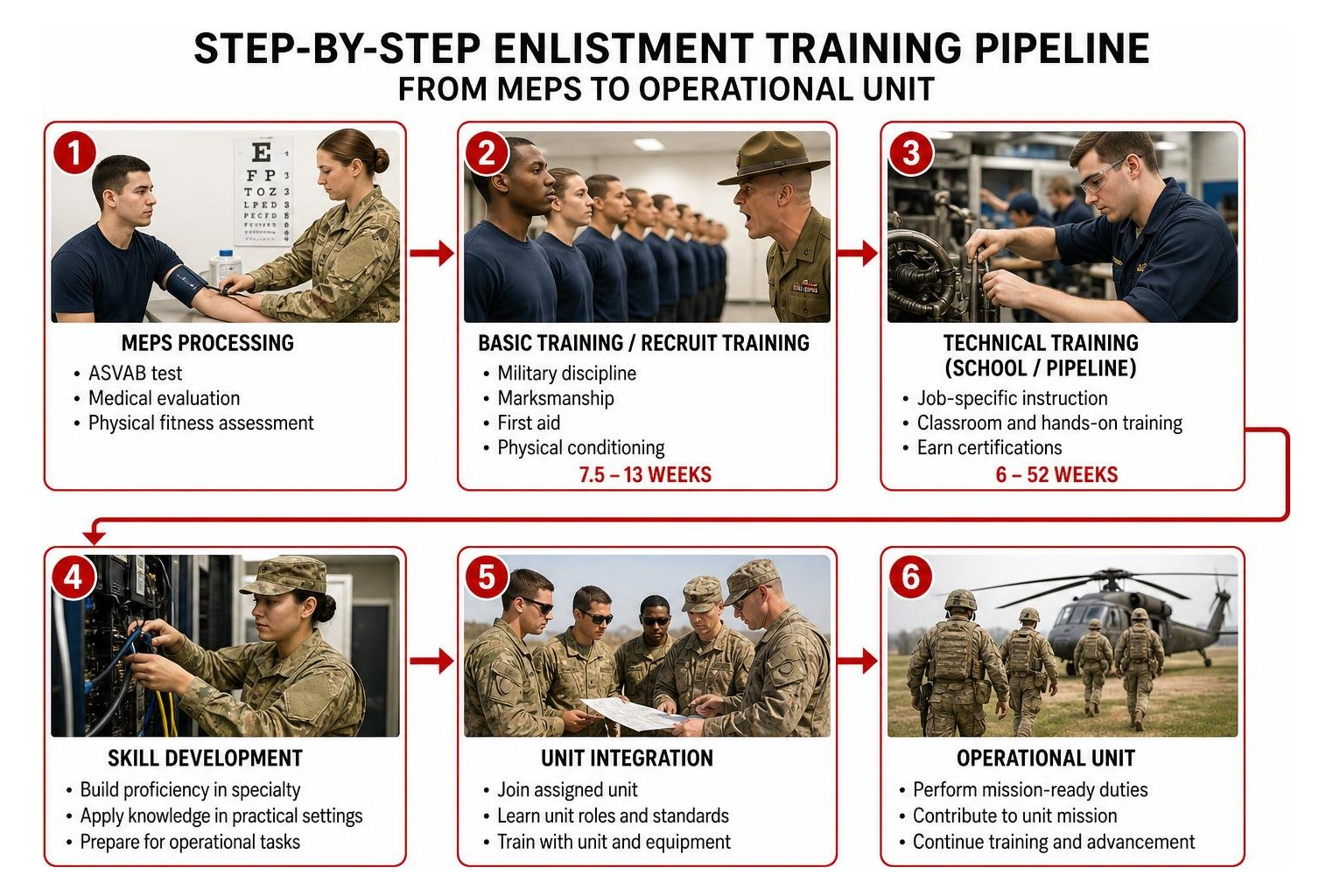
Every recruit takes the Armed Services Vocational Aptitude Battery (ASVAB) and completes a medical evaluation at a Military Entrance Processing Station (MEPS). Learn more about these initial qualification steps in our enlistment process guide.
Physical fitness tests differ across branches to match their operational demands:
- Army: Army Combat Fitness Test (ACFT), featuring deadlifts, standing power throws, hand-release push-ups, sprint-drag-carries, planks, and a 2-mile run.
- Marine Corps: Physical Fitness Test (PFT), with pull-ups, planks, and a 3-mile run, plus the combat-specific Combat Fitness Test (CFT).
- Navy: Physical Readiness Test (PRT), assessing push-ups, planks, and a 1.5-mile run or cardio alternative.
- Air Force & Space Force: Physical Fitness Assessment, measuring push-ups, sit-ups/planks, and a 1.5-mile run.
- Coast Guard: Physical Fitness Assessment, including push-ups, sit-ups, a 1.5-mile run, and a mandatory swimming assessment.
Career Specialties, Training Timelines, and Civilian Job Translation
Military jobs are classified by codes: Military Occupational Specialties (MOS) in the Army and Marines, Air Force Specialty Codes (AFSC) in the Air Force and Space Force, and Ratings in the Navy and Coast Guard. Detailed insights from the U.S. Bureau of Labor Statistics Military Careers Overview reveal that many military occupations translate directly into high-demand civilian professions.
| Branch | Basic Training Duration | Technical School Duration | Primary Fitness Assessment |
|---|---|---|---|
| Army | 10 Weeks | 10 to 20+ Weeks (AIT) | ACFT |
| Marine Corps | 13 Weeks | 8 to 24+ Weeks (MOS School) | PFT / CFT |
| Navy | 10 Weeks | 9 to 52 Weeks (“A” School / Pipeline) | PRT |
| Air Force | 7.5 Weeks | 6 to 30+ Weeks (Tech School) | Air Force PFA |
| Space Force | 7.5 Weeks | 8 to 26+ Weeks (Specialty Training) | Space Force PFA |
| Coast Guard | 8 Weeks | 8 to 20+ Weeks (“A” School) | Coast Guard PFA |
Basic Training and Technical School Duration Across Branches
Enlisted recruits start with recruit training (7.5 to 13 weeks) to learn military discipline, marksmanship, first aid, and physical conditioning. Afterward, service members attend specialized technical schools that typically last 10 to 20 weeks. Highly technical paths—such as the Navy’s nuclear power pipeline—can take up to a full year of intensive classroom and hands-on laboratory instruction.
Evaluating Career Paths for Technical and Combat Roles
When exploring military career pathways, consider whether you want combat arms or a technical trade. If you pursue cyber warfare, intelligence analysis, or aviation maintenance in the Air Force, Space Force, or Navy, your military training often earns civilian industry certifications and security clearances that command lucrative salaries after service.
Military Compensation, Enlistment Bonuses, and Officer Career Pathways
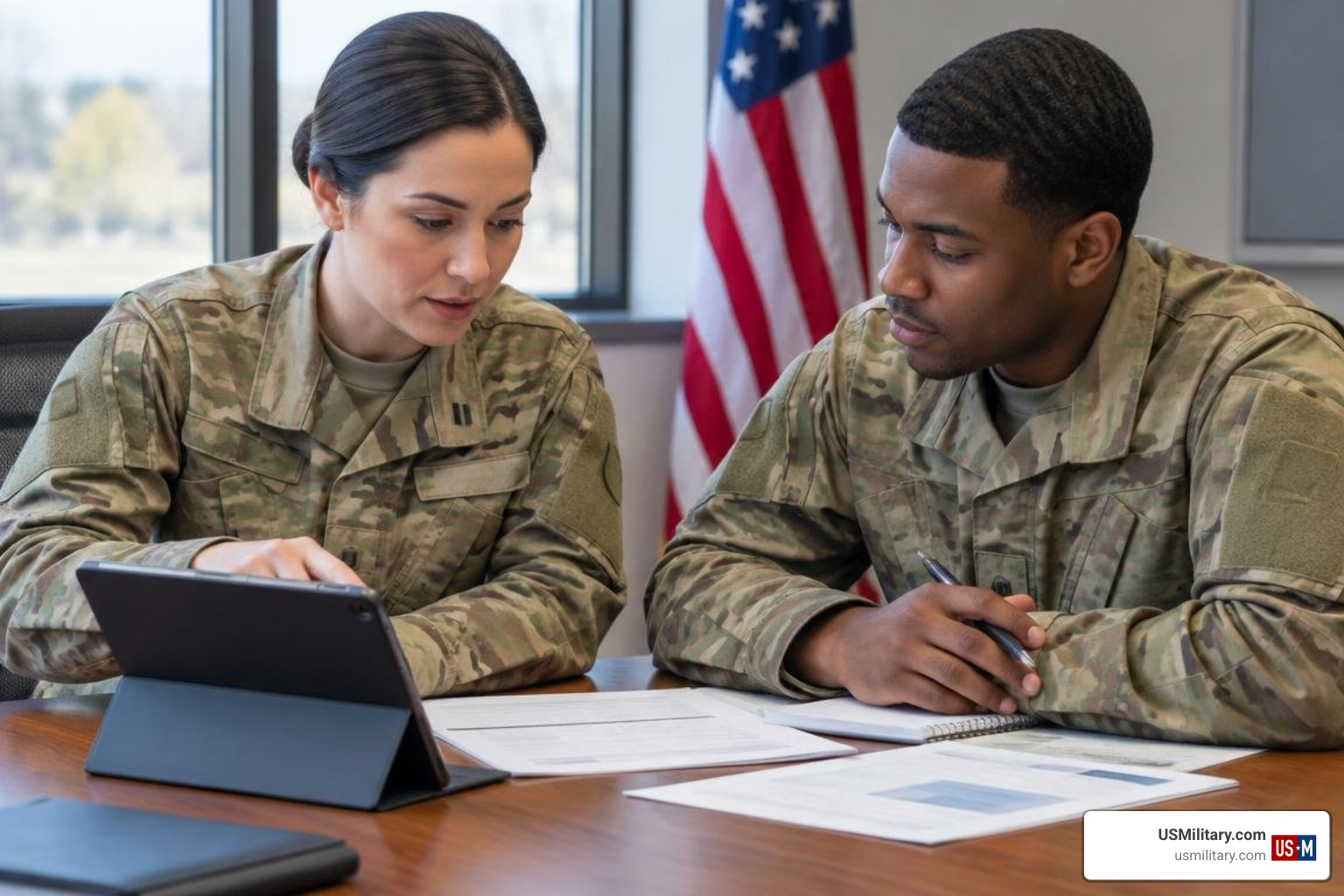
Military pay is standardized across all branches by rank and time in service, offering competitive compensation and comprehensive military benefits.
Base Pay, Allowances, and Specialized Duty Incentives
In addition to basic pay, active-duty members receive non-taxable allowances, including the Basic Allowance for Housing (BAH) and Basic Allowance for Subsistence (BAS). Depending on your role, you may also qualify for:
- Hazardous duty incentive pay
- Submarine duty incentive pay
- Aviation flight pay
- Enlistment and retention bonuses, including the highest cash recruitment bonuses in 2026 for critical-need roles like cyber defense, special operations, and nuclear operations.
Officer Commissioning: Academies, ROTC, and Officer Candidate School
Officers fill leadership and management roles and typically must hold a four-year bachelor’s degree. Aspiring officers can compare the best military branches for education and pursue commissioning through:
- Federal Service Academies: West Point (Army), Naval Academy (Navy/Marines), Air Force Academy (Air Force/Space Force), and the Coast Guard Academy.
- Reserve Officers’ Training Corps (ROTC): College scholarships paired with military leadership training.
- Officer Candidate School (OCS / OTS): Post-college commissioning pipelines for degree holders.
- Direct Commissioning: Available for specialized civilian professionals such as doctors, nurses, chaplains, and cyber experts.
Work Environment, Deployment Cycles, and Branch Culture Comparison
Each military service maintains a distinct lifestyle, operational pace, and community culture.
Determining Branch Fit Based on Lifestyle and Culture
- Army: Built on deep team camaraderie, large base installations, and wide opportunities for specialty assignments.
- Marine Corps: High-intensity warrior culture focused on discipline, expeditionary readiness, and institutional pride.
- Navy: A world-traveling maritime lifestyle centered on shipboard teamwork and port visits during globe-spanning deployments.
- Air Force: A professional, corporate-style work environment that emphasizes quality of life, base infrastructure, and predictable duty hours.
- Space Force: A lean, collaborative, tech-focused culture that resembles an aerospace engineering enterprise.
- Coast Guard: Close-knit, community-integrated stations with direct, daily humanitarian and law enforcement missions.
Deployment Frequency, Operational Tempo, and Family Support
Navy personnel spend extended blocks of 6 to 9 months deployed at sea aboard ships. Army and Marine units deploy on rotational brigade or expeditionary deployments, often spending intense cycles in field environments. Air Force units typically operate on shorter, rotational expeditionary cycles (4 to 6 months), while Coast Guard crews run domestic patrol shifts with frequent returns to home port.
Every branch supports families through military childcare centers, Morale, Welfare, and Recreation (MWR) programs, and Family Readiness Groups to assist during relocations and deployments.
Frequently Asked Questions About Choosing a Military Branch
What is the maximum age limit to join each military branch?
The maximum enlistment age without prior service or waivers is 28 for the Marine Corps, 35 for the Army, 41 for the Navy and Coast Guard, and 42 for the Air Force and Space Force.
Which military branch offers the fastest promotion and advancement?
Advancement speed depends heavily on your occupational specialty, staffing needs, and the branch’s promotion point system. Branches with high turnover in technical fields or rapid growth often offer faster promotion tracks for high performers who earn competitive advancement exam scores.
Can you switch military branches after enlisting?
Yes, but it requires approval. You must obtain an approved conditional release (DD Form 368) from your current service branch before transferring to another branch or transitioning from active duty into a reserve or National Guard component.
Conclusion
Choosing the right military branch means matching your strengths, career ambitions, and preferred lifestyle to the right service mission. Whether you want to lead infantry platoons in the Army, launch jets off an aircraft carrier in the Navy, engineer orbital networks in the Space Force, or perform coastal rescues in the Coast Guard, military service provides unmatched leadership development, educational funding, and veteran benefits.
Take time to speak with recruiters from multiple branches, review specific career specialties, and explore comprehensive branch comparisons on USMilitary.com to take your first confident step forward.
Free for Service Members & Veterans
Get the military benefits intel no one tells you about.
Weekly updates on VA benefits, pay changes, and money tips — free for service members and veterans.
No spam. Unsubscribe anytime. Your info is never shared.



Leave a Reply