Core Eligibility: Age, Citizenship, and Education
The Requirements To Join The US Military cover several key areas every potential recruit must meet before enlisting. Here’s a quick overview:
| Requirement | Basic Standard |
|---|---|
| Age | 17-42 depending on branch (17 needs parental consent) |
| Citizenship | U.S. citizen or Green Card holder with English fluency |
| Education | High school diploma preferred; GED accepted with limitations |
| ASVAB Score | Minimum 31-40 depending on branch |
| Physical Health | Must pass MEPS medical exam and meet height/weight standards |
| Moral Character | Background check required; some criminal records disqualifying |
Every branch of the U.S. military — Army, Navy, Air Force, Marine Corps, Coast Guard, and Space Force — sets its own specific standards. But the core requirements listed above apply across the board.
These requirements exist for good reason. Military service demands physical readiness, mental sharpness, and strong character. Knowing what’s expected before you walk into a recruiter’s office saves time and sets you up for success.
This guide breaks down everything you need to know — from age limits and ASVAB scores to tattoo policies and waivers — so you can walk in prepared.
I’m Larry Fowler, publisher of USMilitary.com since 2007 and a long-time resource for those researching the Requirements To Join The US Military across all six branches. Over the years, this platform has connected hundreds of thousands of prospective recruits with the information and recruiters they need to take that first step.

Joining the military is a life-changing decision, but before we can talk about boot camp or specialized training, we have to look at the “Big Three”: how old you are, where you’re from, and what’s on your transcript. These form the foundation of the Requirements To Join The US Military.
While the Department of Defense sets broad guidelines, each branch has the flexibility to adjust its standards based on recruiting needs. In 2026, we are seeing some of the most flexible age and education standards in recent history as branches look to attract a wider range of talent. You can find more details on these official standards at Requirements to join the U.S. military | USAGov.
Age Limits Across the Branches
Age is often the first hurdle. The absolute minimum age to enlist in any branch is 17, provided you have signed parental consent. If you are 18, you can sign for yourself. On the upper end, the “max age” has been trending upward lately.
Here is how the active-duty age limits break down by branch as of April 2026:
- Army: 17–35 years old (must enlist before 35th birthday).
- Navy: 17–41 years old.
- Air Force: 17–42 years old.
- Marine Corps: 17–28 years old (the Marines remain the “youngest” branch).
- Coast Guard: 17–41 years old.
- Space Force: 17–42 years old.
It is important to note that these are for active duty. If you are looking at the Guard or Reserve, the numbers can shift slightly. For instance, the National Guard Age Limit 3 often mirrors the Army but can vary by state need. For a deeper dive into these age brackets, check out The Ultimate Guide To Military Enlistment Ages Are You Eligible.
Citizenship and Residency Requirements To Join The US Military
You do not necessarily have to be a U.S. citizen to serve, but you do have to be a legal resident. Specifically, you must have a valid Permanent Resident Card (Green Card) and currently live in the United States.
For non-citizens, there are a few extra Requirements To Join The US Military:
- I-551 Form: You must possess this permanent residence document.
- English Proficiency: You must be able to speak, read, and write English fluently.
- Job Limitations: Non-citizens generally cannot receive security clearances, which means they cannot be officers or hold certain high-tech or intelligence-based jobs.
The good news? Military service is a fast track to citizenship. In some cases, the residency requirement for naturalization can be reduced to as little as one day of honorable service. Statistics show that between FY2001 and FY2015, over 109,000 non-citizen service members became U.S. citizens. You can learn more about these pathways at Eligibility Requirements – Today’s Military.
Education Standards: Diploma vs. GED
We often get asked, “Can I join with a GED?” The short answer is yes, but it’s harder. The military classifies recruits into “Tiers.”
- Tier 1: High school diploma holders. This is the gold standard.
- Tier 2: GED holders. Most branches limit the number of GED recruits they take each year (often less than 5–10% of total enlistments).
If you have a GED, you can move yourself into Tier 1 status by earning at least 15 college credits. This shows the military you have the academic discipline to succeed. For those aiming to be officers, a four-year bachelor’s degree is a non-negotiable requirement. For more on the Army’s specific take on this, see Requirements To Join The Army.

Physical Fitness and Medical Requirements To Join The US Military
The military is a physically demanding job. You don’t need to be an Olympic athlete on day one, but you do need to be within a healthy range.
The MEPS Medical Examination
Every recruit must visit the Military Entrance Processing Station (MEPS). This is where the “real” screening happens. You’ll undergo a full physical, vision and hearing tests, blood work, and a review of your entire medical history.
Common disqualifiers at MEPS include:
- Vision that cannot be corrected to 20/20.
- Significant hearing loss.
- Chronic conditions like insulin-dependent diabetes.
- Certain orthopedic issues (past surgeries that limit range of motion).
It’s one of the 3 Most Common Reasons People Do Not Enlist, but don’t panic—many conditions are eligible for waivers if a specialist clears you.
Fitness Testing and Prep Courses
Once you pass the medical exam, you have to meet height and weight standards. These vary by age and gender. For example, an Army male aged 17–20 between 58 and 80 inches tall has a maximum weight of 234 lbs. If you’re worried about the scale, check out Can I Join The Military If I Am Obese.
If you are slightly outside the required range, the Army offers the Future Soldier Preparatory Course. This 90-day program has a fitness track designed to help you lose body fat and improve your physical conditioning before you head to Basic Training. It’s one of the best 3 Ways To Prepare For The Us Military.
The ASVAB Test and Career Placement
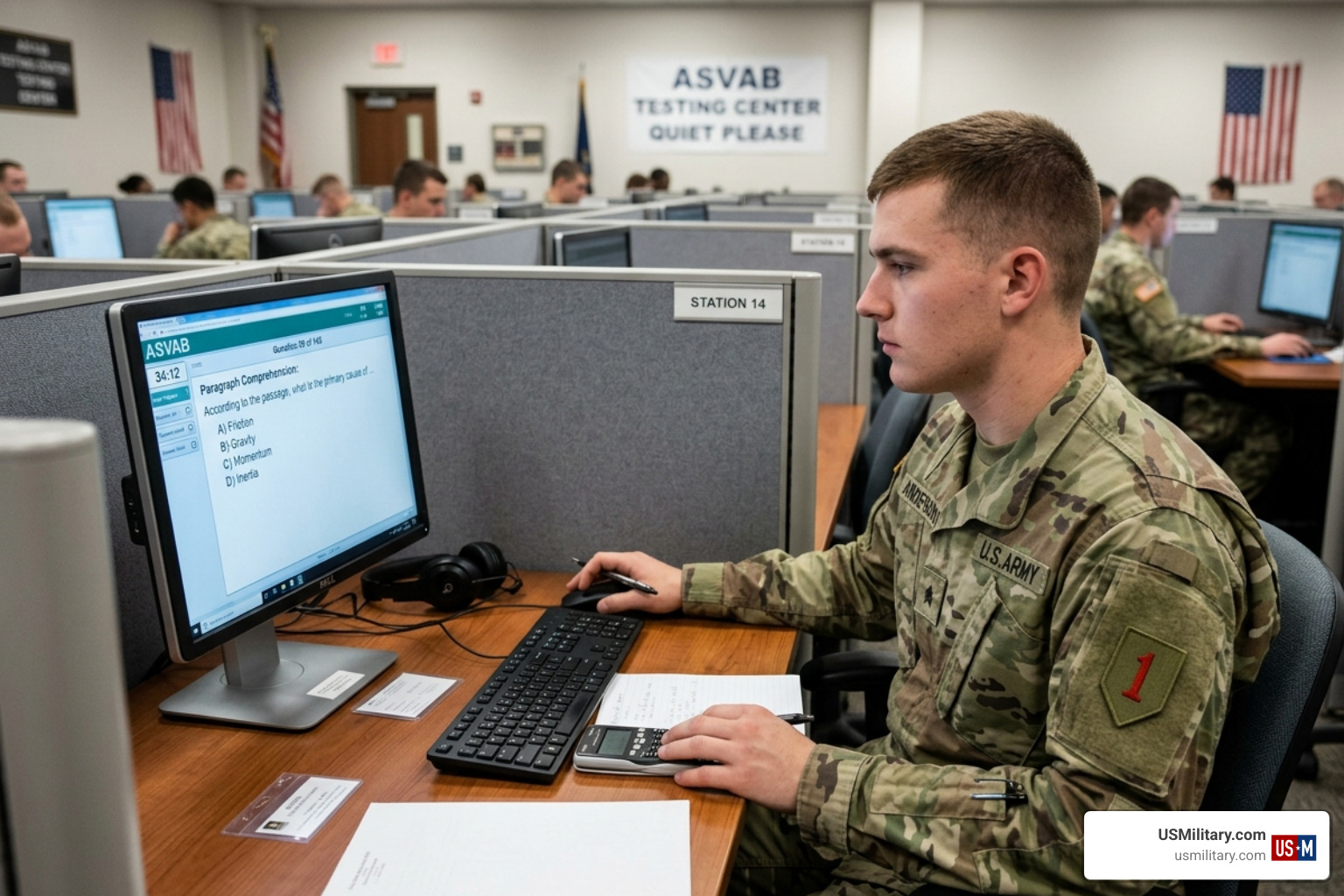
The Armed Services Vocational Aptitude Battery (ASVAB) is not an IQ test; it’s a tool used to see what jobs you’re naturally good at. It covers everything from math and word knowledge to electronics and mechanical comprehension.
Understanding ASVAB Scores and Requirements To Join The US Military
Your AFQT (Armed Forces Qualification Test) score is the “big number” that determines if you can join at all.
- Army: 31
- Navy: 35
- Air Force: 36
- Marines: 32
- Coast Guard: 40
A higher score doesn’t just make you look good; it opens up more “cool” jobs like intelligence, nuclear engineering, or aviation. If you score low, you might be eligible for the academic track of the Future Soldier Preparatory Course to boost your score. For tips on acing the test, read Successful Hints For Military Enlistment and keep a list of Important Items For Military Enlistment.
Enlisted vs. Officer Career Paths
We like to describe the difference like this: Enlisted personnel are the “doers” who perform hands-on work and master specific technical skills. Officers are the “managers” who lead, plan, and make big-picture decisions.
To become an officer, you generally need a college degree and must go through a commissioning program like ROTC, a Service Academy (like West Point), or Officer Candidate School (OCS). If you’re ready to start the journey, you can Join The Army or your preferred branch through their respective portals.
Moral Conduct, Tattoos, and the Waiver Process
Your “moral character” is just as important as your physical health. The military will run a background check that looks at criminal records, credit history, and even your social media footprint for security clearances.
Tattoo and Body Modification Policies
Tattoo policies have relaxed significantly in 2026, but they aren’t a free-for-all.
- Content: No tattoos that are extremist, racist, sexist, or indecent. No exceptions.
- Placement: Most branches allow tattoos on the arms and legs.
- The “One Inch” Rule: The Air Force, for example, allows one neck tattoo behind the ear (max 1 inch) and limited hand tattoos (one ring tattoo per hand and one other tattoo under 1 inch).
Before you get fresh ink, check the Air Force Recruiting guidelines or your specific branch’s latest update.
Criminal Records and Moral Waivers
Can you join with a record? It depends. Felonies are generally disqualifying, as are drug trafficking charges or multiple DUIs. However, many misdemeanors or “youthful indiscretions” can be handled with a moral waiver. Each case is reviewed individually. For a reality check on this topic, read Can You Join The Military With A Felony.
When you go to your first interview, be honest. We recommend reviewing Tips To Visiting Your Military Recruiter so you know how to present your history accurately.
Frequently Asked Questions about Military Requirements
Can I join the military if I am pregnant?
No, you cannot enlist or attend basic training while pregnant. For enlisted roles, women must be at least six months postpartum before they can join. For officer candidates, you must have a qualifying physical within 14.5 months postpartum. Once you are in, you’ll need a “Family Care Plan” to ensure your child is cared for during deployments.
Are there medical waivers for ADHD or Asthma?
Yes! For asthma, it is generally only a disqualifier if you were diagnosed after your 13th birthday. For ADHD, you can often join if you have been off medication for at least one year and can demonstrate that you can function well in a work or school environment without it. These require “medical waivers” which are common.
How do I find a recruiter near me?
The best way is to use official locators. You can find an Army Recruiter Near Me or Find A Navy Recruiter through our site’s directory. Your first meeting is just an information session—you aren’t signing your life away yet!
Conclusion
Navigating the Requirements To Join The US Military can feel like a full-time job, but it’s the first test of your commitment. Whether you are aiming for the high-tech world of the Space Force or the elite infantry of the Marines, the steps remain the same: get your education in order, stay fit, and be honest with your recruiter.
At USMilitary.com, we provide the resources you need to make an informed choice. From VA benefits to branch-specific guides, we are here to support you from enlistment to retirement. If you’re still wondering “Which military branch should I join?”, take a look at our comparison tools and start your journey today.
Free for Service Members & Veterans
Get the military benefits intel no one tells you about.
Weekly updates on VA benefits, pay changes, and money tips — free for service members and veterans.
No spam. Unsubscribe anytime. Your info is never shared.


