What It Means That the US Military Will Begin Automatic Draft Registration in 2026?

The US military will begin automatically registering Americans for the draft in December 2026 — but this is not a reinstatement of the military draft. Here is what you need to know right now:
Quick Answer:
- What is changing: The Selective Service System will automatically register eligible men using federal databases, replacing the current self-registration requirement.
- Who is affected: Male U.S. citizens and certain male immigrants aged 18 to 25.
- When it starts: December 18, 2026.
- Does this mean a draft is coming? No. Registration is administrative. Congress must still pass separate legislation to activate a draft.
- What triggers it: Section 535 of the Fiscal Year 2026 National Defense Authorization Act (NDAA), signed into law in December 2025.
The change is largely a paperwork shift — the legal obligation to register already exists. The government is simply taking over the task of doing it for you, using data from agencies like the Social Security Administration, state DMVs, and the Census Bureau.
One key reason behind the switch: registration compliance has been quietly falling. After the Selective Service registration checkbox was removed from the FAFSA student aid form in 2021 — which had previously accounted for roughly 24% of all registrations — compliance dropped from 89% to around 81% by 2024. Automatic registration is the government’s fix.
I’m Larry Fowler, publisher of USMilitary.com, and I’ve spent nearly two decades helping servicemembers, veterans, and military families navigate complex policy changes — including shifts in Selective Service requirements that directly affect eligibility for federal benefits. As someone who has tracked the US military’s move toward automatically registering Americans for the draft in December, I’ll break down exactly what this means for you and your family in plain language.
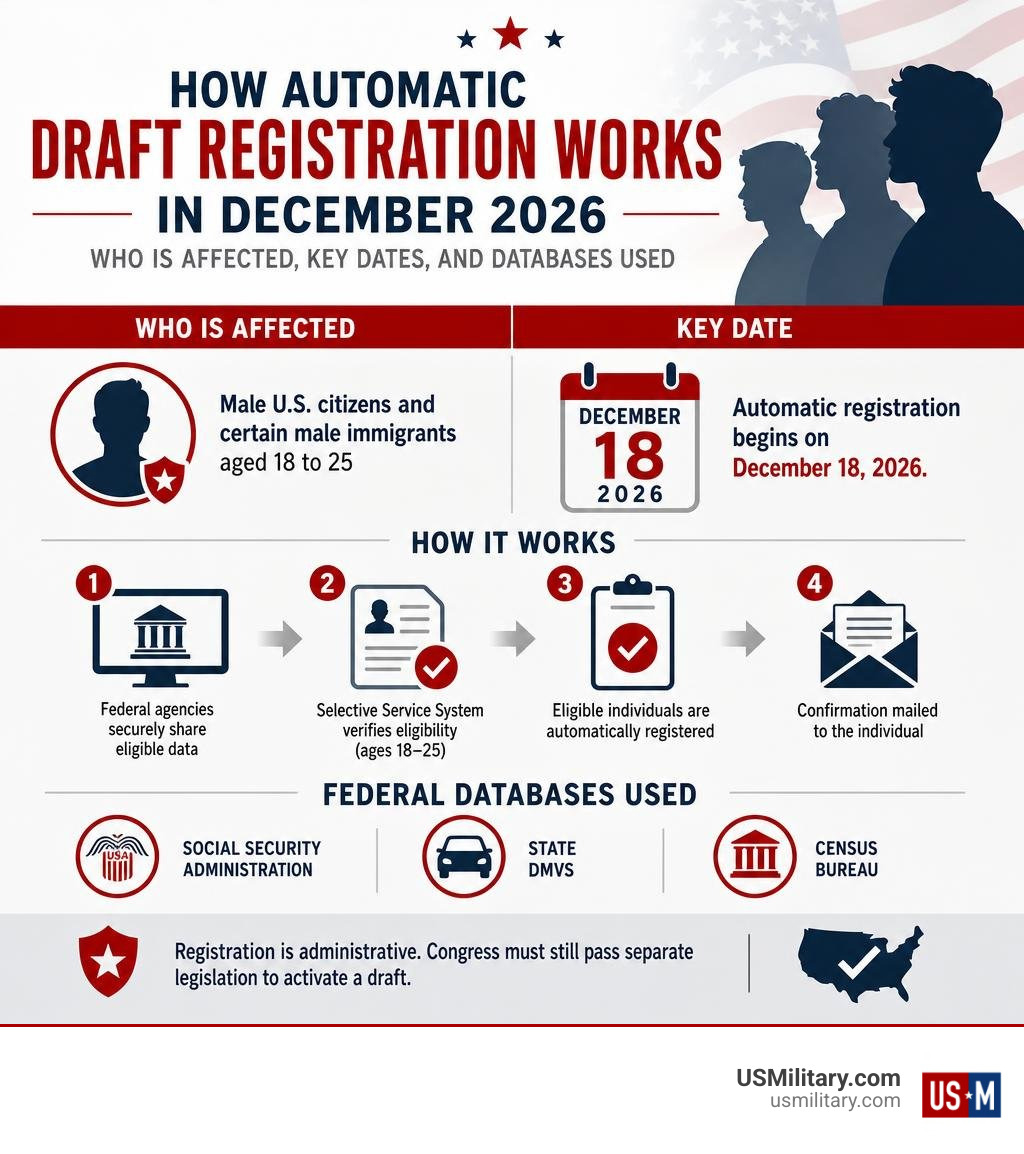
US military will begin automatically registering Americans for the draft in December terms at a glance:
- Automatic US draft registration begins 2026
- Current draft status
- Military Draft For Selective Service To Begin
The Truth Behind the NDAA Mandate
To understand why this change is happening, we have to look at the legislative machinery of Congress. In late December 2025, lawmakers finalized the Fiscal Year 2026 National Defense Authorization Act (NDAA). Tucked deep within this massive annual defense policy bill is Section 535, a provision that fundamentally alters how the Selective Service System (SSS) operates.
For decades, the burden of draft registration fell squarely on the shoulders of individual young men. If you were a male citizen or immigrant turning 18, you had to manually fill out a card at the post office or register online. Under the new mandate, that responsibility officially transfers to the federal government.
When the news first broke, social media exploded with viral videos and rumors that a military draft was being reinstated to send Gen Z into active combat. We want to be completely clear: this is an administrative update, not conscription. The SSS is an independent government agency, entirely separate from the Department of Defense. It manages the registry of names but has no power to induct anyone into the military without a direct act of Congress.
The SSS operates on a modest budget — enacted at $31,300,000 for FY 2026 — and employs a very small civilian staff. To make this technological transition possible, Congress allocated an additional $6 million specifically to modernize the agency’s legacy conscription systems. This funding ensures that old database networks can securely interface with other federal agencies to handle automated registration.
To learn more about the legislative steps that brought us here, read our in-depth coverage on how the Automate Military Draft Passed By Congress and what it means for the Military Draft 2026. You can also review the initial reporting on this policy shift from the Automatic registration for US military draft-eligible men to begin in December.
US military will begin automatically registering Americans for the draft in December
Starting on December 18, 2026, the United States will officially retire the self-registration system that has been in place since 1980. From this date forward, the government will use automated data-matching to register draft-eligible individuals behind the scenes.
For the last 46 years, self-registration was a rite of passage (and sometimes a source of anxiety) for young American men. Under the legacy system, eligible individuals had to register within 30 days of their 18th birthday. Failing to do so was technically a federal felony, though the government rarely prosecuted individuals. Instead, the system relied on “soft” penalties, such as stripping unregistered men of federal student aid, government jobs, and security clearances.
This historic shift to automation removes the manual paperwork burden entirely. Rather than waiting for a young man to remember to register, the Selective Service System will automatically pull his information from pre-existing government databases as soon as he becomes eligible.
For a detailed breakdown of the timeline, check out A Quick Start Guide To Automatic Us Draft Registration 2026 and read the national coverage on Automatic registration for US military draft to begin in December: Here’s what it means.
Why the US military will begin automatically registering Americans for the draft in December
The primary driver behind this sudden transition is a sharp decline in registration compliance. Historically, the easiest way for the government to register young men was through the Free Application for Federal Student Aid (FAFSA). For decades, the FAFSA included a simple checkbox that allowed applicants to register for the Selective Service automatically. This single checkbox accounted for roughly 24% of all draft registrations between 2009 and 2019.
However, a federal law passed in 2021 uncoupled student aid from Selective Service registration, removing the checkbox from FAFSA forms entirely by 2022. The impact was immediate and severe. Compliance rates, which had hovered around 89% for years, plummeted to 84% in 2022 and hit a low of 81% by 2024.
Faced with a shrinking database, the SSS was forced to spend millions of dollars on marketing campaigns, social media ads, and physical mailers to remind young men of their legal duty. By automating the process, the government expects to save millions of dollars in advertising and administrative overhead. Lawmakers like Representative Chrissy Houlahan have pointed out that this change allows the SSS to focus its limited budget on emergency readiness rather than compliance marketing, while ensuring young men aren’t accidentally penalized for a paperwork oversight.
You can read more about the historical context of compliance in our Military Draft Complete Guide.
Who is Affected When the US military will begin automatically registering Americans for the draft in December
The automatic registration mandate applies to the exact same demographic groups that were required to register under the manual system. This includes:
- All male U.S. citizens aged 18 through 25.
- Male immigrants living in the United States within the same age range, including permanent residents (green card holders), refugees, asylum seekers, and undocumented immigrants.
Under current law, eligibility is strictly tied to sex assigned at birth. This means that individuals assigned male at birth must register, even if they have transitioned. Conversely, individuals assigned female at birth are not required to register, regardless of their current gender identity.
Despite repeated bipartisan debates in Congress over whether to expand draft registration to women, lawmakers have consistently stripped those provisions from final defense bills. As of July 2026, the female exemption remains firmly in place.
✉ Get updates like this in your inbox
Weekly VA benefit changes, pay updates, and money tips for service members, veterans, and military families. Free, no spam.
For more details on who must register, see Who Is Eligible For The Us Draft and explore the ongoing debate in Can Women Get Drafted.
How the Automatic Registration System Works
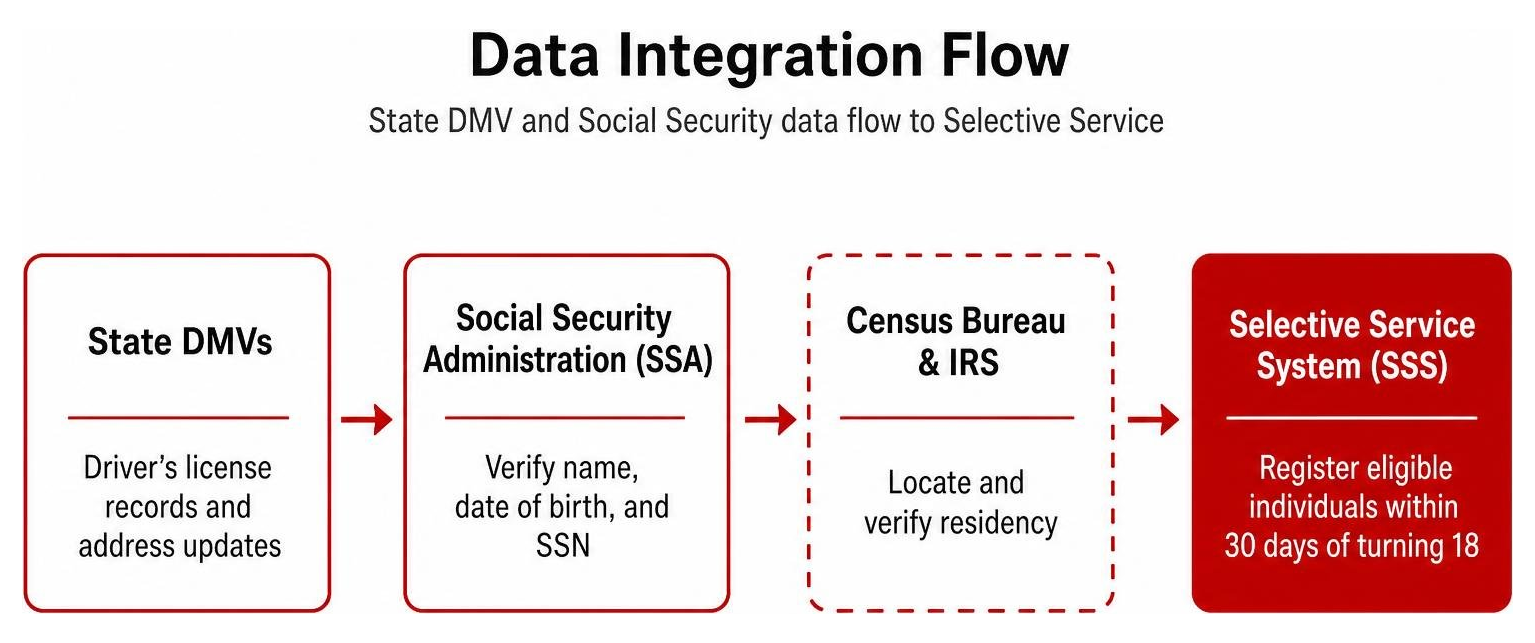
The automatic system relies on a process called “data-matching.” Instead of waiting for you to submit your name, the SSS will query existing federal and state databases to identify and register young men within 30 days of their 18th birthdays.
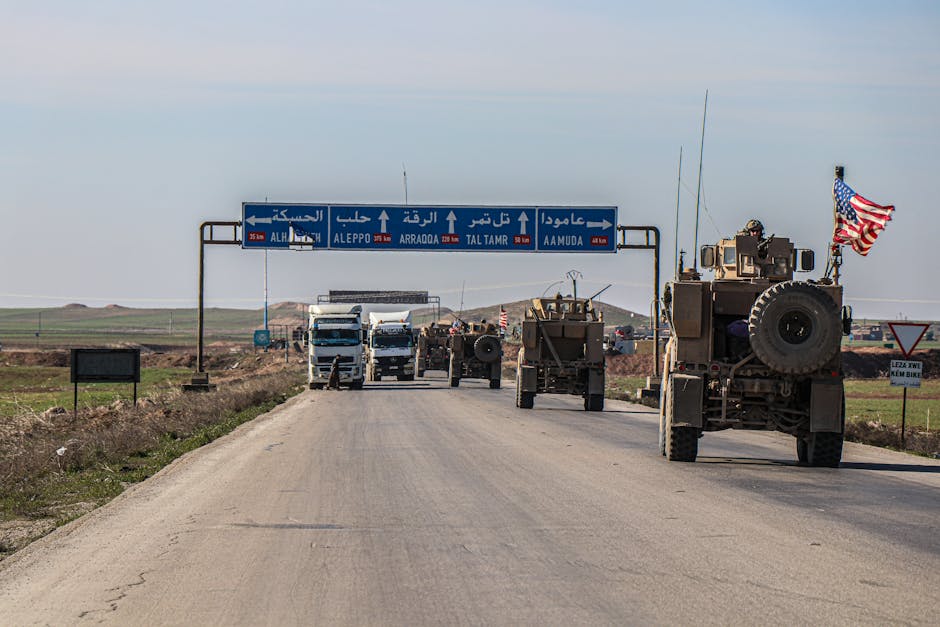
This network of data sharing is already highly developed at the state level. In fact, 46 states and U.S. territories already use some form of automatic or opt-in draft registration when young men apply for a driver’s license or state ID. Over 60% of all current registrations are processed through state Departments of Motor Vehicles (DMVs).
The new federal mandate standardizes this process nationwide by integrating major federal databases:
- State DMVs: Providing address updates and driver’s license records.
- The Social Security Administration (SSA): Verifying names, dates of birth, and Social Security numbers.
- The Census Bureau & IRS: Assisting in locating and verifying the residency of eligible individuals.
The table below illustrates the key differences between the legacy manual system and the upcoming automatic system:
| Feature | Legacy Manual System (1980–2026) | New Automatic System (Post-Dec 2026) |
|---|---|---|
| Primary Responsibility | The individual citizen/immigrant | The federal government (via SSS) |
| How Data is Gathered | Paper forms, SSS website, FAFSA | DMV, Social Security, and Census databases |
| Compliance Rates | Dropped to ~81% by 2024 | Projected to reach near 100% |
| Peacetime Penalties | High risk of accidental benefit loss | Virtually eliminates accidental non-compliance |
| Government Cost | High (millions spent on compliance ads) | Low (automated backend data-matching) |
Privacy Concerns and Impact on Special Groups
While the shift to automation is highly efficient, it has drawn sharp criticism from civil liberties organizations, privacy advocates, and religious groups.
The primary concern is the sheer scale of federal data harvesting. Under the Privacy Act of 1974 and the Computer Matching and Privacy Protection Act of 1988, federal agencies are subject to strict rules when sharing citizen data. Critics point out that the SSS has historically struggled with compliance, noting the agency has not published its legally required Computer Matching Act notices in the Federal Register since 2017. Some advocacy groups worry that a centralized database designed to identify and track young men could eventually be weaponized for other purposes, such as aggressive immigration enforcement against unregistered non-citizens.
Automation also removes a element of personal agency, which heavily impacts specific communities:
- Conscientious Objectors: Under the manual system, some young men chose to register while documenting their moral or religious opposition to war through private organizations. Others chose civil disobedience by refusing to register entirely. Automatic registration erases this deliberate choice, registering individuals without their explicit consent.
- Transgender and Non-Binary Individuals: Because the database relies on sex assigned at birth, transgender women will be automatically registered, while transgender men will not. This can lead to administrative confusion and data errors if state DMV records do not align with Social Security databases.
- Immigrant Communities: Many young immigrants are unaware of draft registration requirements. While automatic registration prevents them from being penalized later during the naturalization process, some advocates worry about the government tracking undocumented youth.
For an in-depth look at these concerns, read Articles – Draft Registration Becomes ‘Automatic’ in December – The National Network Opposing the Militarization of Youth and check out The Essential Guide To Conscientious Objector Definitions.
Penalties, Enforcement, and the Reality of a Modern Draft
Under the Military Selective Service Act, failing to register for the draft remains a federal felony. The statutory penalties are severe, carrying a fine of up to $250,000, up to five years in prison, or both.

In reality, the Department of Justice has not prosecuted anyone for draft evasion since the mid-1980s. Instead, the government enforces compliance through administrative restrictions. If you are not registered by the time you turn 26, you face permanent lifetime penalties, including:
- Permanent ineligibility for federal student loans and grants.
- Ineligibility for federal jobs and state-level government employment in many states.
- Denial of U.S. citizenship pathways for immigrants.
The beauty of the automatic system is that it virtually eliminates the risk of young men unknowingly committing a felony or losing out on college financial aid due to a missing form.
However, we must emphasize that registering for the draft is not the same as being drafted. The United States has not had an active draft since February 1973, during the Vietnam War. Since then, our nation has relied entirely on an all-volunteer military. For a draft to be reinstated, a national emergency would have to occur that exceeds the capacity of our volunteer forces. Even then, the President cannot activate a draft alone; Congress must pass legislation to authorize conscription, which the President must then sign into law.
If a draft were ever activated, the SSS would conduct a randomized lottery based on birthdates. The order of call prioritizes 20-year-olds first, followed by ages 21 through 25, then 19-year-olds, and finally those who have just turned 18. During World War II, the draft inducted 10,110,104 men — the highest in U.S. history. Today, any modern draft would look vastly different, likely incorporating specialized skills drafts for cyber security and technical roles.
To understand the likelihood of a draft returning, check out our analysis on Is The Military Draft Coming Back.
Frequently Asked Questions about the 2026 Draft Registration
Is the US military reinstating an active draft?
No. The U.S. military has operated as an all-volunteer force since February 1973. The upcoming change in December 2026 is purely administrative, moving the registration process from manual sign-ups to automatic database matching. Congress would have to pass new legislation to reinstate an active draft. For more information, read Could There Be A Us Military Draft.
Are women required to register under the new automatic system?
No. Under current law, only individuals assigned male at birth are required to register. While Congress has debated including women in the Selective Service, those proposals have not been passed into law. You can read more about this in Can Women Be Drafted.
What should conscientious objectors do under automatic registration?
Because registration is automatic, conscientious objectors (COs) will be added to the database without their active input. However, the SSS does not classify or evaluate CO status during peacetime registration. If a draft is ever activated, registered individuals who are called up will have the opportunity to apply for conscientious objector status and seek alternative, non-combat service. To prepare for this possibility, read The Step By Step Conscientious Objector Application Roadmap.
Conclusion
The transition to automatic Selective Service registration on December 18, 2026, represents the most significant administrative update to the draft system in over forty years. By shifting the burden of paperwork from the individual to federal databases, the government aims to restore falling compliance rates, save taxpayer money, and protect young men from accidentally losing access to federal benefits.
While the change has sparked valid discussions around privacy and civil liberties, it is ultimately a streamlining of an existing legal obligation — not a return to conscription.
At USMilitary.com, we are dedicated to keeping our military community, veterans, and families informed on the policies that affect their lives. Whether you are navigating VA benefits, exploring military career paths, or keeping up with legislative updates, we are here to provide clear, reliable guidance.
To dive deeper into the history and mechanics of conscription, Learn more about the US military draft or visit our homepage at USMilitary.com for resources on military loans, career comparison, and veteran benefits.
Free for Service Members & Veterans
Get the military benefits intel no one tells you about.
Weekly updates on VA benefits, pay changes, and money tips — free for service members and veterans.
No spam. Unsubscribe anytime. Your info is never shared.


