Honestly: Why Are SEALs Special And What Sets Them Apart From The Others: Lineage and Maritime Mastery
First, you need to know that I’m a little partial as a BUD/S Class 89 graduate. I also happen to be the publisher of NavySeal.com and USMilitary.com. With that said, I’m clearly a little biased. However, I will be honest with you. OK? Hopefully, you’ll learn something below. With that, let’s get going…
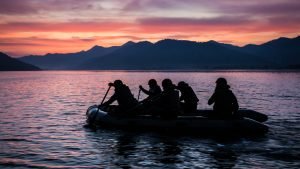
What sets Navy SEALs apart from other elite forces is their unmatched mastery of the maritime domain, including amphibious combat, swimming, infiltration, and underwater direct-action capabilities. While other special operations units cross water to reach a target, SEALs treat the water itself as an operational weapon and a primary axis of attack.
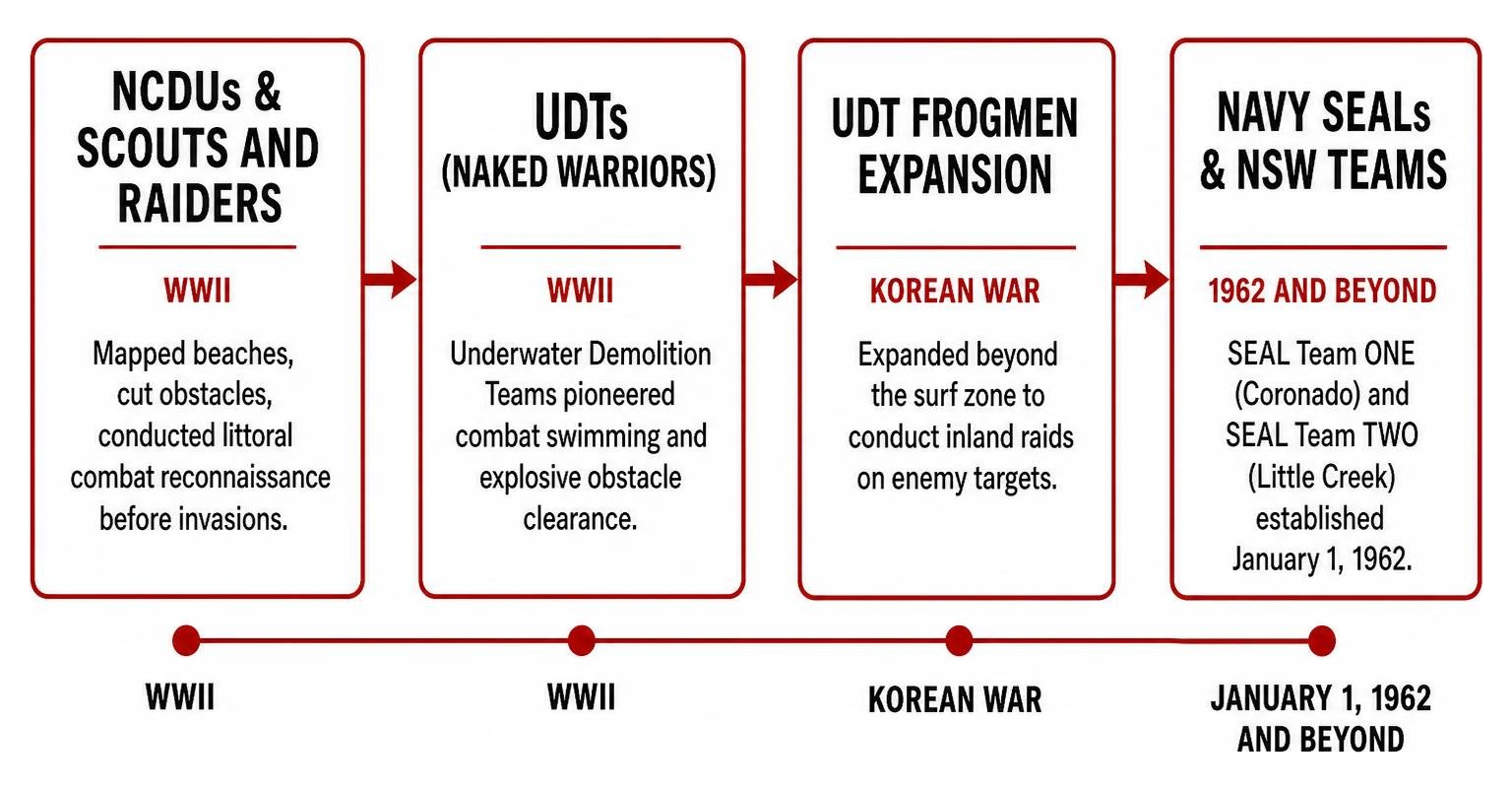
To truly understand how United States Navy SEALs operate today, we have to look back at their roots. The community did not simply appear overnight in response to modern warfare. It was forged under intense pressure during World War II, starting with specialized units like the Naval Combat Demolition Units (NCDUs) and the Amphibious Scouts and Raiders.
These early maritime commando units were tasked with impossible jobs. They mapped hostile beaches, cut deep-water obstacles, and conducted littoral combat reconnaissance before Allied invasion forces hit the sand. This lineage of combat swimmers established a culture of extreme comfort in cold water, high-risk stealth, and small-unit autonomy.
From WWII UDTs to Modern Naval Special Warfare
The modern SEAL teams directly descend from the Underwater Demolition Teams (UDTs) formed during the Pacific campaigns. Pioneers like Lieutenant Commander Draper Kauffman at Fort Pierce, Florida, and units established at Waimanalo Beach, Hawaii, developed the initial doctrine of combat swimming and explosive obstacle clearance. These “Naked Warriors” wore only swim trunks, fins, dive masks, and Ka-Bar knives as they swam into enemy fire.
By the Korean War, UDT frogmen expanded their duties beyond the surf zone, conducting inland raids to destroy bridges, rail tunnels, and coastal supply networks. Recognizing the growing need for a force capable of unconventional warfare across all environments, President John F. Kennedy officially established SEAL Team ONE in Coronado, California, and SEAL Team TWO in Little Creek, Virginia, on January 1, 1962.
The Vietnam War quickly validated this expansion. Operating in the dense waterways of the Mekong Delta and the Rung Sat Special Zone, the teams earned the nickname “the men with green faces” from the Viet Cong. For readers exploring the full history of the Navy SEALs, this transition cemented the force’s reputation for devastating, small-unit direct action.
Amphibious Operations vs. Other Special Operations Forces
While other elite units excel across varied combat zones, NSW maintains ownership over the maritime domain, as detailed in Fearless Since 1962: How the SEALs Became the Navy’s Most Elite Force. No other special operations force focuses as heavily on:
- Hydrographic reconnaissance and underwater demolition prior to amphibious assaults.
- Visit, Board, Search, and Seizure (VBSS) operations against hostile vessels underway on the open ocean.
- Long-range combat swimmer infiltration via closed-circuit rebreathers and diver propulsion systems.
- Maritime interdiction operations targeting illicit shipments, offshore platforms, and coastal strongholds.
Other forces cross water to get to a fight. SEALs treat the water itself as an operational weapon and a primary axis of attack.
BUD/S, Hell Week, and the Unforgiving Selection Pipeline
The selection process for Naval Special Warfare is renowned for its sheer physical and psychological toll. Operating out of the Naval Special Warfare Center on Coronado beach, Basic Underwater Demolition/SEAL (BUD/S) training pushes candidates beyond normal human limits. The course tests an applicant’s ability to remain calm and decisive while cold, exhausted, and submerged.

Earning a slot in BUD/S requires exceptional baseline fitness. The standard Navy Physical Screening Test (PST) minimums serve only as entry points; competitive applicants aim for Elevated Physical Screening Test (EPST) scores to secure a contract:
- 500-Yard Swim: Breaststroke or sidestroke in under 9 minutes, 30 seconds (12:30 minimum).
- Push-ups: 75 repetitions in 2 minutes (50 minimum).
- Sit-ups: 75 repetitions in 2 minutes (50 minimum).
- Pull-ups: 15 dead-hang repetitions (10 minimum).
- 1.5-Mile Run: Completed in under 9 minutes, 30 seconds wearing running shoes and shorts (10:30 minimum).
Those who pass enter a comprehensive 56-week initial training pipeline for enlisted personnel (62 weeks for officers). This includes BUD/S, Army Airborne School, and SEAL Qualification Training (SQT). For candidates preparing for this journey, our guide on Navy SEALs BUD/S training requirements breaks down each phase in detail.
What Honestly Sets Navy SEALs Apart From The Other Elite Forces in Selection Brutality
Every military branch features elite selection, but our SEAL and special forces training comparison highlights the unique challenge of BUD/S: the sustained water element.
During the infamous “Hell Week” in First Phase, candidates endure five and a half days of continuous training with fewer than four hours of sleep total. They run more than 200 miles, log hundreds of push-ups, and spend hours in the freezing Pacific surf during “surf torture” sessions designed to test hypothermia resistance.
✉ Get updates like this in your inbox
Weekly VA benefit changes, pay updates, and money tips for service members, veterans, and military families. Free, no spam.
In Second Phase (Combat Diving), candidates must conquer “pool comp” and drownproofing—having their wrists and ankles bound while bobbing, flipping, and retrieving gear underwater. The attrition rate consistently hovers around 75% to 80%, filtering out anyone lacking deep psychological resilience.
Tactical Comparison: How SEALs Stack Up Against Delta Force, Rangers, and Air Force PJs
Each component of the U.S. special operations community is built with distinct core tasks in mind. Understanding how they align prevents common misconceptions about unit capabilities.
| Unit | Primary Branch | Core Mission Focus | Primary Insertion Environment | Key Differentiator |
|---|---|---|---|---|
| Navy SEALs | U.S. Navy | Maritime Direct Action, Special Reconnaissance, Counter-Terrorism | Sea, Air, Land (Maritime Specialization) | Amphibious combat swimming and coastal infiltration |
| Delta Force (1st SFOD-D) | U.S. Army | Counter-Terrorism, Hostage Rescue, High-Value Target Raids | Land, Air | Specialized hostage rescue and clandestine land operations |
| Army Rangers (75th Ranger Reg.) | U.S. Army | Airfield Seizure, Large-Scale Direct Action, Joint SOF Support | Air, Land | Premier light infantry strike force at battalion/regimental strength |
| Special Forces (Green Berets) | U.S. Army | Unconventional Warfare, Foreign Internal Defense, Guerrilla Support | Land | Training and leading indigenous guerrilla forces behind lines |
| Air Force Pararescue (PJs) | U.S. Air Force | Combat Search and Rescue (CSAR), Tactical Combat Casualty Care | Air, Land, Water | Advanced trauma surgery under active fire in denied areas |
Comparing Mission Scope: Direct Action, Reconnaissance, and Combat Search
The differences become clear when examining unit mandates. While the differences between Delta Force and SEALs involve specific counter-terrorism and hostage rescue mission profiles, Army Green Berets emphasize Unconventional Warfare (UW) and Foreign Internal Defense (FID). As our comparison of Green Beret vs Navy SEAL demonstrates, Green Berets are built to live among local populations for months, learning dialects and organizing guerrilla resistance.
Meanwhile, Air Force Pararescuemen focus primarily on Combat Search and Rescue (CSAR). When evaluating Air Force PJs and Navy SEALs, PJs operate as elite paramedic trauma specialists capable of deploying into any combat environment to recover downed personnel. SEALs, by contrast, focus their offensive power on rapid direct-action raids, reconnaissance, and maritime infrastructure disruption.
Infiltration Capabilities: Submarines, Combat Swimming, and Freefall Infiltration
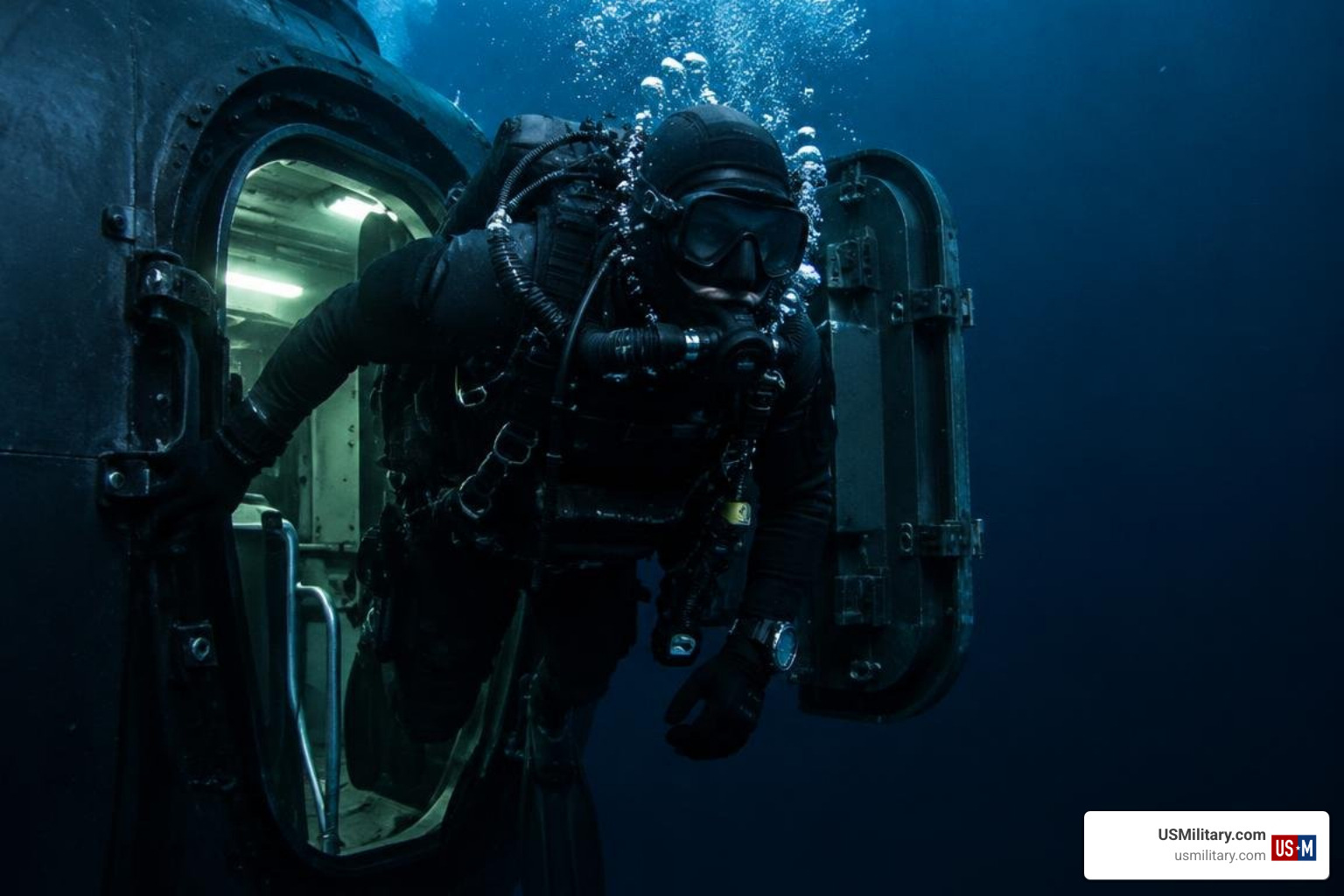
SEAL platoons maintain diverse insertion capabilities, enabling them to strike targets without relying on standard runways or visible staging grounds:
- Submarine Lock-Out & Dry Deck Shelters (DDS): Exiting submerged submarines using specialized chambers to launch combat swimmer missions or submersibles.
- SEAL Delivery Vehicles (SDVs): Navigating wet submersibles over long underwater distances directly to hostile coastlines.
- Special Warfare Combatant-Craft Crewmen (SWCC) Support: Rapid insertion and extraction along riverine corridors and coastal littorals using high-speed combatant craft.
- Military Free-Fall: High Altitude Low Opening (HALO) and High Altitude High Opening (HAHO) parachute jumps behind radar coverage.
- Over-the-Beach Infiltration: Long-distance combat swims followed by silent transition from water to land targets.
Command Structure, Special Mission Units, and the SEAL Ethos
Naval Special Warfare Command (NSWC), based in Coronado, oversees the entire force. NSW is organized into multiple Naval Special Warfare Groups managing East Coast teams (Little Creek, VA), West Coast teams (Coronado, CA), and specialized SEAL Delivery Vehicle Teams.
What Honestly Sets Navy SEALs Apart From The Other Elite Forces in Mindset and Culture
The cultural cornerstone of the community is codified in the NSW – SEAL Ethos and captured by the community motto: “The Only Easy Day Was Yesterday.”
At the tactical level, SEALs rely heavily on the swim buddy system—a bond forged in BUD/S where an operator is held accountable for the safety and actions of their partner. Mental resilience is systematically reinforced through proven sports psychology techniques known across the community as the “Big 4”:
- Goal Setting: Breaking overwhelming challenges down into immediate, micro-level tasks (such as focusing only on making it to the next meal).
- Mental Visualization: Mentally rehearsing complex combat tasks and contingencies before stepping onto an objective.
- Positive Self-Talk: Controlling the internal dialogue to prevent panic and maintain confidence under fire.
- Arousal Control: Using deliberate breathing techniques to lower heart rates and preserve fine motor skills in high-stress situations.
Tier 1 DEVGRU vs. Tier 2 SEAL Teams and JSOC Integration
Within the special operations hierarchy, standard SEAL teams operate as Tier 2 forces under theater special operations commands. However, the Naval Special Warfare Development Group (DEVGRU, historically known as SEAL Team Six), based in Dam Neck, Virginia, operates under the direct command of the Joint Special Operations Command (JSOC).
DEVGRU serves as a National Mission Force alongside the Army’s 1st SFOD-D (Delta Force). While DEVGRU operators execute highly classified counter-terrorism operations worldwide—such as Operation Neptune Spear—they maintain deep roots in specialized maritime counter-terrorism, ship takeovers, and underwater target interdiction.
Frequently Asked Questions About Navy SEALs and Special Operations
What is the biggest difference between Navy SEALs and Army Green Berets?
The core difference lies in primary mission focus and operational footprint. Navy SEALs are built primarily for direct action, maritime interdiction, and special reconnaissance missions executed by small, agile units. Army Green Berets specialize in Unconventional Warfare and Foreign Internal Defense, focusing on embedding with, training, and leading indigenous military or guerrilla forces over extended deployments.
Is Navy SEAL BUD/S training harder than Delta Force or Army Ranger selection?
All special operations selection courses are exceptionally demanding, but they test different physical and mental attributes. BUD/S places heavy emphasis on water competency, cold endurance, and sleep deprivation in maritime surf conditions. Army Ranger Assessment and Selection Program (RASP) focuses heavily on extreme physical conditioning, land navigation, and small-unit infantry tactics under heavy ruck loads. Delta Force selection evaluates mature, experienced operators through grueling long-distance land navigation and psychological assessments.
What specific qualifications and PST scores are required to join the SEALs?
Enlisted candidates must be 17 to 28 years old (officers 28 or younger). Applicants must achieve qualifying scores on the ASVAB, pass a rigorous dive medical physical (including eyesight standards of 20/40 best eye, 20/70 worst eye, correctable to 20/25), and obtain a Secret security clearance. Passing the physical screening test with competitive scores—such as a sub-9:30 500-yard swim and run, alongside 75+ push-ups and sit-ups—is essential to earn an NSW contract.
Conclusion
The elite forces of the United States military represent the most dedicated warfighters in the world. Whether it is the precision combat medicine of Air Force PJs, the large-scale assault capabilities of the Army Rangers, or the clandestine reach of Delta Force, each force brings vital skills to national defense.
What truly sets the Navy SEALs apart is their unmatched lineage and mastery of the maritime domain, paired with the capability to strike seamlessly across sea, air, and land. For those interested in learning more about Naval Special Warfare pipelines, military benefits, and tactical career paths, explore our complete Navy SEALs guide to begin your journey.
Free for Service Members & Veterans
Get the military benefits intel no one tells you about.
Weekly updates on VA benefits, pay changes, and money tips — free for service members and veterans.
No spam. Unsubscribe anytime. Your info is never shared.



Leave a Reply