Why Navy SEAL Traits Build Resilience Under Pressure
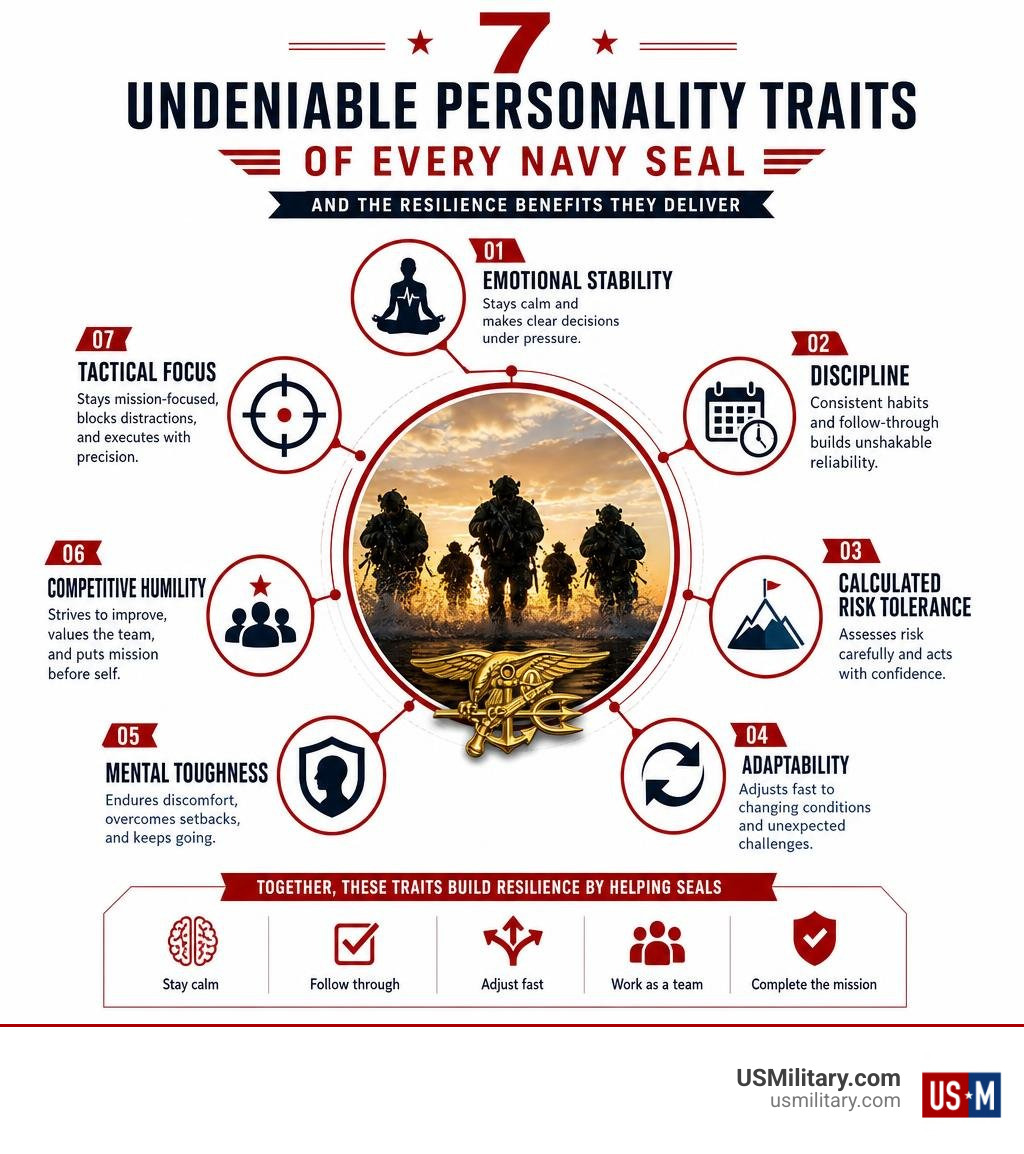
The 7 Undeniable Personality Traits Of Every Navy SEAL are emotional stability, discipline, calculated risk tolerance, adaptability, mental toughness, competitive humility, and tactical focus. Together, they help operators stay calm, adapt fast, and trust their team when mistakes carry serious consequences.
Research from the Naval Health Research Center found that 139 active-duty SEALs scored lower in neuroticism and agreeableness, and higher in extraversion and conscientiousness, than average adult men. Excitement-seeking was the only measured facet in the “very high” range.
These traits support preparation, direct communication, and clear decisions under pressure. BUD/S selection tests those habits intensely, which helps explain why only a minority of candidates finish.
I am Larry Fowler, publisher of the USMilitary.com Network since 2007. This guide connects the research, SEAL training, and practical lessons for everyday resilience.
Similar topics:
- Navy SEALs BUD/S Training Requirements
- What Navy SEAL BUD/S Training Taught Me About Self-Confidence, Courage, & Faith
- Who is Navy SEAL David Goggins
The Psychological Blueprint: How Elite Operators Differ from Civilians
Physical fitness is only the price of admission. What keeps an operator moving through freezing surf, night dives, and chaotic missions is emotional regulation paired with relentless drive.
SEALs are not immune to fear, pain, or exhaustion. They process stress as performance fuel, not a signal to stop.
Science Behind the 7 Undeniable Personality Traits Of Every Navy SEAL
A Naval Health Research Center study evaluated 139 active-duty personnel using the NEO Personality Inventory, which measures neuroticism, extraversion, openness, agreeableness, and conscientiousness.
Compared with adult male norms, active operators showed:
- Lower neuroticism: Stronger stress tolerance and emotional control.
- Higher extraversion: More assertiveness, activity, and comfort with stimulation.
- Very high excitement-seeking: The only measured facet where the SEAL group mean reached the “very high” range.
- Higher conscientiousness: More competence, order, dutifulness, and self-discipline.
- Lower agreeableness: More skepticism, competitiveness, and direct communication.
Commissioned officers scored higher than enlisted personnel in conscientiousness and extraversion, reflecting command demands.
The Selection Crucible: BUD/S and Hell Week
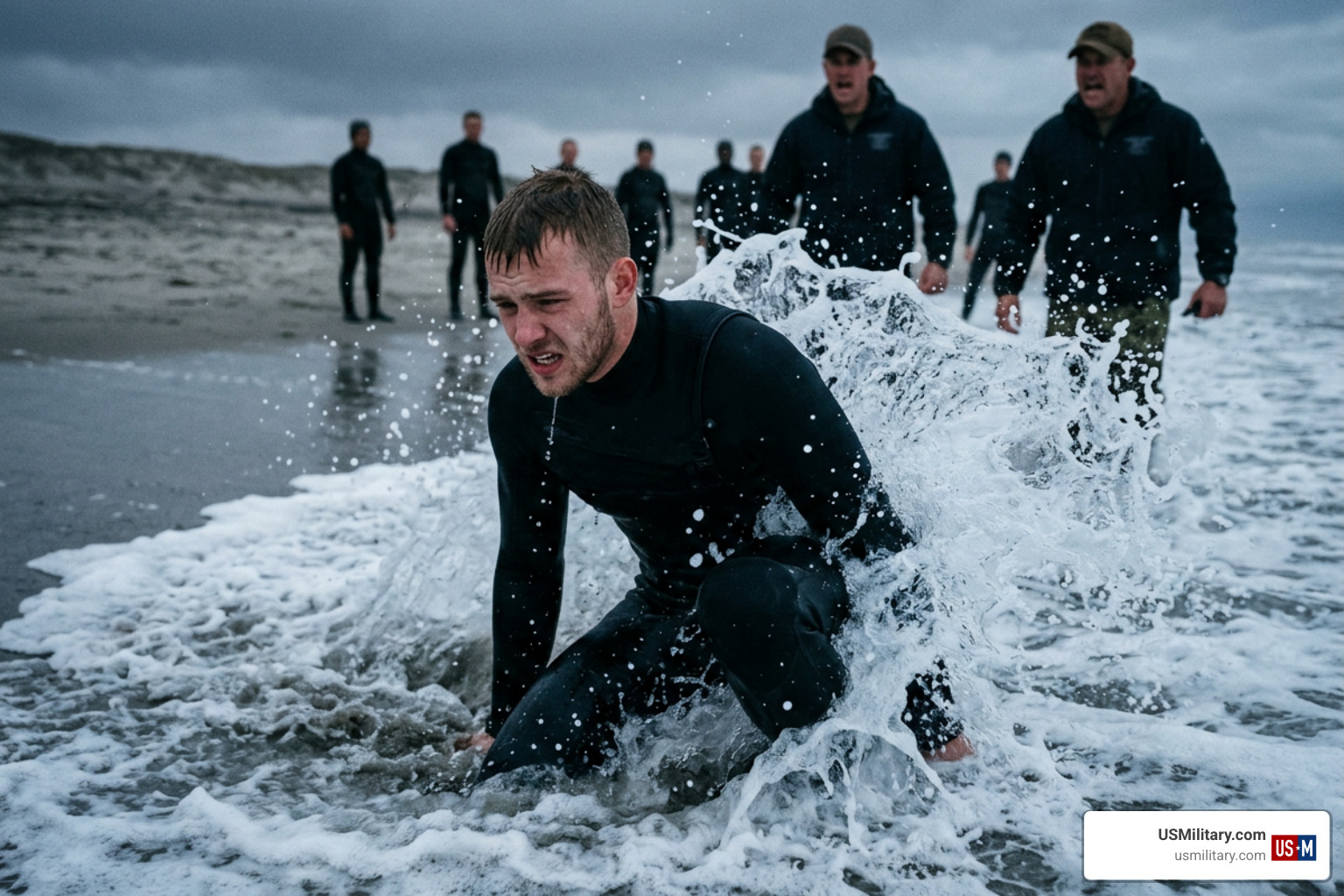
Navy SEAL BUD/S training is an assessment pipeline with a historical dropout rate between 80% and 85%. The decisive test often arrives during Navy SEAL Hell Week: five and a half days of exertion, more than 200 miles of movement, heavy carries, cold surf exposure, and less than four hours of sleep.
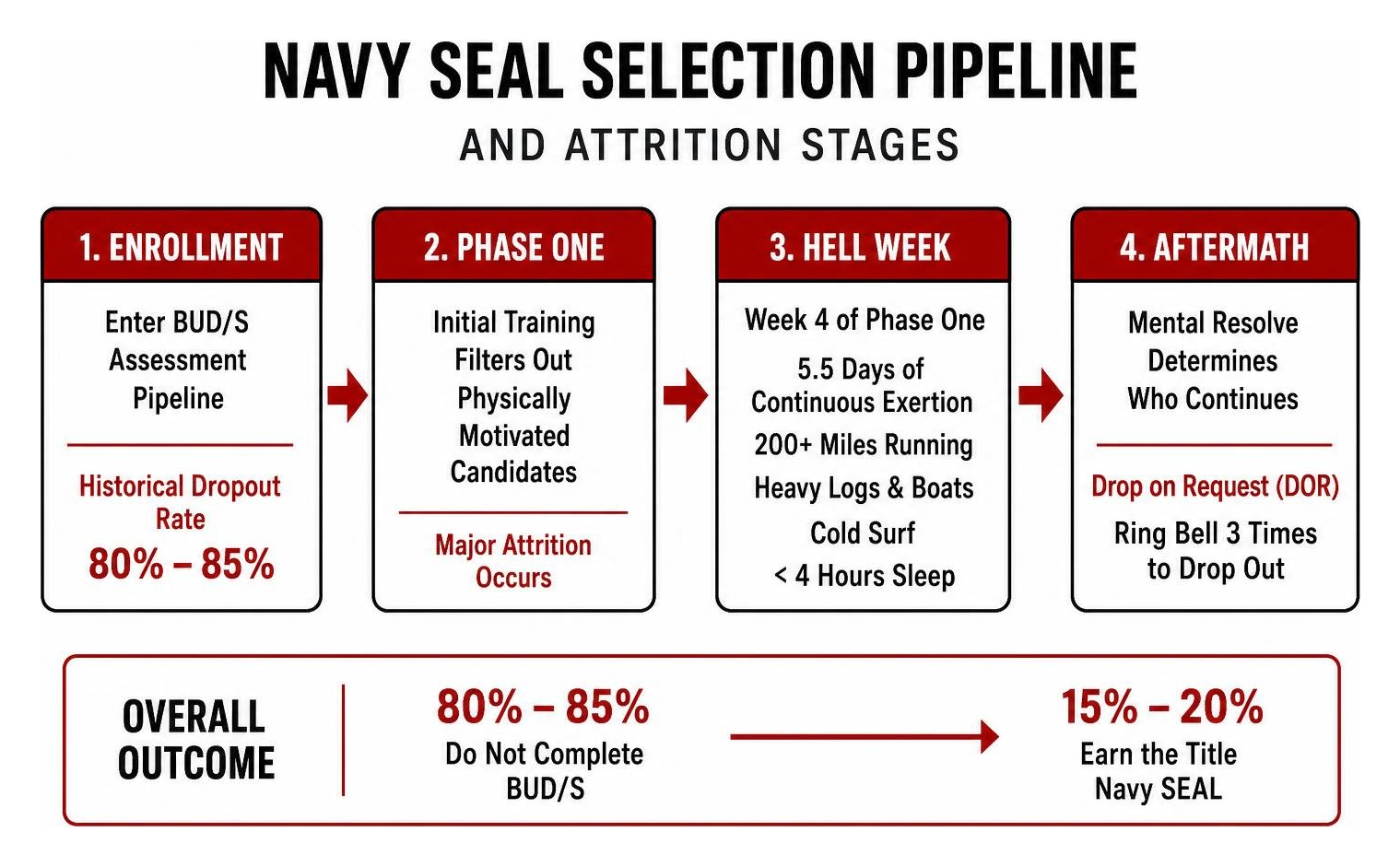
At that point, standard physical advantages fade. Many candidates who quit still have physical reserves, but their mental resolve gives way.
| Personality Trait (Big Five) | Civilian Male Average Norm | Active Navy SEAL Average | Primary Operational Impact |
|---|---|---|---|
| Neuroticism | 73.0 | 62.9 | Stress tolerance, low panic, emotional control |
| Extraversion | 102.6 | 120.6 | Assertive leadership, fast communication, high energy |
| Excitement-Seeking | 18.5 | 24.2 | Thrives in high-risk, intense environments |
| Openness | 108.2 | 109.1 | Tactical flexibility with practical realism |
| Agreeableness | 124.3 | 114.8 | Competitiveness, direct debriefs, high standards |
| Conscientiousness | 118.5 | 126.8 | Attention to detail and disciplined execution |
The 7 Undeniable Personality Traits Of Every Navy SEAL
Seven traits explain how operators remain effective under extreme pressure.
1. Unshakable Emotional Stability and Low Neuroticism
In life-or-death situations, panic is contagious and hesitation can be fatal. Emotional stability helps operators stay calm when a parachute malfunctions, a weapon jams, or a team is ambushed.
Understanding what do Navy SEALs do shows why this matters. Whether conducting reconnaissance or counterterrorism raids, operators must manage fight-or-flight responses through breathing, rehearsal, and focus.
2. Relentless Discipline and High Conscientiousness
Discipline is a daily standard shown in gear checks, weapon maintenance, and team responsibilities.
The 4 qualities you need to become a Navy SEAL include attention to detail. One equipment mistake can compromise a mission, so operators drill until critical actions become automatic.
3. Calculated Risk Tolerance and Excitement-Seeking
Naval Special Warfare personnel show elevated excitement-seeking, which helps explain their comfort with high-altitude jumps, deep-sea dives, and hostile environments.
This is not reckless thrill-seeking. It is calculated risk tolerance backed by planning, contingencies, and confidence in preparation.
4. Dynamic Adaptability and Comfort in Chaos
No plan survives first contact with the enemy. Elite operators must process incomplete information and adjust fast.
The history of United States Navy SEALs shows adaptability across maritime, desert, urban, and arctic environments. When radios fail, coordinates change, or weather cancels support, operators find alternatives.
5. Extreme Mental Toughness and the 40% Rule
Mental toughness is the choice to keep moving when every physical instinct says to quit. During Navy SEAL training, instructors use exhaustion, cold, and discomfort to test that choice.
The “40% Rule,” popularized by elite operators, suggests people often hit a mental wall before their true physical limit. SEALs use reframing and short-term goals to push past it.
6. Fierce Competitiveness Paired with Radical Humility
SEALs are highly competitive and hold themselves to exceptional standards. Lower agreeableness in testing reflects skepticism, directness, and intolerance for complacency.
That competitiveness must be balanced by humility. The “Quiet Professional” accepts criticism, owns mistakes, and puts the team’s mission above ego.
7. Tactical Compartmentalization and Dark Humor
During high-intensity operations, grief, shock, and fear must wait until the mission is complete. Tactical compartmentalization lets operators focus now and process stress later.
Dark humor can help small units cut tension, lower perceived stress, and maintain morale in dangerous conditions.
Translating Battlefield Resilience to Modern Professional Life

SEAL mental frameworks can help in civilian life, whether you are leading a team, building a business, or navigating personal challenges.
How to Cultivate the 7 Undeniable Personality Traits Of Every Navy SEAL in Daily Life
You do not need freezing surf in Coronado to build resilience. Start with repeatable habits:
- Practice deliberate stress regulation: Breathe slowly, lower your heart rate, and assess before reacting.
- Conduct honest after-action reviews: Ask what the objective was, what happened, why there was a gap, and how to improve.
- Build discipline through micro-habits: Use simple non-negotiables, such as waking early, training consistently, or making your bed.
- Adopt a stress-is-enhancing mindset: Treat pressure symptoms as preparation to perform, not proof of failure.
- Focus on what you can control: Ignore noise you cannot change and execute the next priority.
Understanding who are Navy SEALs shows that elite capability comes from consistent training and disciplined habits.
Frequently Asked Questions About Navy SEAL Personality Traits
Can someone develop Navy SEAL personality traits, or are they purely genetic?
Genetics influence physical capacity and risk tolerance, but psychological traits can develop. Emotional stability, stress tolerance, and discipline improve through intentional exposure and practice.
BUD/S filters for pre-existing resilience, but positive self-talk, visualization, goal compartmentalization, and breath control can be learned.
Why do Navy SEALs score low on agreeableness in psychological testing?
Low agreeableness does not mean hostile or unkind. Here, it points to a direct, skeptical, and competitive mindset.
Special Operations team members must challenge bad assumptions, identify tactical flaws, and speak up regardless of rank. Too much compliance can create dangerous blind spots.
What is the primary psychological reason candidates quit during BUD/S?
Candidates rarely quit because of sudden muscular failure. More often, mental fatigue and prolonged discomfort overwhelm their focus.
When candidates fixate on how much suffering remains, self-limiting beliefs grow. Graduates usually focus on short horizons: the next hour, drill, or evolution.
Conclusion
A Special Warfare mindset rests on emotional stability, discipline, calculated risk tolerance, adaptability, mental toughness, competitive humility, and tactical compartmentalization.
At USMilitary.com, we provide servicemembers, veterans, and military families with reliable information on military careers, benefits, VA home loans, and transition resources.
You do not need a combat deployment to build resilience. Practice ownership, stay calm under pressure, and focus on steady progress.
To learn more about Naval Special Warfare requirements, culture, and training, explore our Navy SEALs complete guide.
Free for Service Members & Veterans
Get the military benefits intel no one tells you about.
Weekly updates on VA benefits, pay changes, and money tips — free for service members and veterans.
No spam. Unsubscribe anytime. Your info is never shared.


