Hell Week is the most notorious and challenging phase of the Navy SEAL training program, also known as Basic Underwater Demolition/SEAL (BUD/S) training. It’s a grueling, five-day period that pushes students to their limits, testing their physical and mental toughness, teamwork, and determination. The primary objective of Hell Week is to simulate the extreme conditions and stress that Navy SEALs may face in real-world missions. It’s designed to identify those who have the strength, resilience, and teamwork skills necessary to succeed in the special operations community. A typical day in Hell Week starts at 4:00 AM and lasts for 20-24 hours, with minimal rest and food. BUD/S trainees are constantly challenged with physically demanding exercises, obstacle courses, and team-building activities. Here’s a sample of what a day in Hell Week might look like:
- Morning PT: A 2-hour physical training session that includes push-ups, sit-ups, and running.
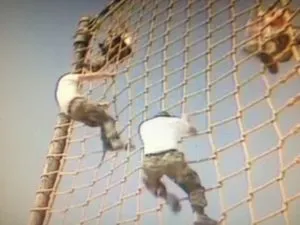
- Obstacle Course: Students navigate a challenging obstacle course that includes rope climbs, wall jumps, and crawling through mud and barbed wire.
- Drown-Proofing: Students are taught to survive in water by tying their hands and feet behind their backs and swimming underwater for extended periods.
- Swimming and Diving: Students complete swimming and diving exercises, including a 500-yard swim and a 50-foot underwater swim.
- Team Challenges: Students participate in team-building activities, such as navigating an obstacle course while carrying a heavy log or completing a challenging puzzle.
Hell Week takes place in the most inhospitable environments, including:
- Cold Weather: Students are exposed to freezing temperatures, often with minimal clothing and no sleep.
- Wet and Muddy Conditions: Students are constantly wet and muddy, with minimal opportunities to dry off or clean up.
- Limited Food and Sleep: Students receive minimal food and sleep, often going 48 hours without rest.
The dropout rate for Hell Week is notoriously high, with an average of 70-80% of students failing to complete the program. Those who drop out are not guaranteed a second chance and may be dropped from the BUD/S program altogether. Those who successfully complete Hell Week are rewarded with a sense of accomplishment and a renewed sense of purpose. They move on to the next phase of BUD/S training, where they’ll continue to develop their skills and prepare for the challenges of being a Navy SEAL. One former SEAL said, “Hell Week is not just about physical endurance; it’s about mental toughness, teamwork, and leadership. It’s about finding the strength to keep going when everything in your body is screaming at you to stop.”
Hell Week is a true test of human endurance, pushing students to their limits and beyond. It’s a crucial part of the Navy SEAL training program, designed to identify those who have the strength, resilience, and teamwork skills necessary to succeed in the special operations community.
- What Exactly Is Hell Week?
- The Sheer Brutality of the Numbers
- A Day by Day Glimpse into Hell Week BUD/S
- Surviving vs. Thriving: What Separates the Finishers?
- Is It Even Possible to Prepare?
- Conclusion
What Exactly Is Hell Week?
Hell Week is the defining event of the First Phase of Basic Underwater Demolition/SEAL (BUD/S) training. It starts on a Sunday evening and does not stop until the following Friday morning. During these 132 hours, seal candidates face non-stop physical tasks, profound mental stress, and constant, inescapable cold.
The core purpose is simple but severe, as the BUD/S instructors want to find the men who will not quit, no matter the circumstances. This brutally difficult operational training is structured to weed out those who lack the necessary grit. While physical strength helps, the instructors are searching for mental toughness and an unbreakable will to succeed as a team.
You cannot fake your way through it; the extreme stress is designed to strip away your ego and expose your true character. The week consists of continuous training with little to no sleep. It’s a legendary test of the human spirit that stands as a pillar of all BUD/S training.
The Sheer Brutality of the Numbers
The statistics surrounding BUD/S tell a story all their own. A typical BUD/S class might start with over 150 candidates, but the goal is not to graduate a certain number. The program’s only objective is to find the few who meet the unyielding standard required of all Navy SEALs.
Many will drop out before hell week even begins, succumbing to the daily grind of First Phase. Then the real test starts, as hell week tests physical limits in a compressed and overwhelming fashion. It is common for over half of the remaining class to not make it through this single week, pushing the attrition rate to famously high levels.
Sleep is a weapon used against the candidates, as they might get a total of four hours for the entire week. This extreme sleep deprivation leads to powerful hallucinations, disorientation, and severely impaired judgment. Every simple task becomes a monumental effort when your own mind starts playing tricks on you.
| Event | Duration / Metric |
|---|---|
| Total Duration | 5.5 days (approx. 132 hours) |
| Total Sleep Allowed | ~4 hours (cumulative) |
| Total Miles Run | Over 200 miles |
| Typical Attrition | 50-75% of remaining class |
A Day by Day Glimpse into Hell Week BUD/S
It is nearly impossible to capture the full experience in words, but we can look at the key evolutions that comprise the week. These are the physical and mental trials that make up the toughest training in the American military. Imagine facing this onslaught day after day with no end in sight.
The week starts with pure chaos on Sunday night, an event known as “Breakout.” A barrage of machine gun fire, explosions, and screaming instructors shatters any calm. Candidates are immediately rushed into the surf zone for the first of many cold water immersions, a brutal introduction that sets the tone for everything to follow.
Log PT is one of the most infamous parts of BUD/S, an exercise in controlled suffering. Teams of six to eight men are tasked with carrying a telephone pole, weighing around 200 pounds, for miles on end. They perform squats, presses, and endless carries with this log digging into their necks and shoulders, a true lesson in teamwork where one man’s failure means the entire team pays the price.
Then there is the cold, an enemy that never relents. The Pacific Ocean off Coronado, California, is not warm, and “Surf Torture” is exactly what it sounds like. Candidates link arms and lie in the cold ocean waves for long periods, sometimes for hours, as their body temperature drops and hypothermia becomes a constant, grinding battle.
This is not about getting a little chilly; it is a deep, bone-aching cold that never leaves you as the cold ocean wind cutting through soaking wet clothes makes it worse. They are almost always wet, which compounds the misery, drains precious energy, and tests cold tolerance to its absolute limits. While medical staff are always present, the discomfort is pushed to the edge of human endurance.
Back on land, there is “The Grinder,” a paved area where candidates spend countless hours performing calisthenics. Endless push-ups, sit-ups, pull-ups, and flutter kicks are done under the watchful eyes of instructors. It is pure physical burnout, designed to make them question every decision that led them there.
Between these major evolutions are miles of running in wet boots and uniforms, where sand chafes raw skin until it bleeds. They spend hours carrying boats on their heads and paddling boats, known as IBS (Inflatable Boat Small), for dozens of miles on the open ocean. A difficult surf passage at night, with a hallucinating mind, can make the simple task of paddling feel impossible.
The mud flats are another miserable experience where faces and uniforms become indistinguishable from the terrain. Candidates crawl on their hands and knees for long distances through cold, sticky, stinking mud. It is a dehumanizing evolution that tests determination and is another tool used to find a candidate’s breaking point.
All of these events are performed under constant harassment from the BUD/S instructors. There is no praise, only yelling and the promise of more pain. The only way out is to walk up to a brass bell, ring it three times, and quit. Many do.
Surviving vs. Thriving: What Separates the Finishers?
So, what kind of person makes it through this ordeal? It is rarely the biggest or strongest men in the class. Those impressive physical specimens are often among the first to quit because they have never experienced true failure before.
The men who ultimately succeed possess a different kind of strength, an internal fire that refuses to be extinguished. There is no single definitive answer, but there is a common trait: a burning desire to be a Navy SEAL. This “why” becomes their anchor in the storm of pain and exhaustion.
They learn to break the immense challenge down into tiny, manageable pieces, not thinking about Friday but just about getting to the next meal. Teamwork becomes everything because you physically cannot get through the week alone. This week tests physical endurance but also the ability to perform work as a cohesive unit.
Candidates learn to rely on the man next to them, helping him when he is down and knowing he will do the same. This forges the incredible bond that defines SEAL teams long after BUD/S training. You can see a man’s spirit start to fade, and his teammates will literally hold him up and help him through an evolution, knowing that hours later, they might be the one needing help.
It is this interdependence that the instructors look for. While the Air Force and Marine Corps have their own brutally difficult training, the focus on the small-team element in BUD/S is absolute. The true predictor of who will succeed is not the fastest runners or swimmers; it’s the man who refuses to quit on his teammates.
Is It Even Possible to Prepare?
You cannot fully replicate Hell Week, but you can prepare your body and mind for extreme hardship. The high physical standards to even get into BUD/S are incredibly demanding. Candidates must be phenomenal runners and swimmers and possess exceptional strength just to be admitted.
Physical fitness is just the ticket to the dance; it will not get you through the week on its own. Mental preparation is just as, if not more, important. Prospective candidates are often told to get comfortable being uncomfortable, which means taking cold showers, running in the rain, and doing hard workouts when tired.
It is about building mental calluses and learning to control your own mind. When everything in your body is screaming to stop, you need a mental framework to push through. Knowing how to compartmentalize pain and focus on a small, immediate goal is a skill that must be practiced and is the most important tool for any candidate.
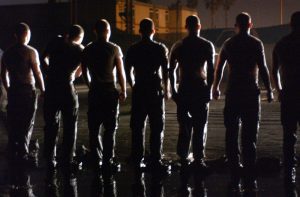
When you’re standing interminably in formation, soaking wet, with the ocean wind cutting through you as mud covers uniforms and sand chafes raw skin, physical strength has reached its limit. At that point, only mental fortitude and the will to not let down your team will carry you forward. That is what you must prepare for.
Conclusion
There is nothing else on earth quite like hell week bud/s. It is a legendary crucible that has remained the heart of Navy SEAL selection for decades, a week that tests physical and mental limits simultaneously. It goes beyond a simple test, probing the deepest parts of a man’s character and spirit.
It is five and a half days of cold, exhaustion, and pain, all designed to find the rare individuals who are truly unbreakable. Completing Hell Week is often cited by Navy SEALs as their greatest achievement. Those who make it through have proven they possess the mental fortitude and teamwork ethos to join the world’s most elite fighting force.
The experience of completing hell week bud/s reshapes a man, proving to him that his perceived limits were merely suggestions. He emerges not just stronger, but with an unshakable confidence that will serve him throughout his career as a Navy SEAL and beyond.
Want more military info? Find your nearest military recruiter here!
Free for Service Members & Veterans
Get the military benefits intel no one tells you about.
Weekly updates on VA benefits, pay changes, and money tips — free for service members and veterans.
No spam. Unsubscribe anytime. Your info is never shared.


